A smart bicep workout plan helps you build bigger, stronger arms without wasting time on random curls. By choosing the right exercises, rep ranges, and weekly schedule, you can train your biceps effectively while avoiding overuse and plateaus.
Below, you will find a simple, science-backed structure you can follow whether you are a beginner or already lifting consistently.
Understand what your biceps need
Your biceps do more than just bend your elbow. The biceps brachii controls elbow flexion and forearm supination, which is the twisting motion that turns your palm up. For full arm development you also need to involve the brachialis and brachioradialis, which sit under and around the biceps and add size and shape to the upper arm and forearm.
Back exercises like rows and pull ups do work your biceps indirectly, but that alone is not enough for maximum growth. The RP Strength bicep training guide notes that the biceps need direct work in addition to back training to reach their full potential.
When you design your bicep workout plan, make sure you include:
- A mix of curls that target both heads of the biceps
- Movements that hit the brachialis and brachioradialis
- At least one exercise that includes strong supination, not just bending the elbow
If you check those boxes, your whole upper arm will grow, not just the visible “peak.”
Choose the right bicep exercises
You do not need a long list of fancy moves. Ideal bicep workouts usually include 1 to 3 different exercises per session and 2 to 5 different exercises across the week. That gives you enough variety without spreading your effort too thin.
Here are six proven options you can build around:
1. Concentration curl
Concentration curls emphasize the short head of the biceps and are great for learning a strong mind muscle connection.
How to do it:
Sit on a bench, lean forward slightly, and brace your upper arm against the inside of your thigh. Curl the dumbbell toward your shoulder without swinging your torso, then lower with control.
Use this near the end of your workout when your arms are warm and you want to focus on strict form.
2. Hammer curl
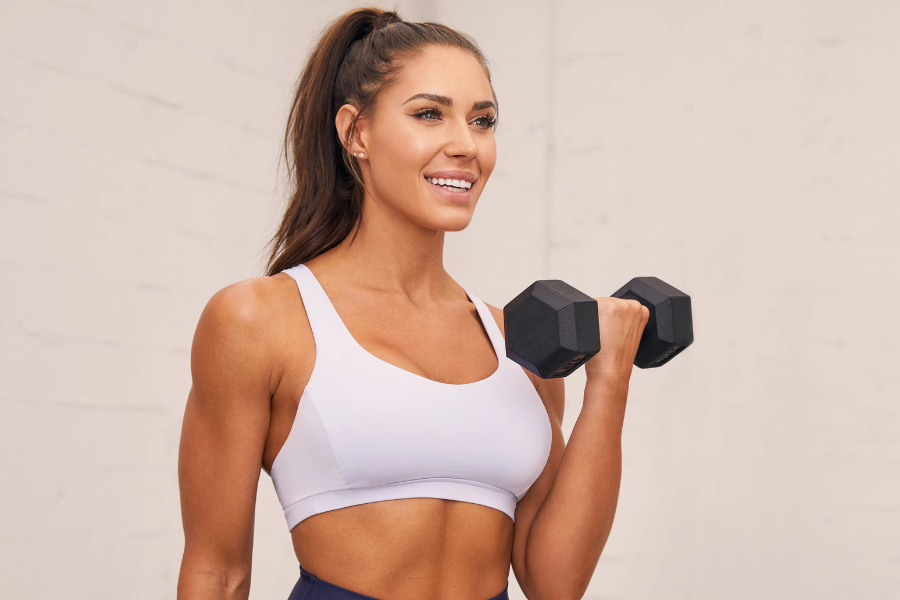
Hammer curls hit the long head of the biceps along with the brachialis and brachioradialis, which makes them one of the best “overall arm” builders.
Hold dumbbells with your palms facing each other, keep your elbows close to your sides, and curl up in a controlled motion. Lower slowly. This neutral grip is also friendly for your wrists.
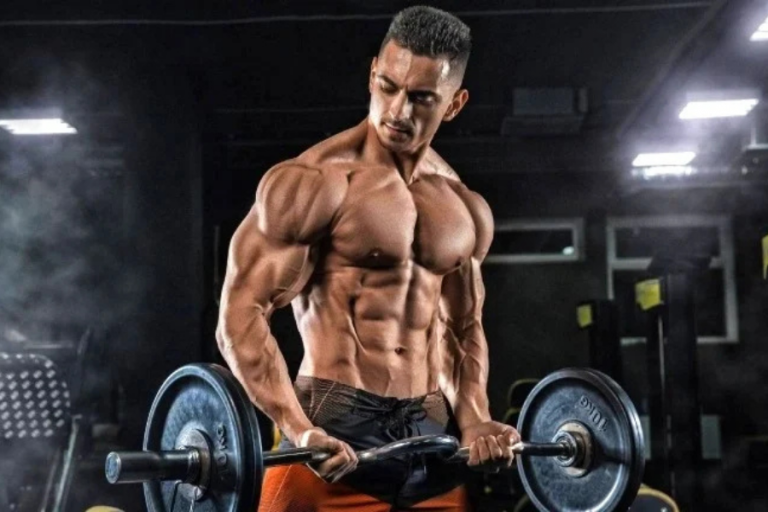
3. EZ bar curl
EZ bar curls let you lift heavier loads comfortably while hitting both heads of the biceps. Your grip width slightly changes the emphasis, but you can think of this as your main “mass builder” curl.
Stand tall, keep your elbows just in front of your body, and curl the bar toward your chest without swinging. Lower under control and avoid letting your elbows drift forward too much.
4. Preacher curl
Preacher curls place more tension on the short head of the biceps and limit cheating because your upper arms are supported.
Position your upper arms on the preacher bench pad, grip a dumbbell or EZ bar, and curl until your forearms are vertical. Lower all the way until you feel a stretch, but do not relax at the bottom.
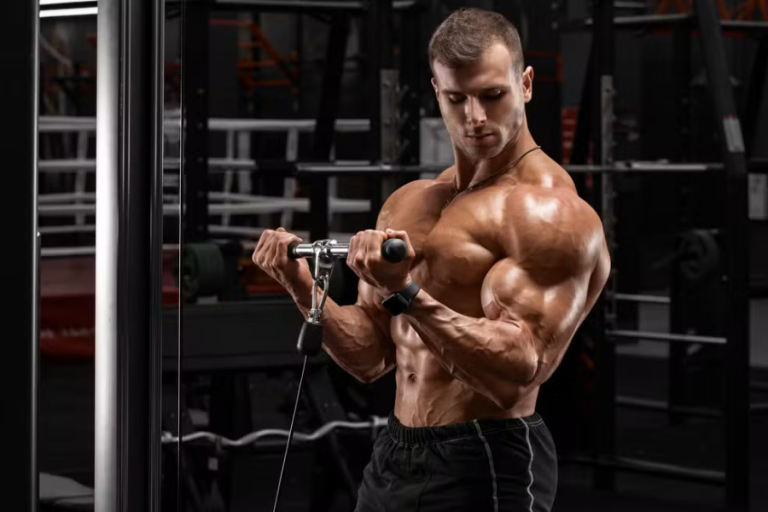
5. Single arm high cable curl
High cable curls keep continuous tension on the biceps throughout the movement, which is one reason cable curls are highlighted as especially effective for engagement.
Set the pulley slightly above shoulder height, stand side on to the machine, and curl your hand toward your ear while keeping your elbow up and in line with your shoulder. Think about squeezing the biceps hard at the top.
6. Chin up
Chin ups are a compound move that works both your biceps and your upper back. With a shoulder width underhand grip, they can be a powerful driver of biceps size while also building pulling strength.
If you cannot yet do bodyweight chin ups, you can:
- Use band assisted chin ups
- Use an assisted pull up machine
- Practice negative chin ups by jumping to the top and lowering slowly
These modifications are especially good if you are a beginner building up strength.
Set effective reps and sets
For hypertrophy, you want enough total work to stimulate growth without breaking down your joints or recovery.
A solid default for your bicep workout plan is:
- 2 to 4 bicep exercises per session
- 3 to 4 sets per exercise
- 8 to 12 repetitions per set
This 8 to 12 rep range is consistently recommended for size and pairs well with 3 to 4 sets for each movement. If you train this way, you will spend most of your work in the moderate rep zone, which research suggests is ideal for balancing stimulus, fatigue, and mind muscle connection.
You can also benefit from mixing in some heavier and lighter sets across the week:
- Heavy sets: 5 to 10 reps
- Moderate sets: 10 to 20 reps
- Light sets: 20 to 30 reps
About half of your total weekly sets can be in the moderate range, with the rest split between heavy and light work.
Plan your weekly training frequency
Your biceps respond best when you train them often enough, but not so often that they never recover.
The research you have here points to two key ideas:
- Training biceps two to three times per week leads to more hypertrophy than once per week, around 3.1 percent greater week to week increases in muscle size
- Training biceps every day is discouraged because muscles grow during rest and daily training can lead to fatigue and a higher risk of injury
As a practical guideline, you can:
- Aim to hit biceps 2 to 3 times per week
- Spread your sets evenly, for example 3 to 6 sets of biceps work per session
- Count heavy chin ups and rows as partial bicep work when you are tracking volume
More advanced lifters may eventually train biceps 3 to 6 times a week at their minimum effective volume and up to their maximum recoverable volume, but only if recovery, sleep, and nutrition are all in place.
Use advanced techniques sparingly
Once you are consistent with basic sets and reps, you can layer in advanced methods to create extra stimulus.
Some options recommended for advanced bicep training include:
- Straight sets, your standard sets at a given weight
- Down sets, drop the weight 10 to 20 percent after your main sets and continue for more reps
- Giant sets, use multiple small sets in a row to hit a target total rep count
- Myoreps, clusters of sets with very short rests
- Drop sets, reduce weight several times with no rest to extend a set past failure
- Pre exhaust supersets, fatigue smaller elbow flexors first, then move to heavy curls
- Occlusion training and lengthened partials for experienced lifters who understand the risks
You do not need all of these. Start by doing occasional down sets or a single drop set on your last exercise. Keep the bulk of your workout as regular straight sets with good form.
Try this sample bicep workout plan
You can use the following as a template and adjust based on your experience and schedule.
Always warm up your elbows and shoulders first. Simple band pull aparts, light curls, and gentle stretches for 5 minutes will help prepare your joints without fatiguing your muscles.
Option A: Biceps focused day
Use this if you dedicate a session to arms.
- Hammer curl
- 3 sets of 12 reps
- Focus on smooth, controlled reps to activate brachialis and brachioradialis
- Cable biceps curl
- 3 sets of 12 reps
- Feel constant tension from the cable, keep your elbows tucked
- Dumbbell preacher curl
- 3 sets of 10 to 12 reps
- Full stretch and strong squeeze at the top
- Barbell or EZ bar curl
- 3 sets of 8 to 10 reps
- Go heavier here, but no swinging
- Seated dumbbell curl
- 2 to 3 sets of 10 to 12 reps
- Finish with strict curls to emphasize the biceps peak
This sequence mirrors a recommended structure where you first fatigue the smaller elbow flexors with hammer curls, cable curls, and Scott or preacher curls, then use straight bar curls for mass, and finish with seated dumbbell curls to round out the session.
Option B: Add on to your upper body day
Use this if you train biceps after back or chest.
- Chin up or assisted chin up
- 3 sets of as many quality reps as you can
- Focus on pulling with your arms and back, not kicking
- EZ bar curl
- 3 sets of 8 to 10 reps
- Hammer curl
- 3 sets of 10 to 12 reps
- Concentration curl
- 2 sets of 12 to 15 reps per arm
This plan uses about half the volume of a dedicated arm day, which fits better when you are already training other muscle groups in the same session.
Fix imbalances and avoid common mistakes
If one bicep is clearly smaller or weaker than the other, you can correct it by increasing volume and frequency for that side. Add extra sets of unilateral dumbbell or cable curls for the smaller arm, or dedicate one extra short session per week to the weaker side. With a couple of months of focused work, the difference usually becomes much less noticeable.
To keep progressing, watch out for these frequent errors:
- Cheating too early in the set by swinging your torso, which shifts tension to your front delts
- Using so much weight that you cannot fully contract the biceps at the top
- Doing as many hard sets for biceps as for large muscle groups like lats or quads, which can lead to overtraining
- Relying on only one curl variation and never changing angles, grips, or resistance type
Cable curls, preacher variations, hammer curls, and chin ups all give different angles and loading patterns, so rotate them across your training blocks.
Finally, respect your recovery. Muscle growth happens between workouts. Training biceps two to three times per week with solid sleep and nutrition will take you much further than training them every day with sore elbows and constant fatigue.
Start by picking one of the sample plans, run it consistently for 6 to 8 weeks, and track your reps and weights. If you are adding a little weight or a couple of reps over time and your arms feel fuller and stronger, your bicep workout plan is working.
About the Author