A rowing machine might look simple, but when you use it the right way it becomes one of the best rowing workouts for weight loss and overall fitness. Rowing engages your legs, back, core, and arms in every stroke, so you burn a lot of calories while building strength and endurance at the same time (Men’s Health). Because it is low impact, you can work hard without beating up your joints, which makes it easier to stay consistent.
Below, you will find practical rowing workouts you can start today, whether you are a complete beginner or already comfortable on the machine. You will also learn how to structure your sessions for fat loss and how to avoid common mistakes that slow your progress.
Why rowing is so effective for weight loss
Each stroke on the rowing machine uses a large portion of your body at once. Estimates suggest you engage around 86% of your muscles during a proper rowing stroke, including your legs, back, arms, and core (Fit & Well). The more muscle you use, the more energy you burn.
Rowing combines cardio with strength training, because you are working against resistance from a flywheel, fan, magnetic system, or water tank. This combination improves your cardiovascular health and supports metabolic health and fat loss when you pair it with other healthy habits like a balanced diet and regular movement off the machine (Garage Gym Reviews).
Rowing is also joint friendly. Since you stay seated and move in a linear path, rowing is low impact compared with activities such as running. This makes it a strong option if you want to lose weight but need to protect your knees, ankles, or hips (PureGym).
Get your form right before you go hard
Good technique helps you burn more calories, avoid injury, and feel less awkward on the machine. Before you worry about speed or distance, spend a few minutes practicing the basic stroke.
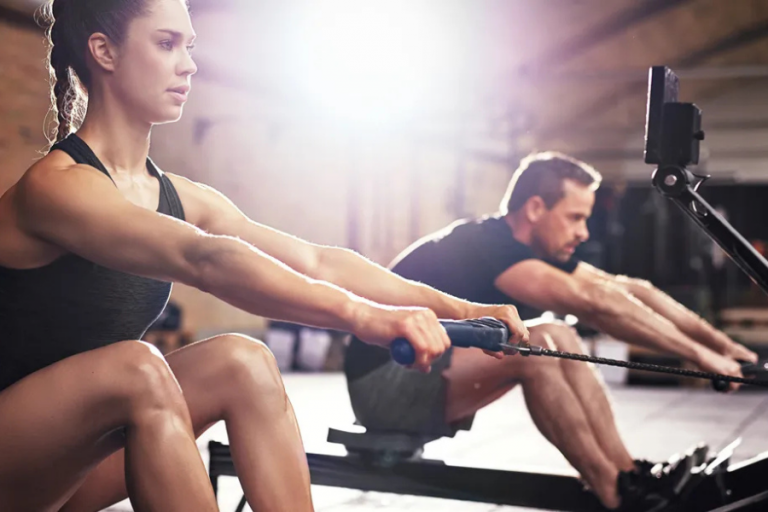
A simple way to remember rowing form is: legs, body, arms on the way out, then arms, body, legs on the way back. You start each drive by pushing through your feet, then lean back slightly from the hips, then finish with your arms. On the recovery, you reverse that order and glide back to the start.
Proper rowing form for fat loss includes a few key details:
- Keep your back straight but relaxed instead of rounding your spine
- Initiate the drive with your legs, not your arms, so your bigger muscles do most of the work
- Lean back only about 45 degrees and pull the handle to just under your ribs
- Maintain a smooth rhythm rather than jerky, rushed strokes
These cues match the technique guidelines used in structured rowing plans and can help you stay efficient and safe (RP3 Rowing, Fit & Well).
How rowing helps you lose weight
To lose weight you need to create a calorie deficit, which means you burn more energy than you take in. Rowing helps by increasing the calories you burn in a relatively short time, and it can be adapted to almost any fitness level (Healthline).
A moderate 30 minute rowing session can burn around 200 to 300 calories for many people, and heavier individuals may burn closer to 400 calories in the same time (RowingMachineWorkouts). When you combine that regular burn with a calorie controlled diet, you support steady fat loss over time instead of relying on extreme, short term tactics.
High intensity interval training, or HIIT, on the rower can further boost your results. Short bursts of hard rowing followed by easy rowing raise your heart rate, challenge your muscles, and increase the afterburn effect that keeps your metabolism slightly elevated after you finish your workout (The Fitness Outlet, RP3 Rowing).
You cannot choose exactly where the fat comes from, and rowing will not only burn belly fat. Fat loss happens across your whole body when you stay in a consistent deficit (RowingMachineWorkouts). The upside is that regular rowing also builds muscle in your legs, back, and shoulders, which can improve your shape as the scale moves.
Best beginner rowing workout for weight loss
When you are new to rowing, your main goals are to master technique, build a habit, and avoid overdoing it. A simple, structured session a few days per week is enough to start seeing progress.
Healthline suggests that beginner rowing workouts focus on 20 minutes of moderate rowing, about 3 days per week, with a strong attention to form and gradual increases in intensity (Healthline). You can follow this easy structure for your first few weeks:
-
Warm up for 5 minutes
Row gently at a comfortable pace. Aim for a stroke rate around 18 to 22 strokes per minute. Use this time to dial in your form. -
Main set for 10 minutes
Row at a pace that feels like a 6 out of 10 in effort. You should be breathing heavier but still able to say short sentences. If your machine shows split time, keep it steady rather than trying to beat a number each minute. -
Cool down for 5 minutes
Gradually slow your pace until your breathing returns close to normal. Finish with light stretching for your hamstrings, hips, and shoulders.
Once you feel more comfortable, you can start introducing simple intervals, such as 1 minute slightly faster, 1 minute easier, across the middle 10 minutes. The key is to end each session feeling like you could do a bit more, not completely wiped out.
Effective HIIT rowing intervals for faster fat loss
Once you are steady with basic rowing, interval sessions can help you burn more calories in less time. HIIT workouts alternate short, intense bouts with rest or light rowing, and they have been shown to improve cardiovascular fitness and support fat loss while keeping total workout duration manageable (Garage Gym Reviews, PureGym).
One beginner friendly HIIT format on the rower looks like this:
- 5 minutes easy warm up
- 8 to 10 rounds of 30 seconds hard rowing at about 24 to 26 strokes per minute, followed by 90 seconds of very light rowing
- 3 to 5 minutes easy cool down
This 20 minute structure teaches you how to manage intensity without letting your form fall apart and is recommended for people focused on fat loss and conditioning (The Fitness Outlet).
For a slightly more advanced interval workout, you can try 1 minute hard, 1 minute easy for 10 to 12 rounds, which gives you a 25 minute session including a 5 minute warm up and 5 minute cool down. This approach helps maximize calorie burn and improves your aerobic capacity as you get fitter (The Fitness Outlet).
If you enjoy very intense efforts and already have several months of rowing experience, you can experiment with Tabata style intervals such as 20 seconds all out, 10 seconds rest, repeated 8 times. These short but demanding blocks create a large metabolic challenge and can support fat loss when used sparingly and combined with easier sessions (RP3 Rowing, PureGym).
A good rule of thumb is to limit HIIT rowing to at most three sessions per week and to keep beginner HIIT workouts to 15 to 20 minutes total. This helps you avoid overtraining and keeps your joints and energy levels in a healthy place (Garage Gym Reviews).
Sample weekly rowing plan for weight loss
To stay consistent and see results, it helps to map out your week in advance. Here is a sample 4 day rowing weight loss routine inspired by structured programs that balance HIIT, intervals, and steady sessions, with rest days in between for recovery (RowingMachineWorkouts).
Day 1: Interval focus, 20 to 25 minutes
Warm up for 5 minutes, then complete 8 to 10 rounds of 30 seconds hard, 90 seconds easy, and finish with a 3 to 5 minute cool down.
Day 2: Rest or light activity
Go for a walk, do gentle mobility, or take a yoga class. Keeping some movement in your day supports recovery and calorie burn without adding extra strain.
Day 3: Steady rowing, 25 to 30 minutes
Warm up for 5 minutes, row 15 to 20 minutes at a moderate, steady pace around 60 to 70% of your max heart rate, then cool down for 5 minutes. This type of lower intensity work supports fat utilization and builds your base (RP3 Rowing).
Day 4: Rest
Day 5: Longer intervals, 25 to 35 minutes
After a 5 minute warm up, do 10 to 12 rounds of 1 minute hard, 1 minute easy, then cool down for 5 minutes. Maintain good form even when you are working hard.
Days 6 and 7: One steady session plus one full rest day
On one of these days, repeat the Day 3 steady workout or a slightly shorter version if you are tired. Fully rest on the other day.
This structure gives you 3 to 4 sessions per week, each between 20 and 35 minutes, which fits well with many rowing based weight loss routines that deliver consistent calorie burn without excessive time investment (RowingMachineWorkouts).
How to get more from every rowing workout
Small choices before, during, and after your sessions can make a noticeable difference over time. You do not need perfection, but a few simple habits will help you see more from the effort you are already putting in.
Before workouts, aim to have a meal that includes carbohydrates 2 to 4 hours beforehand so you have energy for intervals or longer rows. After rowing, drink water and choose a light carb, high protein snack or meal within a few hours to support recovery and muscle development (Fit & Well).
During workouts, keep an eye on your stroke rate and focus on powerful, controlled strokes rather than rushing. Many weight loss focused rowing plans target a moderate stroke rate of around 20 to 26 strokes per minute so that you can maintain consistent pacing and good form, which improves your real calorie burn over the session (RowingMachineWorkouts).
Most importantly, adjust the intensity to your current fitness level. Beginners are often better served doing one short HIIT session per week and several moderate sessions instead of jumping straight into daily intervals (Garage Gym Reviews). As you get stronger and more comfortable, you can extend your intervals, add an extra session, or experiment with more challenging formats like pyramids or Tabata workouts (RP3 Rowing).
Start with one of the beginner workouts above in your next gym visit or home session. Once that feels comfortable, layer in intervals and build toward the weekly plan. With consistent effort on the rower and attention to your nutrition, you can turn short, focused workouts into steady, sustainable weight loss.
About the Author