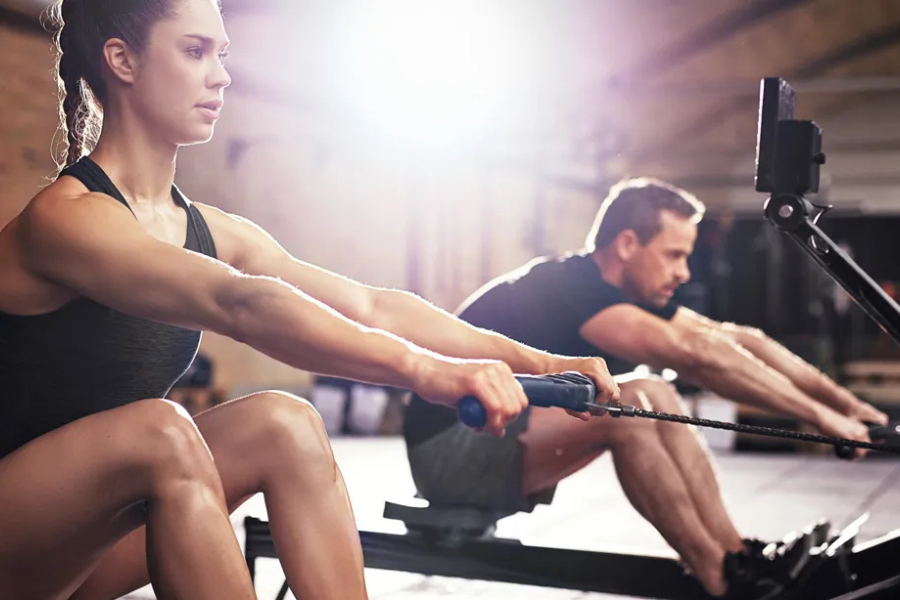
A rowing machine can quietly sit in the corner of your gym, but it might be the most powerful tool you have for fat loss. When you use it for rowing machine interval training, you get a low impact, full body workout that can help you burn calories quickly, build muscle, and improve your cardiovascular health at the same time.
Instead of spending 45 minutes on a treadmill, you can get similar or better benefits in 20 to 30 minutes of focused intervals. Rowing engages about 86 percent of the muscles in your body, so every stroke asks a lot from your legs, core, back, and arms, which drives your heart rate up and your calorie burn with it (Marathon Handbook).
What rowing machine interval training is
Rowing machine interval training means you alternate between harder efforts and easier efforts on the rower. You are not just sitting at one steady speed the whole time. Instead, you move through short bursts of high intensity work, followed by periods of lighter rowing to recover.
Research on interval training in rowing shows that shifting between high and low intensity elevates your heart rate, improves cardiovascular capacity, and creates an “afterburn effect” so your body continues burning calories for hours after you finish (RP3 Rowing). HIIT rowing can boost your metabolic rate for up to 14 hours after a workout, which supports fat loss even when you are back at your desk or on the couch (Marathon Handbook).
You can build intervals around:
- Time, such as 30 seconds hard, 1 minute easy
- Distance, such as 250 meters hard, 250 meters easy
- Effort level, such as 80 percent effort followed by 40 percent effort
The pattern you choose matters less than staying consistent and honest with your intensity during the work periods.
Why rowing intervals are effective for fat loss
Rowing machine interval training combines several fat burning advantages in one workout. Since you are using most of the major muscle groups in your body, you can burn more calories in less time compared with exercises that focus on only one area, such as cycling for legs or light arm work alone (Garage Gym Reviews).
During intense intervals your heart rate typically reaches at least 85 percent of your maximum. This level of effort is what makes HIIT rowing so efficient, since it can provide similar cardiovascular and metabolic benefits in roughly 40 percent less time than steady state cardio (Marathon Handbook).
A few key ways rowing intervals help you lose fat:
- You create a strong calorie burn in each session
- You keep your metabolism higher for hours afterward
- You build or maintain muscle in your legs, core, and upper body, which supports a higher resting metabolic rate
- You improve insulin sensitivity, which can help your body manage blood sugar and store less fat (Garage Gym Reviews)
Rowing is also low impact, so you put less stress on your joints compared with running. That makes it easier to stay consistent week after week, which is what matters most for long term fat loss.
Understanding effort level and stroke rate
To get the most from rowing machine interval training, you need a simple way to measure your effort. Most rowing machines show your stroke rate, which is the number of full strokes you take per minute. Each stroke includes the catch, drive, finish, and recovery phases.
You can estimate effort without any gadgets by using the “talk test” (Garage Gym Reviews):
- Below about 55 percent effort, you can talk in full sentences
- Around 60 to 70 percent effort, you can say short phrases but do not really want to chat
- Above 80 percent effort, speaking more than a word or two feels difficult
For many fat burning intervals you will cycle between moderate zones and those 80 percent plus efforts. As a beginner, aiming for a stroke rate around 20 to 26 strokes per minute helps you balance good form with enough intensity for effective calorie burning (Rowing Machine Workouts).
If your machine displays split time, that is the time it would take you to row 500 meters at your current pace. Seeing this number drop over the weeks is a clear sign your conditioning is improving (The Fitness Outlet).
How to set up your rowing machine
Before you start your first interval session, you will want to set your machine correctly. Many people slide the damper to the highest setting, thinking higher resistance always means a better workout. In reality, a very high damper can feel sluggish, fatigue you quickly, and make it harder to maintain smooth form.
For most interval training, a damper setting between 3 and 5 is recommended. This range tends to mimic the feel of real water rowing and lets you generate power efficiently without overtaxing your muscles and joints (The Fitness Outlet).
A few other setup pointers:
- Adjust the foot straps so your feet are secure but not pinched
- Sit tall with a neutral spine rather than rounding your back
- Keep your shoulders relaxed and your grip firm but not tight
Good posture makes a noticeable difference in how powerful and comfortable each stroke feels, especially when you push the pace.
Beginner friendly rowing interval workout
If you are new to rowing or returning after a break, you can start with short, manageable intervals that teach you how to handle intensity without overwhelming you. A 20 minute session is enough to get your heart pumping and build a foundation.
Here is a simple beginner workout based on expert guidance for new rowers (The Fitness Outlet and Garage Gym Reviews):
- Warm up for 5 minutes at an easy pace. Focus on smooth strokes and breathing.
- Row hard for 30 seconds at about 24 to 26 strokes per minute. You should not want to talk.
- Row very light for 90 seconds, letting your heart rate come down while you keep moving.
- Repeat the 30 seconds hard, 90 seconds easy pattern 8 to 10 times.
- Cool down for 3 to 5 minutes at a gentle pace.
Beginners can start with fewer rounds, such as 6 intervals, then build up to 10 as fitness improves. This style of workout teaches you how to handle short bursts of effort without spending a full hour in the gym.
Intermediate fat burning pyramid session
Once you are comfortable with basic intervals, you can move to a slightly longer pyramid style workout. This structure gradually increases intensity, peaks, then brings you back down, which many people find more engaging than repeating the exact same effort over and over.
An example 15 to 20 minute pyramid session for fat loss, inspired by beginner programs that use growing intensity intervals (Garage Gym Reviews), might look like this after a 5 minute easy warm up:
- 30 seconds at about 60 percent effort, 60 seconds at moderate effort
- 30 seconds at 70 percent effort, 60 seconds at moderate effort
- 30 seconds at 80 percent effort, 60 seconds at moderate effort
- 30 seconds at 70 percent effort, 60 seconds at moderate effort
- 30 seconds at 60 percent effort, 60 seconds at moderate effort
You can repeat this pyramid once or twice, depending on your experience, then finish with a 5 minute cool down. The gradual build keeps you mentally engaged, and the short high points let you work hard without feeling drained for the entire session.
Advanced intervals for maximum conditioning
If you already have a strong fitness base and want a challenging way to push fat loss and performance, you can try distance based or race pace intervals. These sessions demand focus, but they are very time efficient.
One advanced option is:
- Warm up 5 to 10 minutes
- Row 500 meters at race pace, where speaking is almost impossible
- Row very lightly for 2 minutes
- Repeat the 500 meter plus 2 minute recovery pattern 5 to 6 times
- Cool down 5 minutes
This style of workout develops both power and cardiovascular endurance at a high level (The Fitness Outlet).
Another approach is to mix in bodyweight moves between intervals. For example, you might row 250 meters at a challenging pace, step off for 10 to 15 push ups or squats, then get back on the rower. Combining intervals this way creates a full body circuit that targets both strength and cardio at once (RP3 Rowing).
How often you should row for fat loss
You do not need to row every day to see results, and in fact, you should not. Your muscles and nervous system need time to recover so you can keep training hard without burning out.
Guidelines for interval sessions typically suggest that 20 to 30 minute rowing interval workouts, including warm up and cool down, are enough for a single session (Garage Gym Reviews). Many plans recommend rowing around 30 minutes four to five times per week while avoiding consecutive high intensity days and capping training at six days per week to protect your recovery (Garage Gym Reviews).
One 4 week fat loss routine outlines four rowing workouts per week that vary between high intensity intervals, medium duration intervals, and longer steady rows. This mix keeps your calorie burn high without needing to constantly increase intensity, which can help prevent plateaus and overuse issues (Rowing Machine Workouts).
At least three rest or low intensity days each week are important for muscle repair, hormone balance, and long term progress. Pushing too hard every day can raise stress hormones and actually make fat loss harder (Rowing Machine Workouts).
Staying safe and getting better results
Rowing machine interval training is only effective if you can do it consistently without injury. Proper form and smart pacing protect your body and make every stroke count.
A few practical guidelines:
- Keep your core engaged so your lower back stays supported
- Drive first with your legs, then lean back slightly at the hips, then finish with your arms
- On the recovery, extend your arms first, hinge forward from the hips, then bend your knees
- Start with 2 to 3 hard rounds if you are a beginner and work up to 5 or more rounds over several weeks (Garage Gym Reviews)
Listening to your body is crucial. If your form breaks down or your lower back aches, scale back the intensity or cut the session short. Progress comes from repeating solid workouts, not pushing through pain.
Your nutrition also plays a role in how much fat you lose. Creating a moderate calorie deficit while you follow your rowing routine will help convert your hard work into steady fat loss results (Rowing Machine Workouts).
A focused 20 minute rowing interval session can deliver comparable benefits to a 45 minute steady state workout, which makes it one of the most time efficient ways to build fitness and burn fat (RP3 Rowing).
Try starting with one beginner interval workout this week, even if it is just 10 to 15 minutes. As those short bursts of effort get more comfortable, you can add more intervals, mix in new structures, and watch both your fitness and your confidence grow.
About the Author