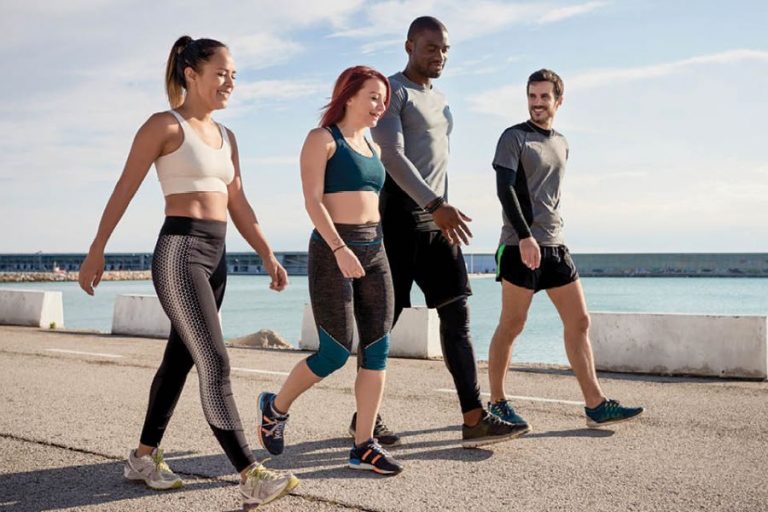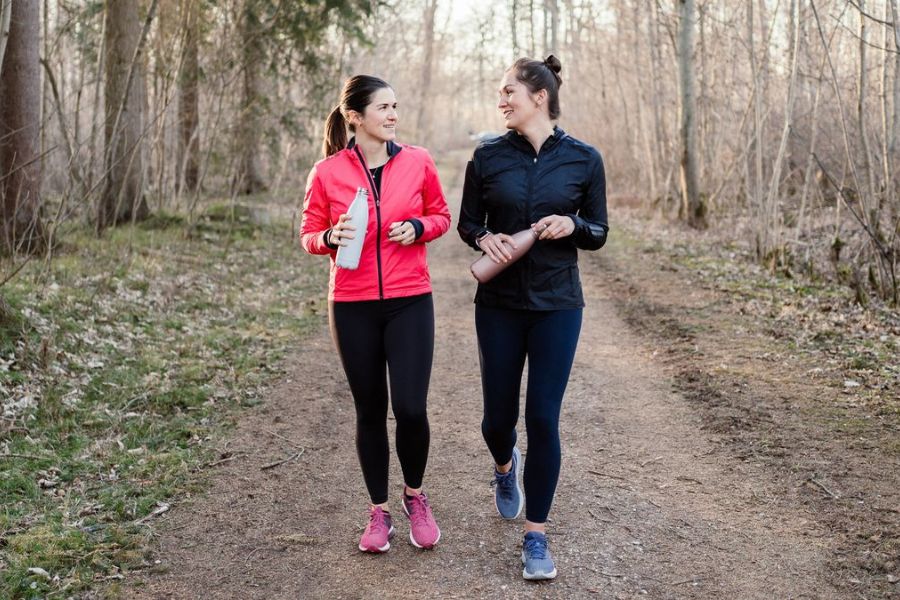
Fast walking workouts let you turn an everyday habit into real cardio training. By slightly increasing your pace and being intentional with your routine, you can burn more calories, improve your heart health, and still keep your workouts simple and low impact. If you have struggled to stick with intense gym plans, fast walking can be a sustainable way to build fitness and support weight loss.
You do not need special equipment, a perfect route, or hours of free time. You only need a comfortable pair of shoes, a realistic plan, and a willingness to take your regular walk up a notch.
Understand what fast walking really is
Fast walking workouts sit between a casual stroll and an all‑out power walk. The exact speed is less important than the effort level.
A helpful guide is the talk test. At a fast walking pace, you can talk in full sentences, but you would not be able to sing a song without stopping for breath. Health experts describe this as moderate intensity, where your heart rate reaches roughly 60 to 70 percent of your maximum heart rate (Verywell Fit, CNN).
For many beginners, a brisk pace means covering a mile in 20 minutes or less. That might feel quick if you are new to exercise, and that is okay. Your goal is not to hit a specific number from day one. Your goal is to walk fast enough that you feel noticeably warmer and slightly out of breath compared to an easy stroll.
Learn the health benefits of walking faster
Once you pick up the pace, walking starts to act like a powerful cardio workout instead of just casual movement.
Fast walking helps you:
- Burn more calories in less time
- Improve heart health and lung capacity
- Lower blood pressure
- Reduce the risk of type 2 diabetes and heart disease
- Support weight management and fat loss
Fast walkers see meaningful long term benefits. A large study of nearly 85,000 adults found that people who walked quickly for at least 15 minutes a day had almost a 20 percent lower risk of premature death, compared with only a 4 percent reduction in people who walked slowly for more than three hours per day (CNN).
Brisk walking also supports your mental health. Consistent walking, especially when it is intentional and slightly challenging, can relieve stress, increase mindfulness, and ease symptoms of anxiety and depression (TODAY). This makes fast walking one of the simplest ways to care for both body and mind.
Use proper form for fast walking
Good technique helps you walk faster, burn more calories, and avoid aches in your feet, knees, or back. A few small adjustments can make your stride more efficient.
Focus on:
-
Posture
Stand tall with your head up and eyes forward. Relax your shoulders down and back instead of hunching. This position helps you breathe deeply and keeps your back from getting sore (Mayo Clinic, CNN). -
Arm swing
Bend your elbows to about 90 degrees and swing your arms naturally from your shoulders, not your elbows. Your right arm should move forward as your left foot steps, and vice versa. Strong but relaxed arm swings help drive your legs and increase speed (Verywell Fit). -
Foot strike
Land on your heel, then roll smoothly through the middle of your foot to your toes. Push off firmly from your toes to power the next step. This rolling motion absorbs impact and supports a quicker pace (Verywell Fit). -
Step length
Avoid overstriding by reaching your foot too far in front of your body. That can slow you down and strain your shins. Instead, take slightly quicker steps and increase your cadence to speed up (Verywell Fit).
Breathing also matters. Try to inhale through your nose and exhale through your mouth. Conscious breathing may help regulate blood pressure and keep you from feeling overly winded as you increase your speed (CNN).
Start safely if you are a beginner
If you are new to exercise or returning after a break, ease into fast walking workouts. The goal is to build a habit you can maintain, not to push so hard that you end up sore or discouraged.
Health organizations often recommend working up to at least 150 minutes per week of moderate intensity activity, such as brisk walking, for strong overall health benefits (Verywell Fit). You do not have to reach that number in the first week.
A simple four week progression might look like this (Verywell Fit):
-
Week 1
Walk 15 minutes at an easy pace, four or five days per week. Focus on consistent movement and comfortable form. -
Week 2
Increase to 20 minutes at a slightly quicker pace. You should still be able to hold a conversation. -
Week 3
Walk 25 minutes, adding short sections where you pick up the pace for one or two minutes, then return to an easier pace. -
Week 4
Walk 30 minutes at a brisk, fast walking pace, about five days per week. This brings you to 120 to 150 minutes of moderate activity, which matches common health guidelines.
If even 15 minutes feels like a lot at first, you can start smaller. For some people, walking to the mailbox and back every other day is a realistic first step. Over time, you can gradually add distance, days, or speed as your body adjusts (UNC Health).
Build an effective fast walking workout
Once you can comfortably walk for 20 to 30 minutes, you can shape your walks into true workouts that improve fitness and support weight loss.
A basic fast walking workout might look like this:
-
Warm up
Walk at an easy pace for 5 minutes. Focus on posture and relaxed breathing. -
Main set
Walk briskly for 10 minutes so you are breathing harder, but still able to talk. As your conditioning improves, gradually extend this to 20 or 30 minutes of fast walking in one session (Verywell Fit). -
Cool down
Finish with 5 minutes at a slower pace to bring your heart rate down.
Over a week, aim for three fast walking workouts where you challenge your speed, mixed with easier walks or rest days. This blend helps you improve without overtraining (Verywell Fit).
You can also break your walking into shorter sessions. For weight loss and general health, you can accumulate at least 30 minutes of brisk walking through two to four walks of about 15 minutes each if a longer block does not fit your schedule (Verywell Fit).
Use intervals to burn more calories in less time
If you want to increase intensity without making your workouts much longer, intervals are a smart tool. Interval training means you alternate between faster and slower walking.
Here is a simple interval structure:
- Warm up for 5 minutes at an easy pace
- Walk fast for 1 minute
- Walk at a comfortable, slower pace for 2 minutes
- Repeat the 1 minute fast and 2 minutes easier pattern 6 to 8 times
- Cool down for 5 minutes
Intervals allow you to spend more time at higher heart rates, which can improve cardiovascular fitness and calorie burn compared with walking at a constant pace the whole time (Mayo Clinic).
As you get stronger, you can:
- Make the fast segments slightly longer
- Shorten the easy segments
- Add hills or gentle inclines
- Include one longer, steady brisk walk on a separate day
Just remember to change only one factor at a time, either your speed or your duration. That approach reduces the risk of shin splints and other overuse injuries (Verywell Fit).
A good rule of thumb is to leave your walk feeling pleasantly worked, not wiped out. You should feel like you could have done a bit more.
Combine walking with strength training
Fast walking workouts are a strong base, but adding even a small amount of strength training makes your routine more effective. Stronger muscles help you walk with better form, reduce injury risk, and increase your daily calorie burn.
You do not need a gym to get started. Bodyweight moves like squats, bridges, calf raises, and simple core exercises build strength and balance. A popular 31 day walking plan pairs daily 20 minute walks with 10 minute strength circuits three times per week to boost fat loss and protect your joints (TODAY).
Two strength sessions per week is a realistic target for most people. You can do them right after a shorter walk or on separate days as active recovery. Over time, this mix helps you feel more powerful during your fast walking intervals and everyday activities.
Stay consistent with motivation tools
Consistency is where fast walking workouts really transform your fitness routine. Short bursts of effort here and there will not create lasting results, but a steady schedule will.
A few simple tools can help you stay on track:
-
Activity trackers or step counters
Seeing your steps, distance, or time in an app or on a watch can be motivating. It gives you a concrete picture of your progress and encourages you to nudge your daily totals a little higher (Mayo Clinic). -
Realistic goals
Plan specific walking sessions each week. For example, you might set a goal of three fast walking workouts and two easy walks. Make it clear and measurable so you know when you have succeeded (UNC Health). -
Accountability
Walk with a friend, join a local group, or simply tell someone your plan. Even a dog can be a powerful accountability partner, since most dogs are eager for daily walks (UNC Health). -
Variety
Alternate between interval days, steady brisk walks, and slower, longer walks. This reduces boredom and gives your body time to recover while you keep the habit alive (Verywell Fit).
If you feel tired or sore, take a recovery day. That might mean complete rest or a very gentle stroll. Recovery allows your muscles to rebuild so you can come back stronger (Verywell Fit).
Listen to your body as you progress
Fast walking should feel challenging but safe. Pay attention to how your body responds as you increase your speed or distance.
Slow down and check in with a healthcare provider if you notice:
- Chest pain or unusual shortness of breath
- Dizziness or lightheadedness
- Sharp pain in your joints or shins
Building up gradually, choosing routes that feel safe, and wearing supportive shoes all lower your risk of problems. If something feels off, it is always better to ease back and adjust your plan rather than push through.
With steady practice, fast walking workouts can shift from an experiment to a core part of your lifestyle. Start with the pace you have today, add a little intention and structure, and let your walks quietly reshape your fitness one step at a time.
About the Author