High intensity elliptical workout: why it works so well
High intensity elliptical workouts let you work hard without punishing your joints. By alternating short bursts of effort with easier recovery periods, you can burn calories, improve your heart health, and build strength in less time than traditional steady cardio. You get many of the benefits of running with a smoother, low impact motion that is easier on your knees, hips, and back (HSS).
Instead of spending an hour on a treadmill, you can finish a focused, high intensity elliptical workout in about 20 to 30 minutes and still see progress in weight loss and overall fitness (Garage Gym Reviews). If you are busy, returning from an injury, or simply want a joint friendly way to get fit, the elliptical can be a smart choice.
Understand what a high intensity elliptical workout is
A high intensity elliptical workout usually follows a HIIT (high intensity interval training) pattern. You push hard for a short burst, then recover at a gentler pace. This cycle repeats for the length of your session.
On an elliptical, that might mean 30 to 60 seconds of fast pedaling at higher resistance, followed by 1 to 2 minutes of easy effort. This kind of interval structure has been shown to maximize calorie burn, boost cardiovascular fitness, and raise your metabolism for hours after you finish (NutroOne).
Because most ellipticals allow you to adjust resistance and incline, you can tailor your intervals to your current fitness level. You are in control of how hard you go on each working segment and how gentle your recoveries feel.
Learn the major health benefits
High intensity elliptical training targets multiple health goals at once. Instead of choosing between heart health, weight loss, and strength, you can support all three in a single workout.
Support your heart and lungs
Elliptical HIIT workouts challenge your cardiovascular system by pushing your heart rate toward 80 to 90 percent of your maximum during work intervals, then letting it come back down during recovery segments (Garage Gym Reviews). This up and down pattern helps your heart become more efficient at handling effort and rest.
If you are short on time, as little as 20 minutes of high intensity elliptical exercise can still support cardiovascular fitness, especially when you aim for about 75 minutes of vigorous activity per week (Healthline).
Burn calories and support weight loss
When you train intensely, your body uses more oxygen and energy, not just during the workout but also afterward. This extra demand is known as excess post exercise oxygen consumption, or EPOC. HIIT on an elliptical can raise your metabolic rate for several hours, so you continue burning calories after you step off the machine (Garage Gym Reviews).
In 30 minutes on an elliptical, you might burn roughly 270 to 400 calories depending on your weight, speed, resistance, incline, and fitness level (Healthline). A more intense interval structure can push that total higher, with some estimates around 400 calories in 30 minutes of harder effort when combined with thoughtful nutrition and a solid weekly workout routine (Set For Set).
Consistent, shorter elliptical workouts, even around 15 minutes, can gradually change your body composition if you pair them with healthy eating and lifestyle habits (Garage Gym Reviews).
Protect your joints while you work hard
One of the biggest advantages of a high intensity elliptical workout is how kind it is to your joints. The gliding motion reduces impact, so you put less stress on your knees, hips, and ankles compared with running or jumping exercises. This benefit is especially important if you have a history of joint pain or arthritis, since low impact training can help reduce the risk of joint and cartilage damage (Healthline).
Elliptical training is also weight bearing, which means you are still supporting your body against gravity. That helps maintain bone density and skeletal strength, something activities like swimming or cycling do not provide as effectively (HSS).
If you are a runner, you can also use elliptical sessions as recovery day cardio. They unload your muscles and joints while still giving your heart and lungs a solid workout, which supports injury prevention and smoother recovery (HSS).
Build total body strength and stability
With an elliptical, you train much more than your legs. The moving handles let you push and pull with your upper body, while your core works to keep you balanced. High intensity intervals that include the handles help you recruit more muscle groups and increase total calories burned (Set For Set).
By adjusting incline and resistance, you can target different areas of your lower body. Higher inclines and heavier resistance challenge your glutes and hamstrings, while flatter, faster settings highlight your quads and calves (Healthline). Over time, you build strength and endurance across your major muscle groups, which also improves balance and stability during your daily life (Garage Gym Reviews).
Use smart setups for your intervals
You do not need a complicated plan to start a high intensity elliptical workout. A few simple structures can help you ease in or push yourself harder as you progress.
Beginner friendly 15 minute format
If you are new to both the elliptical and HIIT, a short session allows you to practice good form and understand how your body responds. Sunny Health & Fitness offers a 15 minute beginner elliptical HIIT layout that alternates between jogging and sprinting intervals at gradually changing resistance levels (Sunny Health & Fitness).
You can use a similar structure on your own machine:
- Warm up: 3 minutes at very light resistance.
- Work block: 40 seconds of comfortable jogging pace, then 20 seconds of faster sprinting.
- Progress resistance: Start with low resistance for the first few rounds, then increase one level for the next blocks, as long as you can keep good form.
- Cool down: 2 to 3 minutes at easy effort and low resistance.
During that 40/20 pattern, focus on breathing steadily, gripping the handles lightly, and keeping your shoulders relaxed.
Classic 20 minute HIIT structure
Once you are comfortable, you can move toward the commonly recommended 1 to 2 ratio of work to recovery. Research on elliptical HIIT suggests 30 to 60 seconds of intense effort followed by 1 to 2 minutes of lower intensity is effective for building endurance and burning calories (NutroOne).
A sample 20 minute high intensity elliptical workout might look like this:
- 5 minutes: warm up at an easy pace and low resistance
- 1 minute: fast, challenging pace, moderate to high resistance
- 2 minutes: slow, comfortable pace, low resistance
- Repeat that 1 minute hard and 2 minutes easy cycle 5 times
- 3 minutes: cool down with very easy movement and stretching afterward
This kind of structure lets you adjust the exact resistance and pace but keeps your heart rate cycling between higher and lower zones. Aim for 2 to 3 HIIT sessions per week, leaving rest or lighter days in between to avoid overtraining (Garage Gym Reviews).
Aim for quality intervals rather than maximum misery. Your high efforts should feel tough but still controlled, so you can maintain good form from start to finish.
Advanced options for extra challenge
When you are ready for something tougher, you can experiment with higher intensity formats like Tabata style intervals. A typical Tabata block uses 8 rounds of 20 seconds of all out effort followed by 10 seconds of rest, which adds up to 4 minutes per cycle. With 2 minute breaks between blocks, you can complete several cycles for a very time efficient workout (Garage Gym Reviews).
You can also vary resistance and incline throughout a 30 minute session, such as:
- Warm up, then
- Rotate between fast, lower incline intervals and slower, high incline intervals
- Use resistance levels that feel challenging but allow smooth pedaling without jerky movements
This variety increases muscle challenge and calorie burn, particularly if your goal is losing body fat around your midsection (Set For Set).
Practice form and safety basics
The harder you work, the more important your technique becomes. A few adjustments can keep your high intensity elliptical workout both safe and effective.
Start every session with a gentle warm up of at least 3 to 5 minutes, and finish with a cool down and stretching. This prepares your muscles and joints for intense work and helps them relax afterward (NutroOne).
During your workout:
- Stand tall with your chest open, not hunched over the console.
- Keep your gaze forward to help maintain balance.
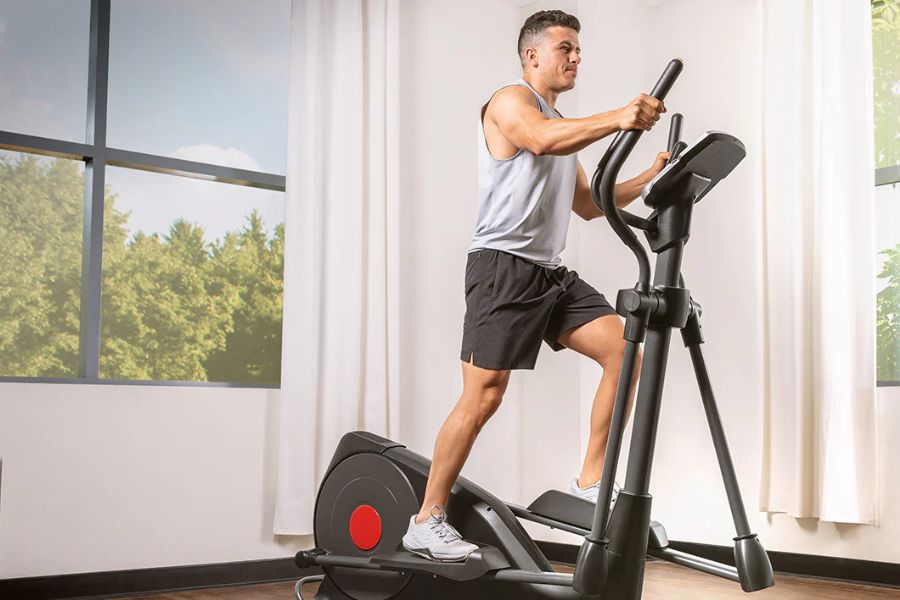
- Push your legs down and back, then pull up and forward in a smooth, cyclical motion to avoid overusing just one part of your stride (HSS).
- Choose resistance that is challenging but still controllable so you are not straining or bouncing.
If you are a beginner, high intensity work near 90 to 100 percent of your maximum heart rate might be too much at first. Gradually build toward harder intervals and listen to your body, especially if you have any medical conditions or are returning from an injury (Set For Set).
Combine elliptical training with strength work
For the best results in weight loss and overall health, pair your high intensity elliptical workouts with regular strength training. Lifting weights or doing bodyweight exercises builds muscle, and more muscle helps raise your basal metabolic rate, which means you burn more calories even at rest (Garage Gym Reviews).
You might schedule 2 or 3 elliptical HIIT sessions each week and 2 or 3 strength sessions on alternate days. Over time, this mix helps improve your body composition, supports better posture, and makes everyday activities feel easier.
Find a weekly rhythm that works for you
Health organizations suggest about 150 minutes of moderate or 75 minutes of vigorous aerobic exercise per week, or a blend of both. You can meet those goals with a mix of high intensity and lower intensity elliptical days (HSS, Healthline).
A simple starting plan could look like this:
- 2 days of high intensity elliptical intervals, 20 to 30 minutes each
- 1 to 2 days of steady, moderate elliptical workouts or other gentle cardio
- 2 to 3 days of strength training, even if some are very short sessions at home
Adjust the details around your schedule, energy levels, and recovery. The key is consistency. Even short workouts matter when you repeat them week after week.
If you want to start right away, choose one simple interval structure from this guide and try it during your next gym visit. Pay attention to how you feel, adjust the resistance as needed, and let your progress build from there.
About the Author