In the world of strength training, a solid quad muscle workout can completely transform your routine. Whether you want to boost overall fitness, support activities like running and cycling, or simply shape and tone your thighs, directing extra attention to your quadriceps delivers significant benefits.
By training your quads, you help stabilize your knees, improve your posture, and make it easier to carry out everyday tasks like climbing stairs or lifting objects. The great news is that strengthening this powerful muscle group doesn’t require complex tools or a daunting schedule. With the right exercises, proper form, and a consistent plan, you can enjoy stronger legs and greater confidence in many aspects of your life.
Understand your quadriceps
Your quadriceps are a group of four muscles located at the front of your thigh. These muscles work together to extend your knees and help stabilize your hips. Whenever you walk, jog, or simply stand up from a chair, your quads spring into action to support those movements. Because they are responsible for so many daily tasks, they benefit massively from a targeted approach to training and flexibility.
Building your quadriceps involves gradually challenging them with bodyweight moves, free weights, or even resistance machines. However, developing strong, balanced quads is about more than raw power. Proper muscle balance prevents aches, strains, or issues that might arise when certain muscle groups become too dominant or remain underused. By understanding the anatomy and function of your quads, you’re already a step closer to choosing the right exercises and routines for optimal results.
Practice essential bodyweight exercises
If you’re aiming for a straightforward but effective quad muscle workout routine, bodyweight moves are a great place to start. Not only are they accessible, but they’re also efficient. You can perform these exercises anywhere, making it easier to stick with a consistent schedule. The key is to focus on quality over quantity and perfect your technique for each move.
Below are four bodyweight exercises that emphasize your quadriceps:
- Squats: Stand with feet shoulder-width apart, keep your weight in your heels, and lower your hips as if you’re sitting on a chair. Push through the balls of your feet to stand again.
- Lunges: Take a large step forward, lower your body until your front knee reaches roughly a 90-degree angle, then power back up. Alternate legs to develop balanced strength.
- Step-ups: Use a sturdy bench or step. Step one foot onto the surface, then drive up through your heel to bring your other foot alongside it. Step down and repeat on the opposite leg.
- Wall sits: Stand with your back against a wall, lower yourself into a seated position, and hold it. This static move quickly fires up your quads, building endurance.
When you start, aim for a moderate number of repetitions and sets (for example, 3 sets of 8–12 reps) until you feel confident in your form. As you get stronger, you can increase the number of reps, extend your wall-sit hold times, or try one-legged variations to make these exercises more challenging.
Use smart weighted moves
Once you’re comfortable with your bodyweight exercises, you may consider adding weights for extra resistance. Weighted moves recruit additional muscle fibers and can help you build strength more quickly. At the same time, they give your quads a new stimulus to grow and adapt, especially if you’ve already mastered basic movements.
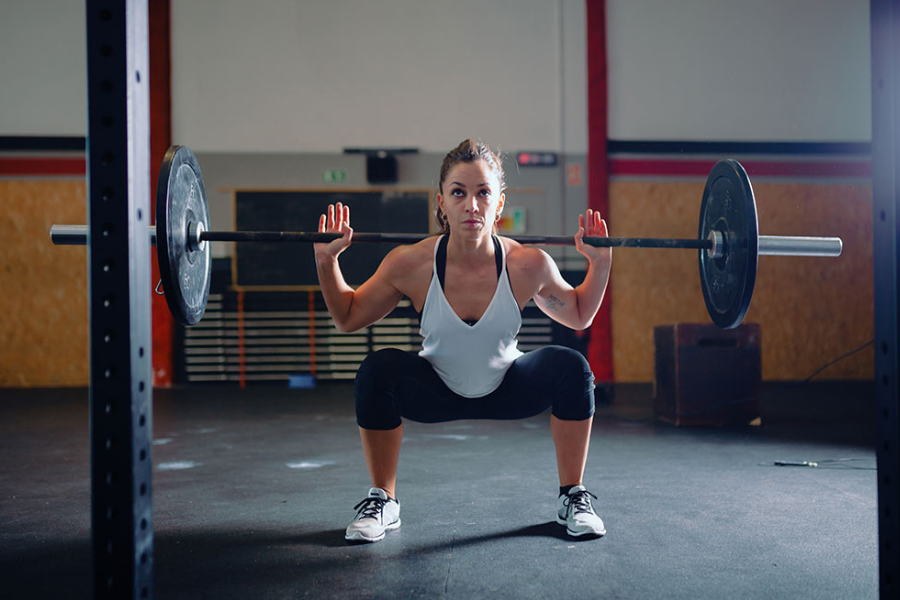
Exercises like barbell back squats, front squats, and weighted lunges are popular choices. A back squat places the barbell across your upper back, so you engage your quads while also requiring core stability to maintain upright posture. In a front squat, you hold the barbell in front near your shoulders. This position shifts emphasis onto your quads and your core, helping you maintain a strong upper-body alignment. Weighted lunges operate in a similar way to unweighted lunges, but the added load demands more power from your lower body to drive yourself out of the bottom position.
Dumbbell goblet squats are a helpful starting point if you’re new to weights. You hold a single dumbbell at chest level while squatting. The movement feels stable, and the position of the weight forces you to focus on keeping your chest lifted and your quads active. If barbells seem intimidating at first, goblet squats can serve as a safe bridge between bodyweight moves and heavier barbell lifts.
Focus on form and alignment
As you progress, it’s easy to get excited and add more weight or volume to your workouts. However, incomplete range of motion or poor alignment could undermine your results or even risk an injury. Before trying new weights or advanced variations, make sure you’re executing each exercise with proper form.
One key tip is to maintain a strong, neutral spine whenever you squat or lunge. This position protects your lower back and lets your quadriceps truly handle the workload. Keep your knees aligned with the direction of your toes to reduce unnecessary strain on your joints, and actively press your feet into the ground to improve stability. Remember that consistency beats intensity when building muscle: you’ll make steady progress if you perfect your technique and add small increments over time.
You’ll also want to embrace full range of motion to maximize your quad engagement. In squats and lunges, lowering yourself to the point where your thighs are parallel to the floor or slightly below encourages more muscle fibers to activate. Shortening the movement might let you lift heavier barbells, but it won’t target as much muscle tissue. By emphasizing form and alignment, you reap all the benefits of a quad muscle workout without exposing yourself to undue risk.
Support your workouts with rest
Your quads need time to grow, adapt, and repair. It’s tempting to work the same muscle group day after day, hoping for rapid gains, but you may risk fatigue or overtraining if you don’t offer your body a chance to recover. This principle holds especially true for quads, which endure a lot of stress just from daily activities.
Aim for at least one rest day between intensive quad sessions to reduce strain and speed up muscle repair. Active recovery, such as gentle walks or light cycling, helps keep blood flowing and maintains flexibility. Spending time on proper stretching and foam rolling also loosens tight muscles. This approach helps prevent soreness and prepares you for your next workout so you can bring full energy to each session.
Including enough high-quality protein in your diet can further support muscle repair. Whether you choose lean meats, fish, plant-based protein, or protein shakes, fueling your body after workouts can help you bounce back faster. Hydration matters too, especially if your sessions are intense or you train in warm conditions. Drinking enough fluids keeps your joints lubricated and your muscles firing at their best.
Wrap up your progress
The best quad muscle workout plan is ultimately the one you enjoy and can sustain. If you’re eager for a noticeable transformation, remember that small gains add up over weeks and months. A strong routine with bodyweight basics, followed by strategic weighted exercises, is an excellent formula for firm, powerful thighs. Combine that effort with solid rest and thoughtful nutrition, and you’ll set your legs up for success.
Over time, you’ll likely notice a difference in how you perform everyday tasks. Climbing stairs becomes easier, your knees feel more stable, and you’ll feel that satisfying strength when you carry groceries or play your favorite sports. These everyday blessings prove that investing in quad training offers rewards beyond sheer muscle definition.
Give yourself time to explore different variations until you find the moves you love most. Listen to your body as you adjust weights or increase repetitions. With consistency and good form, you’ll keep your quads working in your favor, whether you’re crushing a workout or simply living your day with energy and confidence.
About the Author