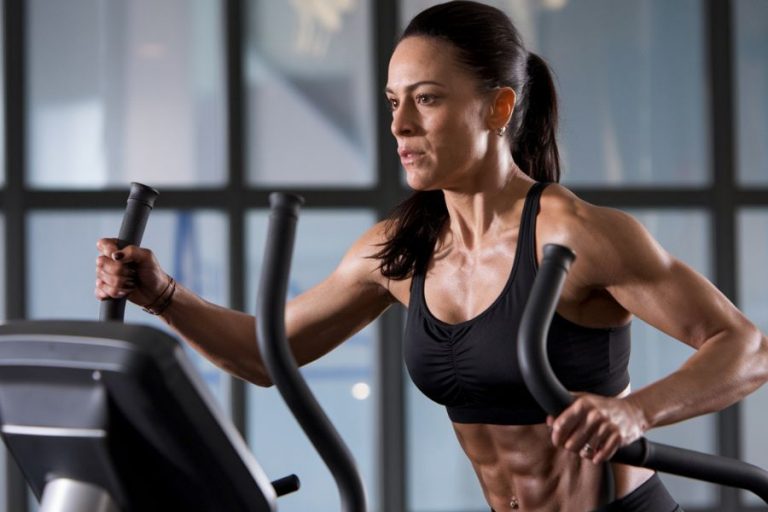
A dumbbell ab workout is one of the simplest ways to make your core training feel more effective in less time. By adding just a little weight, you challenge your abs, obliques, and lower back to work harder, which can help you build strength and muscle definition more quickly than with bodyweight moves alone.
You will not spot reduce belly fat with ab exercises alone, but you can absolutely use this friendly dumbbell routine to build a stronger, tighter midsection that supports everything else you do.
Why dumbbell ab workouts work
Bodyweight ab moves are a good starting point, but your muscles adapt. To keep progressing you need more resistance. That is where dumbbells come in.
When you hold a dumbbell during ab exercises, you:
- Add resistance so your muscles work harder and grow stronger
- Engage stabilizer muscles in your low back and hips to control the weight
- Improve balance, coordination, and posture by teaching your core to resist movement, not just create it
Research-backed guides highlight that weighted ab exercises, including dumbbell moves, activate stabilizers and intercostal muscles more effectively than bodyweight work alone, which lets you get more benefit from fewer reps when you use good form.
You can tailor resistance to your current fitness level. Beginners can start with very light weights, even 2 to 5 pounds, and gradually increase as exercises feel easier.
A quick note about belly fat and visible abs
If your main goal is to “blast belly fat,” it helps to set realistic expectations. A dumbbell ab workout does a lot for you, but it cannot directly burn fat from your midsection.
Here is what this routine can do:
- Build stronger, thicker abdominal muscles
- Improve core stability so daily tasks feel easier
- Support spine health and help prevent or ease lower back pain
To make your abs more visible, you need an overall plan that blends:
- Strength training for your whole body
- Regular cardio
- A nutrition approach that supports a healthy body fat level
Guides that focus on dumbbell ab training are clear that visible abs require fat loss in addition to strong core muscles and that no ab circuit on its own will flatten your stomach.
How to use this dumbbell ab workout
This dumbbell ab workout is beginner friendly but still challenging. You can do it 2 to 3 days per week on non-consecutive days so your core has time to recover.
Suggested structure
For each exercise:
- Do 1 to 3 sets
- Aim for 8 to 15 reps per set
- Rest for about 30 to 45 seconds between sets
If you are new to weighted ab training, start with:
- One set of each exercise
- A light dumbbell that feels easy for the first few reps but tiring by the last 2 or 3
As you get stronger, you can:
- Add another set
- Increase the weight slightly
- Slow down the lowering portion of each rep to increase time under tension
If any move causes sharp pain, especially in your lower back or neck, stop and adjust. It might mean you need lighter weight, fewer reps, or a simpler variation.
Exercise 1: Dumbbell Russian twist
The dumbbell Russian twist targets your obliques along the sides of your torso, as well as the rectus abdominis and spinal stabilizers. It is a great choice for building rotational strength and a firm waistline.
How to do it
- Sit on the floor with your knees bent and heels on the ground.
- Hold one dumbbell with both hands at chest height.
- Lean back slightly so your torso is at about a 45 degree angle. Keep your spine long instead of rounding.
- Brace your core as if preparing for a light punch to the stomach.
- Rotate your torso to the right and bring the dumbbell toward the floor beside your hip.
- Rotate through center and then to the left.
- Keep your head moving with your shoulders so your neck stays in line.
That is one rep to each side.
To make this easier, perform the twist without a dumbbell and lightly touch both hands to the floor on each side. To make it harder, lift your feet off the floor and keep them elevated throughout the set, which significantly increases the challenge.
Exercise 2: Dumbbell standing wood chop
The standing wood chop trains diagonal patterns through your core. You work the rectus abdominis, transverse abdominis, internal and external obliques, and even your shoulders and upper and lower back. This movement carries over especially well to sports that involve rotation such as tennis and golf.
How to do it
- Stand with your feet a little wider than hip-width apart and hold a dumbbell with both hands.
- Start with the dumbbell near one hip, for example your right hip, with a small bend in your knees.
- Brace your core and sweep the dumbbell up and across your body toward the opposite side, finishing above your left shoulder. Rotate through your torso and allow your back foot to pivot.
- Control the motion as you bring the dumbbell back down to your starting hip.
Do all reps on one side, then switch.
Focus on controlled movement rather than speed. You want your abs and obliques to drive the motion, not your arms.
Exercise 3: Dumbbell butterfly sit-up
The butterfly sit-up changes your leg position so your hips cannot help as much, which lets your abs do more of the work. Adding a dumbbell increases the challenge further.
How to do it
- Lie on your back and bring the soles of your feet together so your knees drop out to the sides in a butterfly position.
- Hold a light dumbbell close to your chest.
- Press your lower back gently into the floor and brace your core.
- Curl your torso up toward your thighs, keeping the dumbbell near your chest, until you are sitting upright.
- Lower back down with control, one vertebra at a time, keeping tension in your abs.
If you need a bit more range of motion, you can place your feet lightly against a wall so you have something to press into. This helps you sit up more smoothly and increase the challenge on your abs.
Exercise 4: Dumbbell overhead crunch
The overhead crunch adds a shoulder and upper back stability component. Holding the dumbbell above you shifts your center of gravity so your abs and hip flexors work harder.
How to do it
- Lie on your back with knees bent and feet flat on the floor.
- Hold one dumbbell with both hands and extend your arms straight up toward the ceiling. Keep a small bend in your elbows.
- Engage your core and lift your head, neck, and shoulders a few inches off the floor, crunching your rib cage toward your pelvis while the dumbbell stays over your chest.
- Pause briefly at the top, then lower back down under control.
Start with one dumbbell held in both hands. As you get stronger, you can progress to one dumbbell in each hand. This variation also challenges your lower back, hips, and shoulder stabilizers, so choose a weight that lets you maintain control throughout the movement.
Exercise 5: Weighted plank row
Weighted plank rows, sometimes called renegade rows, double as a core and upper-body exercise. Your abs, obliques, and lower back must stay tight to keep your torso stable while you pull the dumbbell.
How to do it
- Place two dumbbells on the floor about shoulder-width apart.
- Get into a high plank position with your hands gripping the dumbbells, shoulders stacked over wrists, and feet set slightly wider than hip width for balance.
- Brace your core and squeeze your glutes so your body forms a straight line from head to heels.
- Shift your weight slightly to one side and row the opposite dumbbell up toward your ribcage, keeping your elbow close to your body.
- Lower the dumbbell back to the floor with control, then switch sides.
Try to minimize side-to-side rocking. The less your hips sway, the more your core is working. If this is too challenging, you can perform the rows from a kneeling plank or row a single dumbbell while the other hand stays flat on the floor.
Exercise 6: Lying dumbbell leg raise crunch
Lying leg raise crunches emphasize your lower abs, which can be harder to feel with standard crunches. Adding a dumbbell makes your core work against more resistance.
How to do it
- Lie on your back with your legs straight and your arms extended toward the ceiling, holding a light dumbbell.
- Press your lower back gently into the ground and brace your core.
- Keeping your legs as straight as you comfortably can, lift them until they form about a 90 degree angle with your torso.
- At the same time, lift your head, neck, and shoulders slightly off the floor, reaching the dumbbell toward your toes.
- Slowly lower your legs and upper back down, stopping just before your heels touch the ground so your abs stay engaged.
Move slowly so you can really feel your lower abs working. If your lower back starts to arch off the floor, bend your knees a little or lift your legs only as high as you can maintain contact with the floor through your lower spine.
How to pick the right dumbbell weight
For ab training, more weight is not always better. You want a challenging load that still allows controlled, pain free movement.
A simple guideline:
- If you can easily do more than 15 reps with perfect form, increase weight slightly next time.
- If your form breaks down before you reach 8 reps, or you feel strain in your neck or lower back, choose a lighter weight.
According to guidance from Chuze Fitness, starting with lighter weights and gradually increasing resistance is ideal for avoiding injury and steadily building core strength.
Safety tips for your dumbbell ab workout
Weighted ab exercises are very effective, but good form and progression matter.
Keep these points in mind:
- Focus on quality, not speed. Controlled reps are more effective for muscle growth and safer for your spine.
- Keep your neck neutral. Try to imagine holding a small orange under your chin to avoid pulling on your neck during crunches and sit-ups.
- Watch your lower back. If you feel pinching or sharp discomfort, reduce your range of motion or modify the move.
- Progress gradually. Avoid jumping to heavy weights too quickly, which can stress your lower back and abdominal wall.
If you have any history of lower back issues, hernias, or diastasis recti, check in with a medical or fitness professional before loading your core heavily.
You will see the best results from this dumbbell ab workout when you combine it with full-body strength training, regular cardio, and a nutrition plan that supports your goals.
Putting it all together
Here is one simple way to structure this dumbbell ab workout:
- Dumbbell Russian twist, 2 sets of 10 to 12 reps per side
- Dumbbell standing wood chop, 2 sets of 8 to 10 reps per side
- Dumbbell butterfly sit-up, 2 sets of 10 to 15 reps
- Dumbbell overhead crunch, 2 sets of 10 to 15 reps
- Weighted plank row, 2 sets of 8 to 10 reps per side
- Lying dumbbell leg raise crunch, 2 sets of 8 to 12 reps
Rest briefly between sets and focus on breathing steadily. Aim to complete this routine two times per week at first. As it starts to feel easier, you can add a third day, increase the weight slightly, or add a third set of one or two exercises.
With just a pair of dumbbells and a small patch of floor, you can build a stronger, more resilient core that supports better posture, smoother movement, and long term back health.
About the Author