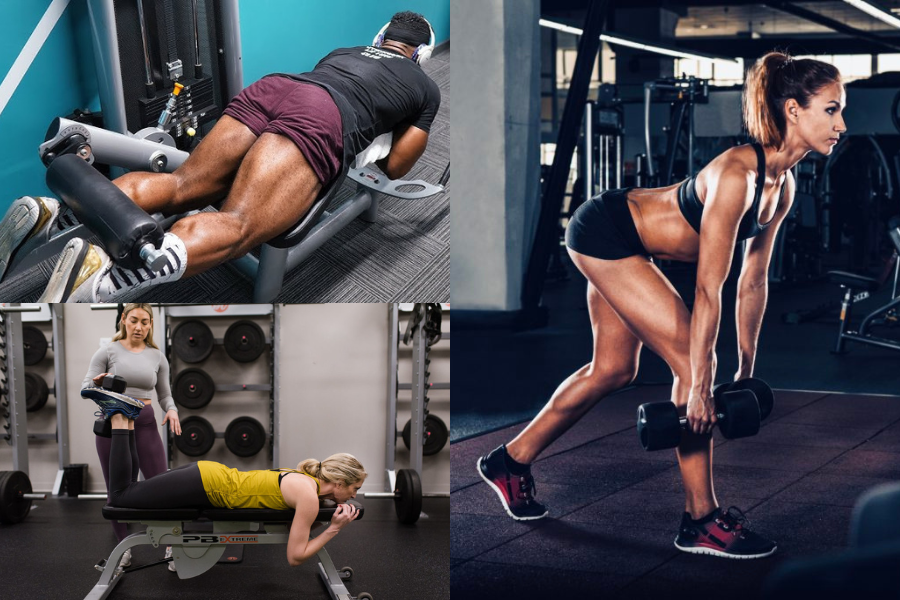
A strong hamstring and glute workout does more than build muscle. It supports your posture, protects your lower back and knees, and can even help your metabolism by increasing lean muscle mass. With a few focused exercises and a simple plan, you can train these muscles effectively at home or in the gym.
Understand your glutes and hamstrings
Your glutes and hamstrings work together any time you walk, climb, or run. When they are strong and active, everyday movement feels easier and more stable.
The glutes include three muscles. The gluteus maximus is the largest muscle in your body and drives hip extension, so it helps you stand up from a chair, climb stairs, and support your lower back. The gluteus medius and minimus help stabilize your hips during single leg activities such as walking or lunges, which is critical for balance and injury prevention and is highlighted in recent beginner fitness guidance from Nutrisense in 2023.
Your hamstrings sit along the back of your thighs. They include the biceps femoris, semitendinosus, and semimembranosus, and they handle both hip extension and knee flexion. They help you bend your knees, push off the ground, and decelerate your legs when you run or jump. Strong and flexible hamstrings reduce the risk of strains that are common in running and jumping sports.
Why these muscles matter for performance and health
Training your hamstrings and glutes is not just for athletes. These muscles are part of your posterior chain, the group of muscles that keeps you upright and moving efficiently.
Stronger lower body muscles burn more calories at rest than fat stores, so a regular hamstring and glute workout can support a higher metabolic rate and overall metabolic health. This is especially helpful if you are trying to manage weight or blood sugar.
From an injury standpoint, poor glute function is linked to more stress on the lower back because your spine has to compensate for weak hip muscles. Strong hamstrings also help protect your knees by controlling how your leg slows down with each step and jump. This is one reason they are a key focus for football and soccer players who rely heavily on leg power.
If you run, your glutes and hamstrings are even more important. They extend your leg behind you and bend your knee, especially as you speed up. Many running injuries trace back to weak or underactive glutes and hamstrings.
When you strengthen your glutes and hamstrings, you are not only building muscle size. You are also improving stability, power, and long term joint health.
Warm up before you start
Good glute and hamstring training starts with a warm up that raises your heart rate and activates the right muscles. This prepares your body for heavier work and lowers injury risk.
Begin with 5 to 10 minutes of light cardio, such as brisk walking, cycling, or easy jogging. The goal is to feel slightly warm and a bit out of breath, not exhausted. Nutrisense recommends pairing this with simple activation drills like knee hugs, glute bridges, lunges with elbow to instep, and hip flexions to get the hips and hamstrings firing before your main workout.
You can try a short sequence like this:
- Walking knee hugs, 10 steps each side
- Bodyweight glute bridges, 2 sets of 10
- Lunges with elbow to instep, 6 steps each side
- Leg swings or hip flexions, 10 each leg
Move through each exercise with control. You want to feel your hips and back of your legs gradually loosen and switch on.
Build your simple hamstring and glute workout
A balanced hamstring and glute workout combines heavy compound lifts with more targeted isolation moves. Compound exercises work several muscles at once and let you use more weight. Isolation moves help you feel and strengthen specific areas that might be lagging behind.
Research and coaching guidance highlight eight especially effective exercises for glute and hamstring development: squats, conventional deadlifts, hip thrusts, Romanian deadlifts, step ups, split squats, hamstring curls, and hip extensions. You do not need to perform all of them in one session. Instead, you can focus on a small group and rotate over time.
Sample beginner friendly routine
You can use this simple structure two times per week on nonconsecutive days:
- 1 main squat or hinge movement
- 1 secondary hip extension move
- 1 unilateral (single leg) exercise
- 1 isolation exercise for hamstrings
For example:
- Squats or conventional deadlifts, 3 sets of 6 to 8 reps
- Barbell or dumbbell hip thrusts, 3 sets of 8 to 10 reps
- Step ups or split squats, 3 sets of 8 to 10 reps per leg
- Hamstring curls, 3 sets of 10 to 12 reps
If you are a complete beginner, you can replace barbell lifts with lighter dumbbell or bodyweight variations. A beginner glute and hamstring workout might include single leg Romanian deadlifts, simpler deadlifts with light weights, dumbbell step ups, dumbbell hip thrusts, dumbbell reverse lunges, hamstring curls, and squats, done for multiple sets with rest between each.
Learn key exercises step by step
Knowing why certain movements work is helpful, but good technique is what keeps you safe and lets you progress. A useful approach is the REP model, which focuses on movements that are repeatable, efficient, and meet simple points of performance instead of rigid anatomy rules.
Here is how to think about a few core exercises in your hamstring and glute workout.
Squats
Squats mainly target your quadriceps in the front of the thighs, but they still work your glutes and, to a lesser degree, your hamstrings. They are valuable for full lower body strength and can be adjusted with stance width or load to match your level.
When you squat, keep your chest comfortably lifted, push your hips back slightly, and bend your knees so they track roughly over your toes. Aim for a range of motion that feels stable and pain free. According to ISSA, squats are more quad focused, so you will rely on other moves for maximal hamstring activation.
Deadlifts and Romanian deadlifts
Deadlifts are one of the most effective hamstring builders because they use heavy weights and involve both hip and knee joints. They emphasize hip extension, which directly trains the posterior chain. A typical muscle building prescription is around 3 sets of 6 to 8 reps, with plenty of rest between sets.
Romanian deadlifts, or RDLs, start from a standing position and focus on lowering the weight with a slight knee bend and a strong hip hinge. This variation places extra emphasis on the eccentric, or lowering, part of the movement and trains the hamstrings, glutes, and spinal erectors for both strength and size. RDLs also carry over well to heavier conventional deadlifts because of the similar mechanics.
Hip thrusts and glute bridges
Hip thrusts are a more loaded version of the glute bridge. You rest your upper back on a bench, plant your feet, and thrust your hips up against resistance. This exercise is especially effective for strengthening the gluteus maximus and improving hip extension strength. It also activates the hamstrings without putting as much stress on your lower back, which makes it a good pick if your back is sensitive.
You can start with bodyweight glute bridges on the floor for 3 sets of about 10 reps, then progress to barbell hip thrusts for 3 sets of 8 to 10 reps as you gain confidence and control.
Step ups and single leg work
Step ups are a powerful compound movement for the glutes and hamstrings. You step onto a box or bench, drive through the front heel, and stand tall before lowering with control. Studies show that step ups can create muscle activation levels comparable to squats, deadlifts, and hip thrusts. You can progress them by increasing the step height or holding weights.
Single leg deadlifts are another great option. They challenge your balance and recruit more of your posterior chain for stability, including the gluteus medius. A common approach is 3 sets of 6 to 8 controlled reps per leg.
Hamstring curls and hip extensions
Hamstring curls isolate the muscles at the back of your thighs. Whether you use a machine, dumbbell, or stability ball, take your time with each rep. Slowly lower the weight for a full stretch and then curl it back for a complete contraction. Training one leg at a time with standing or kneeling machines can be especially helpful if you have imbalances between legs.
Hip extension moves like glute bridges, Romanian deadlifts, and squats all activate the semimembranosus, semitendinosus, and the long head of the biceps femoris muscles. These are the parts of the hamstrings that power sprinting, jumping, and bounding movements.
Avoid common training mistakes
Many people undertrain their hamstrings compared with more visible muscles like the biceps, even though hamstrings make up a large portion of leg muscle mass. They often receive fewer sets and less intensity.
To avoid this, you can:
- Give your hamstrings at least as many quality sets as other major muscles
- Include at least one heavy hip hinge, such as deadlifts or RDLs
- Use advanced techniques like slower eccentrics or occasional drop sets on curls once you are experienced
Another common issue is staying at the same weight and rep range for months. To keep building muscle and strength, gradually increase the load or difficulty when your current sets feel consistently manageable. This could mean adding a small amount of weight, an extra rep or two, or choosing a slightly more challenging variation.
Finally, pay attention to technique. The REP model encourages you to move in a way that you can repeat, that feels efficient, and that hits the key points of performance for your body. That might look a bit different from someone else, and that is normal.
Support recovery and mobility
Your work does not end with the last rep. Recovery and mobility help you feel better between workouts and stay consistent over time.
Foam rolling your glutes and hamstrings for 30 to 60 seconds on each side after training can ease tightness and soreness. Combined with light stretching, it supports flexibility and helps reduce post workout pain.
If you prefer to train at home without equipment, you can still challenge these muscles. An at home glute and hamstring workout might include jumping jacks, leg swings, squat jumps, and single leg variations that improve muscle activation and help correct side to side imbalances.
When to get professional help
If you are new to strength training or have a history of injury, it is a smart idea to get guidance before you push hard. A personal trainer or physical therapist can help you learn proper form, choose the right exercise variations, and spot early signs of strain or overload. This reduces your risk of injury while you progress.
Your results also depend on what happens outside the gym. Working with a sports nutritionist can help you match your protein intake, overall calories, and recovery habits to your training goals. That way, your hamstring and glute workout supports both muscle growth and broader metabolic health.
Start with a few of the exercises above, focus on consistent form, and build up week by week. Even a simple routine can make a noticeable difference in your strength, posture, and confidence when you move.
About the Author