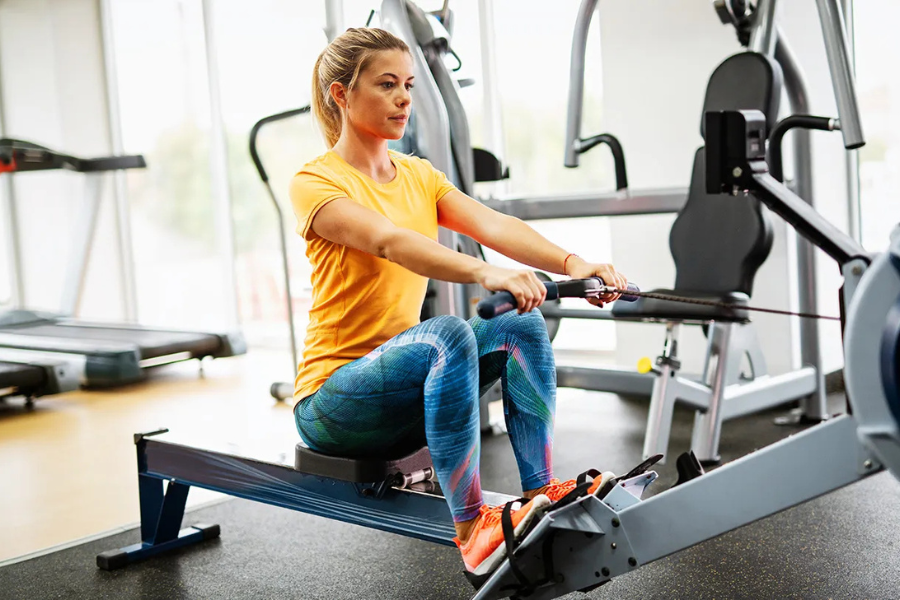
High intensity rowing workouts can be a powerful way to lose weight, build strength, and improve your heart health, all in less time than a long run on the treadmill. With the right setup and form, you get a full body, low impact workout that fits into a busy day and still feels surprisingly fun.
Below, you will find how high intensity rowing works, why it is so effective, and exactly how to do it safely, even if you are a beginner.
Understand what high intensity rowing is
High intensity rowing workouts are a form of HIIT, or high intensity interval training. You alternate short bursts of near maximum effort on the rowing machine with periods of easy rowing or complete rest.
This style of training can burn more calories in less time than steady, moderate rowing and it continues to raise your calorie burn for hours after your workout ends (PureGym). A typical high intensity rowing session lasts between 10 and 30 minutes, including warm up and cooldown, which makes it realistic to stick with even on a tight schedule (PureGym).
During the hard intervals your heart and lungs work close to their limits. This helps improve cardiovascular fitness more efficiently than steady state cardio and raises your threshold for intense exercise over time (PureGym).
Know why rowing is so effective
When you row with good technique you use your legs, glutes, core, back, and arms in each stroke. Rowing machines can activate nearly 85 percent of your muscles in one fluid motion, which makes rowing one of the most efficient indoor workouts you can choose (NordicTrack).
Most of the power should come from your lower body. Around 65 to 75 percent of the effort is generated by your legs and the remaining 25 to 35 percent comes from your upper body muscles (Healthline). That balance is part of why rowing feels so demanding, especially when you increase the intensity.
You also get strong cardio benefits. Rowing workouts have similar peak oxygen consumption (VO₂peak) to treadmill or elliptical training, but they put far less stress on your joints (NordicTrack). If running bothers your knees, rowing can give you comparable heart and lung benefits with less impact.
Even short, low volume HIIT rowing sessions under 15 minutes have been shown to significantly improve fitness, blood pressure, blood sugar control, and heart function, on par with or better than longer moderate workouts (Healthline).
Use the benefits for weight loss and health
If your main goal is weight loss or general health, high intensity rowing workouts can help you in several ways.
During vigorous rowing, a person who weighs about 155 pounds can burn roughly 369 calories in just 30 minutes (Healthline). When you focus those 30 minutes into structured intervals, you create a strong calorie burn in less time, while also building muscle that supports your metabolism.
Rowing workouts challenge both your aerobic and anaerobic energy systems. That means you improve your ability to handle long efforts and short, powerful bursts at the same time. Research suggests that while treadmill exercise may produce slightly higher peak fat oxidation than rowing, you still get strong fat burning benefits from rowing, along with the added advantage of reduced joint impact (NordicTrack).
Because rowing is low impact and joint friendly, you can train consistently without the pounding your body might feel from high impact activities like running and plyometric workouts (Healthline). Consistency matters more than any one workout, so choosing an option you can repeat several times each week is key.
Learn the basic rowing technique
Good technique makes high intensity rowing workouts both safer and more effective. If you are new to rowing, spend time at an easy pace first so these positions become automatic.
Each stroke has four main phases:
-
Catch
You start at the front of the machine with your knees bent and shins vertical. Your torso leans slightly forward from the hips with a straight back, and your arms are extended toward the handle. -
Drive
Push strongly through your legs first, then open your hips and lean back slightly, then pull the handle toward your lower ribs. A common cue is “legs, back, arms.” Most of your power should come from that leg drive (RP3 Rowing). -
Finish
At the end of the drive your legs are straight, your torso is slightly leaned back, and the handle is close to your ribcage. Your shoulders are relaxed rather than shrugged. -
Recovery
Reverse the sequence in a relaxed way: extend your arms first, then hinge your torso forward, then bend your knees and slide back to the catch. Think “arms, back, legs” on the way back (RP3 Rowing).
Aim for a 1 to 2 ratio between the drive and the recovery. The powerful drive should be quick, and the recovery should take about twice as long. This rhythm helps your muscles reset for the next stroke, protects your lower back, and lets you maintain a sustainable pace in high intensity sets (RP3 Rowing).
Pay attention to your grip as well. Hold the handle with your fingers, keep your wrists flat, and avoid squeezing too hard. A relaxed, neutral grip helps prevent hand and wrist pain and slows down fatigue (RP3 Rowing).
Set up your rowing machine correctly
How you set your rowing machine matters just as much as how hard you row. Before you start an intense session, take a minute to adjust a few key settings.
Use a moderate damper or resistance setting, usually between 3 and 5 on many machines. Higher settings around 8 to 10 can feel impressive at first, but they often break your form, overload your back, and do not actually give you better fitness results. Your technique and effort are what really drive intensity, not simply cranking the resistance to the maximum (RP3 Rowing).
Adjust the foot straps so your feet are secure but your ankles can move. You should be able to reach the catch without your heels having to lift excessively.
Finally, make sure the monitor is visible. You will want to see your stroke rate, pace, and time, especially when you are working through intervals.
Warm up before every hard session
A short but focused warm up will help you row harder and reduce your risk of injury. Before any high intensity rowing workout, give yourself at least 5 to 8 minutes to prepare.
A rowing specific warm up might look like this:
- 2 to 3 minutes of joint mobility off the machine, such as gentle hip circles, bodyweight squats, and arm swings
- 3 to 5 minutes of light rowing at an easy pace, gradually increasing your stroke rate and paying attention to technique, rhythm, and breathing
This combination has been shown to improve performance in high intensity rowing and lower the chance of strains, especially in your back and shoulders (RP3 Rowing).
Use the warm up time to check that you feel comfortable with the “legs, back, arms” and “arms, back, legs” sequence. If anything feels off at low intensity, fix it before you turn things up.
Try beginner friendly high intensity rowing workouts
You do not need to jump straight into advanced intervals. You can start with simple structures that build your technique and tolerance for effort. Below are two beginner friendly options that keep your total work time around 15 to 20 minutes.
1. 20 minute starter HIIT session
This workout alternates short sprints with longer rest periods. It is a good way to get used to pushing hard without feeling overwhelmed.
- 5 minute warm up at an easy pace
- 30 seconds of strong rowing at about 80 to 90 percent effort
- 90 seconds of very light rowing or complete rest
Repeat the 30 second / 90 second pattern for 8 rounds, then cool down for 3 to 5 minutes. As your fitness improves, you can slowly shorten the rest periods while keeping the hard efforts the same length (NordicTrack).
2. 15 minute pyramid workout
This session uses gradually increasing and then decreasing effort. It is mentally engaging and a good intro to pacing.
- 5 minute warm up at an easy pace
- 30 seconds at around 60 percent effort, then 60 seconds at a moderate pace
- 30 seconds at around 70 percent effort, then 60 seconds at a moderate pace
- 30 seconds at around 80 percent effort, then 60 seconds at a moderate pace
Repeat this pyramid 2 to 3 times depending on how you feel, then cool down for 3 to 5 minutes. Beginners can start with two rounds, and work up to five rounds total for about 15 minutes of focused work (Garage Gym Reviews).
In both workouts, use your breathing and the “talk test” as a guide. If you can talk in full sentences comfortably, you are probably under 55 percent effort. If you can only speak a few words at a time, you are closer to or above 80 percent effort, which is the zone you want for the short high intensity intervals (Garage Gym Reviews).
Protect your back, knees, and joints
One of the main advantages of rowing is that it is low impact and friendly to your joints. You get high energy, high intensity exercise without the pounding that comes from running or jumping. This makes rowing a good choice if you are prone to knee or joint pain (PureGym).
To keep it that way, stay mindful of your form. Many rowing related back issues come from failing to engage your core or from trying to push through your legs and lean back at the same time instead of in sequence. When you separate those movements and maintain a neutral spine, you reduce strain on your lower back (Healthline).
If you notice a heavy, burning feeling in your legs during high intensity sets, that is normal. The drive phase uses your quads, hamstrings, and glutes in a similar way to high volume squats or lunges (Garage Gym Reviews). Use your recovery periods to let that sensation fade before you push again.
Rowing ergometers are also used in rehabilitation settings because they offer a controlled, joint friendly way to build strength and cardiovascular health. Newer powered eccentric rowing machines, which add resistance as you return to the catch position, can further increase oxygen use, heart rate, and muscle activation, which may be useful for rehab and performance training under professional guidance (NordicTrack).
If you feel sharp or persistent pain, especially in your back or knees, stop and consult a medical professional before continuing.
Quick safety check before you go hard:
Are you warmed up, is your damper in the 3 to 5 range, and are you following “legs, back, arms” on the drive and “arms, back, legs” on the recovery? If not, fix those three first.
Build a realistic weekly rowing routine
High intensity rowing workouts are powerful, so you do not need to do them every day to see benefits. For most people, 2 to 3 HIIT rowing sessions per week is plenty, especially if you are just starting.
You might structure your week like this:
- 2 days of high intensity rowing workouts
- 1 to 2 days of steady, moderate rowing or other light cardio
- 1 to 3 days of strength training or mobility work
- At least 1 full rest day
As your conditioning improves, you can add rounds to your existing workouts, slightly increase your effort, or try more advanced interval formats. Because elite rowers rely on short bursts of explosive power followed by partial recovery, you can think of your own HIIT rowing as a scaled version of how professionals train for performance (NordicTrack).
If you also want to boost your power for faster short efforts, consider adding off machine exercises like jump squats or box jumps. Research in collegiate rowers found that vertical jump height, which reflects lower body power, strongly predicts performance in a 500 meter row (NordicTrack).
Take your next step on the rower
You do not have to overhaul your entire fitness routine to benefit from high intensity rowing workouts. Start by learning the stroke, setting your damper to a comfortable level, and trying one short interval session this week.
As you get comfortable, you can adjust your workouts to match your goals, whether that is weight loss, heart health, or simply feeling stronger and more energized. With just one machine and a small time commitment, you can turn rowing into a safe, effective, and even enjoyable anchor of your fitness plan.
About the Author