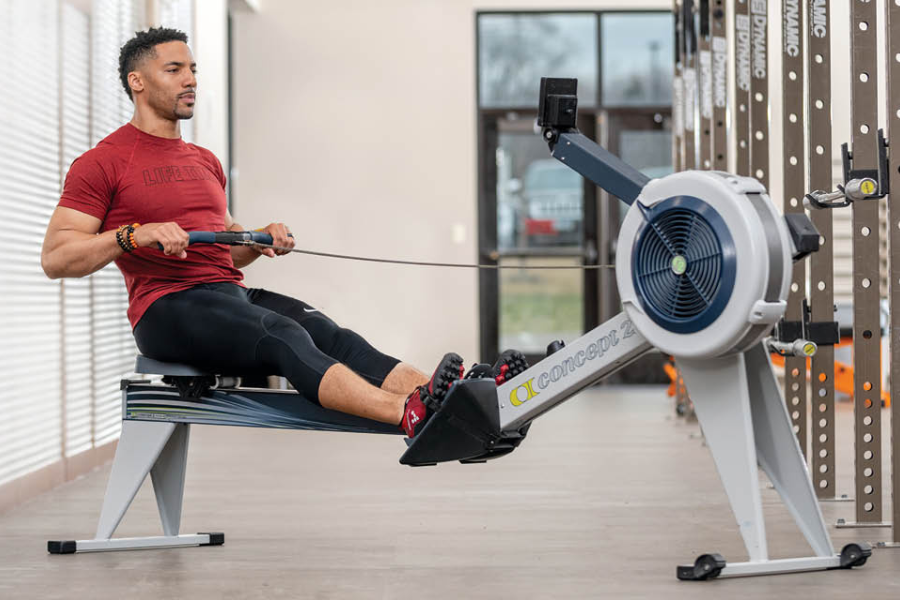
Rowing workouts for endurance are one of the most efficient ways to boost your fitness, protect your joints, and support weight loss, all in a single piece of equipment. With every stroke, you work your legs, core, back, and arms in a smooth, low impact motion that is beginner friendly but still challenging.
You do not need to be an athlete or know anything about rowing on the water to benefit. With a bit of technique and a simple plan, you can use rowing workouts for endurance to transform your health, one session at a time.
Why rowing is so effective for endurance
Rowing is often called a “hidden” full body workout, because it feels like you are just pulling with your arms, but most of the effort actually comes from your legs. Rowing workouts on a rowing machine engage roughly 65 to 75 percent leg muscles and 25 to 35 percent upper body muscles, so you strengthen and tone major muscle groups while you improve your cardiovascular endurance at the same time (Healthline).
Each stroke blends strength and cardio in one continuous motion. You build the ability to exert powerful effort, then repeat it over and over, which is exactly what endurance is. Research shows that this combination improves both cardiovascular and muscular endurance, helping you handle everything from long walks to intense gym sessions more easily (Healthline).
Unlike high impact activities such as running, rowing keeps your feet planted, so there is minimal pounding on your knees, hips, and ankles. Studies suggest that rowing can even be suitable for people with early joint concerns, since it burns significant calories while still being gentle on your joints (Healthline).
How rowing changes your body and health
If you are thinking about rowing for weight loss and better health, it helps to understand what is happening behind the scenes in your body.
Over time, consistent rowing workouts for endurance can:
- Increase mitochondrial density and capillary count, which helps your muscles use oxygen more efficiently and raises your VO2 max, your body’s maximum oxygen uptake (IDEA Fit)
- Improve cardiovascular function, so your heart works more efficiently and your resting heart rate may decrease
- Support fat loss and better body composition, since rowing recruits large muscle groups and burns considerable calories
- Build strength and trunk stability, including your core, which supports better posture and reduces your risk of back pain
One study found that rowing five days a week for six weeks led to a significant decrease in fat mass and body fat percentage, along with improvements in strength and trunk flexion, even in people with low vision (Healthline). That is a good indication that you can see meaningful changes relatively quickly if you stick with it.
Rowing also consistently produces some of the world’s fittest athletes, largely because it trains both cardiovascular and muscular systems at once. That does not mean you have to chase elite performance, but it does show that a rowing machine is a powerful tool for people of all ages, sizes, and abilities when used with proper form (IDEA Fit).
Endurance basics: what you are actually training
When you hear “endurance,” you might immediately think of long, steady sessions. Those are important, but your endurance actually depends on a few different energy systems that you can train in different ways.
Aerobic system
This is your long haul system. You use it for activities that last several minutes or more, like brisk walking, easy cycling, or steady rowing. Aerobic rowing workouts increase your heart’s capacity, improve oxygen delivery, and help your body rely more on fat for fuel. Over time, this is what makes daily activities feel easier and allows you to work out longer without feeling exhausted (IDEA Fit).
Glycolytic system
This system kicks in for moderate to high intensity efforts that last from about 30 seconds to 2 minutes. Think of hard 500 meter rowing intervals. Training here improves your muscle’s ability to buffer lactic acid and your mental tolerance for discomfort. Repeated 500 meter repeats with a work to rest ratio of 1 to 2, for example, can significantly improve how you handle tough efforts (IDEA Fit).
Anaerobic system
This is your sprint system. It powers very short, very intense bursts of effort, such as 20 second all out rowing sprints. Anaerobic rowing workouts that alternate short sprints with active recovery help you build the capacity for powerful bursts of energy and, as a bonus, contribute to your overall endurance when repeated within a workout (IDEA Fit).
By mixing these three types of training, you develop balanced endurance, better heart health, and greater stamina for both exercise and everyday life.
How often and how long you should row
You do not have to spend hours on the rowing machine to see benefits. For general fitness, a home rowing workout that lasts 20 to 30 minutes of steady state rowing, performed at least 3 to 4 times per week, can effectively build cardiovascular health and muscular endurance (RP3 Rowing).
If you are a beginner, it is smart to start smaller and focus on technique. A simple starting structure might look like this:
- 2 to 3 minute warm up at very light intensity
- 10 to 15 minutes total, broken into 1 to 2 minute intervals at a comfortable, moderate effort with 1 minute easy rowing between them
- 2 to 3 minute cool down at very light intensity
You can then gradually increase your total time by about 2 to 5 minutes each week over 4 to 6 weeks, depending on how your body feels (RP3 Rowing).
Rowing 3 to 5 times per week is usually enough to improve endurance while still allowing for recovery. Daily hard rowing sessions can lead to overtraining or repetitive strain, especially because each stroke uses so many muscle groups at once (RP3 Rowing).
Building endurance with steady state rowing
Steady state rowing is your foundation. This is rowing at a pace where you are breathing faster but can still speak in short sentences. It should feel sustainable for at least 20 minutes.
Rowing engages around 86 percent of your muscles with each stroke, including your legs, arms, back, and core, so even these “easier” sessions deliver a serious full body benefit (Aviron Active). Longer steady workouts between 30 and 60 minutes are especially effective for growing your aerobic base and improving your stamina (RP3 Rowing).
To progress your endurance, you can:
- Add 2 to 5 minutes to one steady workout each week
- Keep your stroke rate moderate, usually around 20 to 24 strokes per minute, and focus on powerful, controlled strokes
- Use a comfort based scale from 1 to 10 and aim for a 6 or 7 during most of your steady efforts
As your fitness improves, you will notice that your heart rate stays more controlled at the same pace, and your breathing feels less strained. Daily tasks such as climbing stairs or carrying groceries may also feel easier.
Using intervals and HIIT to build stamina faster
High intensity interval training, or HIIT, does not need to be long to be effective. Studies have found that rowing based HIIT sessions of less than 15 minutes can improve fitness levels, cardiac function, glucose control, and blood pressure as much as, or even better than, longer moderate intensity workouts (Healthline).
You can use HIIT on the rower in a few ways:
- Short, all out sprints of 20 seconds, followed by 40 seconds of very easy rowing, repeated 8 to 10 times
- 1 minute hard, 1 to 2 minutes easy, repeated 8 to 12 times
- The 10 9 8 7 workout, where you row 10, then 9, 8, and 7 minutes at a challenging pace with 10 minute rests between, watching your heart rate and working just below your all out effort (IDEA Fit)
These sessions challenge your aerobic and anaerobic systems at the same time, which makes them especially useful if you are short on time but still want to build endurance and burn calories. Just keep them to 1 or 2 times per week, and listen to your body. Intensity is helpful, but only when you are recovering well between workouts.
Progressive overload: how to keep improving safely
Your body adapts to what you regularly do. To keep improving your rowing endurance, you need progressive overload, which means gradually asking your body for just a bit more over time.
On the rowing machine, you can apply progressive overload by:
- Increasing your total workout time
- Adding a few more intervals or sprints
- Slightly increasing the resistance or damper setting
- Reducing rest time between intervals
The key is to make changes gradually. A sudden jump in intensity or duration can raise your injury risk. Instead, think in terms of small steps. For example, add 5 minutes to one steady state workout this week, then wait and see how you feel before making another change.
This slow and steady approach allows your muscles, joints, and cardiovascular system to adjust without being overwhelmed (Aviron Active).
A useful rule of thumb is to change only one variable at a time. If you increase duration, keep intensity the same. If you add intensity, keep duration stable for a week or two.
Fueling and recovery to support your workouts
Endurance training is not just about what you do on the machine. What you eat and how you recover play a big role in your progress.
Rowing workouts for endurance rely heavily on your glycogen stores, which come from carbohydrates, and they also break down muscle tissue that needs protein to rebuild. A balanced intake of protein, complex carbohydrates, and healthy fats, along with adequate hydration, will help you:
- Power through workouts without hitting an energy wall
- Repair and build muscle so you get stronger and more resilient
- Recover better between sessions so you can row consistently
Proper nutrition and hydration are especially important if you are also using rowing to support weight loss. You want a modest calorie deficit, not extreme restriction that leaves you exhausted and unable to train effectively (Aviron Active).
Alongside nutrition, make sure you are getting enough sleep and including at least one rest or light activity day per week. Your improvements show up when you recover, not when you are grinding.
Putting it all together: your next steps
To use rowing workouts for endurance to transform your health, you do not need a complicated plan. You only need consistency, gradual progression, and attention to technique and recovery.
A simple starting roadmap could be:
- Weeks 1 to 2: Row 3 times per week for 10 to 15 minutes, focusing on form and light to moderate intensity
- Weeks 3 to 4: Increase to 15 to 25 minutes, with one session including gentle intervals such as 1 minute moderate, 1 minute easy
- Weeks 5 and beyond: Aim for 20 to 30 minutes 3 to 4 times per week, with a mix of steady state and one HIIT style workout
As you build endurance, you will likely notice better energy, improved mood, easier weight management, and more confidence in your body. Start with what feels doable today, even if it is just a 10 minute easy session, and let those small steps compound into lasting change.
About the Author