Cycling on a stationary bike already gives you a solid cardio boost. When you layer in smart exercise bike strength training, you start building muscle, burning more calories, and protecting your joints at the same time. With a few simple tweaks, each ride can pull double duty for strength and heart health.
Below, you will find practical, research-backed tips you can apply on your next workout, whether you are brand new to indoor cycling or you already ride several times a week.
Understand what an exercise bike really works
An exercise bike is far more than a “leg day” machine. When you use it correctly, it recruits several major muscle groups alongside your cardiovascular system.
Your primary movers are your quads, hamstrings, calves, and glutes. These large lower body muscles work every time you push and pull the pedals. Guidance from NordicTrack notes that exercise bike workouts are especially effective for strengthening calves, thighs, and glutes, with your abs and lower back kicking in for balance and posture (NordicTrack).
Your core muscles, including your abdominals and lumbar region, stabilize your spine as you ride. If you ride in a slight forward lean, keep your torso steady, and avoid slumping into the handlebars, your core must stay active to support you. Your arms and shoulders also help you maintain control of the handlebars, particularly during standing climbs or sprints (NordicTrack).
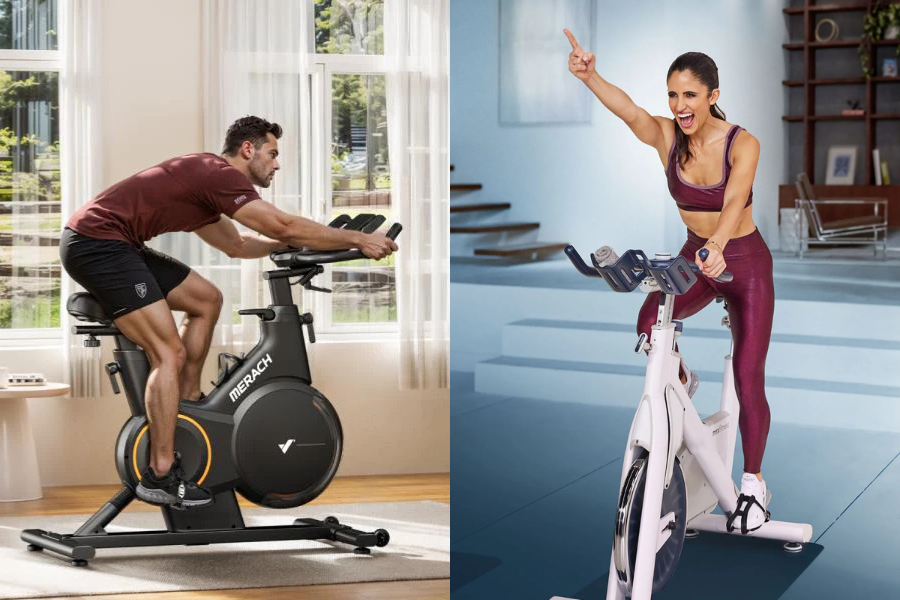
Different styles of bikes shift the emphasis slightly. A classic upright bike tends to involve your lower body and abs while staying kind on your joints. A recumbent bike places more load on your legs and glutes but reduces arm and ab involvement. A racing or studio-style bike, especially when you stand on the pedals, lets you involve your upper body more for a workout that feels closer to outdoor cycling or spin classes (NordicTrack).
Set up your bike for strength and safety
Before you start cranking up resistance for exercise bike strength training, it helps to get the basic setup right. Proper alignment keeps your joints happy and ensures your muscles, not your knees or back, do the work.
Adjust your seat height so that when one pedal is at the bottom of its stroke, your knee has a slight bend rather than being locked out. Your hips should feel stable, not rocking side to side. NordicTrack recommends matching the seat and handlebar positions to your body measurements to engage the right muscles and avoid strain or injury (NordicTrack).
Handlebars should be close enough that you can reach them comfortably without shrugging your shoulders or rounding your back. If your hands or shoulders fatigue quickly, try raising the bars slightly or bringing them closer.
Cleated cycling shoes that clip into compatible pedals can also improve your strength work. Gymsportz highlights that clipping in helps you pull as well as push through the pedal stroke, which increases muscle recruitment and control while reducing the risk of slipping off the pedals during intense intervals (Gymsportz).
Use resistance like a strength tool
Resistance is where your exercise bike turns into a strength training partner. The goal is to make your muscles work hard enough to adapt without sacrificing safe form.
Most indoor bikes rely on a micro adjustable resistance knob. This lets you increase or decrease load in tiny steps as you ride. Sunny Health & Fitness notes that this kind of fine control helps you find the right intensity for your workout while still maintaining full control of the bike (Sunny Health & Fitness).
To gauge whether you are using enough resistance, pay attention to both perceived effort and cadence:
- A flat road effort should feel about 5 out of 10.
- A jog or moderate climb should land in the 6 to 7 out of 10 range.
- A hill or heavy strength push usually sits between 7 and 9 out of 10.
This simple 1 to 10 effort scale helps you know when you are in true strength territory rather than just spinning your legs (Sunny Health & Fitness).
Cadence, your revolutions per minute, adds another layer. Slower cadences at higher resistance demand more muscular strength. Faster cadences at moderate resistance lean more toward cardiovascular training. Sunny Health & Fitness recommends watching both metrics so you can dial in resistance toward your specific goals, whether that is muscle building, endurance, or fat loss (Sunny Health & Fitness).
It is also important to remember that your ideal resistance level is personal. Your fitness, experience, and how you feel on a given day all matter. You should feel free to nudge resistance up or down throughout your session to stay within a challenging but sustainable zone that still allows solid technique (Sunny Health & Fitness).
Structure your rides for strength and fat loss
Once your setup and resistance are in a good place, the way you structure your ride can either amplify or dilute your strength gains. Interval formats work especially well if you want more strength benefits in less time.
NordicTrack notes that alternating short bursts of intense pedaling with recovery phases helps accelerate fat loss and weight management (NordicTrack). Interval training lets you work at higher efforts without having to maintain them for long, which is ideal if you are still building your fitness.
Here is a simple way to turn a typical 30 minute session into a strength focused workout:
- Warm up for 5 minutes at 4 to 5 out of 10 effort.
- Complete 8 to 10 rounds of:
- 40 seconds heavy resistance at 7 to 9 out of 10, seated or standing hill.
- 80 seconds easy spinning at 3 to 4 out of 10.
- Cool down for 5 minutes at 3 out of 10.
This type of short, focused interval block stresses your leg muscles under resistance while still giving you enough recovery to keep your technique sharp.
If you prefer longer efforts, you can use a fartlek style ride, where you mix spontaneous sprints, moderate climbs, and easy cruising. Health.com points out that on a stationary bike, fartlek training works well for building both endurance and power because you control your own intensity and recovery periods (Health.com).
High intensity interval training, or HIIT, is another strong option when you want to build both aerobic capacity and muscle. A 48 minute power intervals workout highlighted by Health.com uses repeated high intensity efforts to stimulate muscle tissue growth and improve fat burning over time (Health.com). You do not need that exact routine to benefit, but adopting the concept of short, all out sprints followed by measured rest is a simple way to tap similar gains.
Combine bike work with off bike strength training
Your exercise bike can take you far, but pairing it with basic strength training multiplies the results. This can be as simple as alternating bike sessions with bodyweight or dumbbell workouts at home.
Strength work is not just for powerlifters. TrainerRoad notes that strength training is essential for cyclists of all levels because it increases power, addresses weak links, and lowers injury risk, which all help you become faster and more resilient on the bike (TrainerRoad). Even if you never ride outdoors, the same benefits apply to your indoor cycling.
If you are new to strength training, you can start with bodyweight movements. TrainerRoad suggests exercises such as Spiderman pushups, planks, pistol squats, pull ups, and planking rows to build a base of strength and good movement patterns before you add weights (TrainerRoad).
As you progress, compound lifts give you the most return for your time. Squats, traditional and Romanian deadlifts, bench presses, military presses, and barbell rows target the major muscles you use while cycling and living your everyday life (TrainerRoad). A cycling specific approach usually means low volume, moderate to heavy loads, and long rest periods between sets so you build functional strength instead of bulky muscle mass. TrainerRoad recommends sets of 3 to 5 reps with plenty of recovery to keep you fresh for your rides (TrainerRoad).
Bicycling magazine echoes these ideas, pointing to research that heavy lifting improves time to exhaustion, time trial performance, cycling efficiency, and anaerobic power (Bicycling). Exercises such as dumbbell deadlifts, side step ups with leg lifts, and single leg bridges are especially helpful because they hit cycling specific muscles like your glutes, hamstrings, quads, and core, which translates into stronger, more stable pedaling (Bicycling).
Consistent strength work also protects your joints. By addressing muscle imbalances, for example by strengthening your glutes to support your lower back, you lower your risk of overuse injuries that can come from repetitive motion like cycling (Bicycling). Keeping one to three strength sessions in your week year round helps you maintain muscle mass and bone health, which becomes even more important as you age (Bicycling).
Turn your spin sessions into full body training
If you like the idea of doing everything on the bike, you can still sneak in more whole body strength work without leaving the saddle.
Gymsportz explains that you can combine cardio and strength on an indoor spin bike by adjusting resistance to simulate hills or intense sprints for your legs and core (Gymsportz). During steady efforts, you can add light dumbbells or resistance bands for upper body movements such as bicep curls, lateral raises, or rows. This turns a regular ride into a full body circuit that targets your arms, shoulders, and back while your heart rate stays elevated (Gymsportz).
High intensity intervals on a spin bike can also enlist both your cardiovascular and muscular systems. For example, 30 second all out sprints at high resistance, where you focus on strong handlebar push pull actions, challenge your upper body along with your legs and lungs (Gymsportz).
Just as with traditional strength work, technique matters. Keeping a neutral spine, relaxed shoulders, and stable knees will help you get more from each minute on the bike. Gymsportz stresses that proper form, accurate seat height, and appropriate footwear are critical for reaping strength benefits while minimizing injury risk during these combined cardio and strength sessions (Gymsportz).
Stationary bikes are low impact and customizable, which means you can push hard enough to build strength while keeping your joints comfortable.
Balance your weekly routine for results
To see steady progress in strength, fat loss, and overall health, it helps to think about how often you ride and lift, not just what you do in a single workout.
BarBend notes that exercise bikes are ideal for strength athletes because they let you perform low intensity steady state rides or more intense intervals without beating up your joints as much as some other cardio options (BarBend). Using a bike two to three times per week can support heart health and fat loss without interfering too much with muscle recovery (BarBend). The low impact nature of cycling also tends to produce less muscle soreness, which makes it a smart choice after leg day or between strength sessions as a form of active recovery (BarBend).
You can even pair your bike time with simple dumbbell circuits. BarBend highlights that combining moderate or hard bike intervals with resistance exercises in the same session can keep your heart rate high and improve overall conditioning that supports your strength training goals (BarBend).
Official health guidelines can serve as a helpful baseline. NordicTrack cites CDC recommendations that adults aim for at least 150 minutes of moderate intensity cardio per week, which might look like 30 minutes a day on an exercise bike, plus two days of strength training (NordicTrack). That combination tends to maximize cardiovascular benefits while still giving your muscles enough stimulus to grow.
You will see the best body composition changes when you also pay attention to nutrition. NordicTrack emphasizes that pairing stationary bike workouts with strength training and dietary adjustments is key for improving body composition, supporting weight loss, and promoting muscle repair (NordicTrack). Simple habits such as prioritizing protein, eating mostly whole foods, and staying well hydrated can make your exercise bike strength training pay off faster.
Put it all together
If you want to start today, you might:
- Adjust your bike to fit your body and practice riding with an engaged core.
- Add one interval style strength ride this week where you challenge resistance at a lower cadence.
- Sprinkle in two short bodyweight or dumbbell sessions that focus on squats, deadlifts, and core.
- Watch how your energy, stamina, and leg strength feel over the next few weeks.
You do not have to overhaul your entire routine to benefit from exercise bike strength training. Small, consistent changes will build on each other. Start with a single tweak, like raising resistance for one or two songs during your next ride, and notice how much stronger and more capable you feel over time.
About the Author