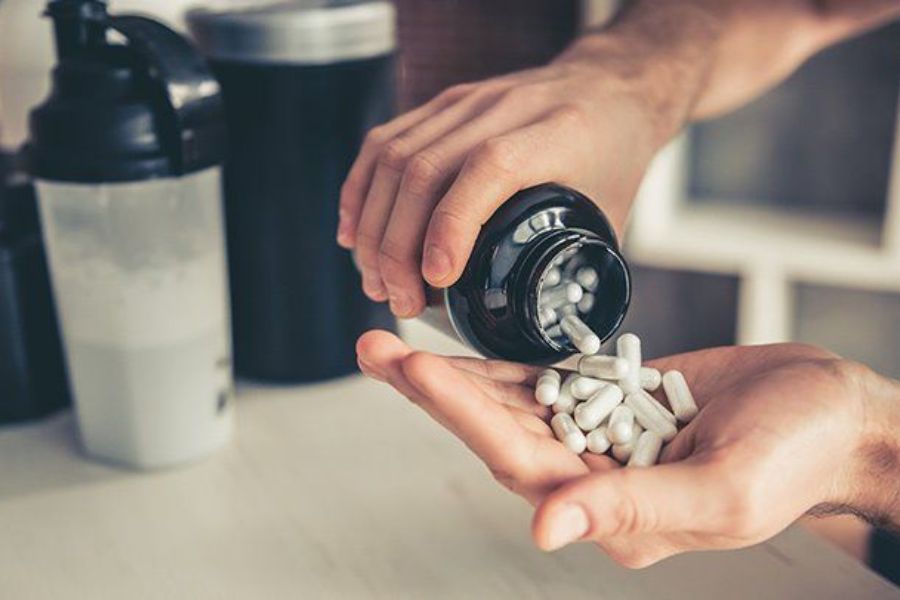
Creatine for endurance athletes has a bit of a reputation problem. You might hear “creatine” and immediately think of bodybuilders, heavy squats, and big muscles, not marathon finishes or triathlon splits.
The research tells a more interesting story.
Creatine will not magically turn a 10K into an easy jog, but it can help you surge harder, sprint faster at the end of a race, and recover better between intense sessions. For many endurance athletes, it becomes a quiet advantage in those short, decisive efforts that make the difference between hanging on and pulling away.
Below, you will see what creatine actually does, how it can help your endurance performance, where it falls short, and how to use it safely and effectively.
Understand what creatine actually does
Creatine is a compound that your body stores in muscle as phosphocreatine. During intense efforts, it donates a phosphate to quickly regenerate ATP, your muscles’ main energy currency. In simple terms, it helps you produce more power for a little longer when the pace spikes.
Studies show that creatine monohydrate can increase muscle phosphocreatine stores by about 20 percent, which boosts your ability to resynthesize ATP and buffer the acidic byproducts of hard efforts (PMC). This is most relevant during short, high-intensity bursts that sit on top of your aerobic base.
For endurance athletes, that means:
- Hard surges on a climb
- Closing sprints at the end of a long ride or run
- Repeated intervals in training where quality drops off over sets
Creatine is not there to fuel your entire marathon. It supports the high-intensity “spikes” within your training and racing.
Weigh the benefits for endurance athletes
The big question is simple. Does creatine help you, as an endurance athlete, go faster or last longer?
The answer is, “sometimes, and in specific ways.”
Stronger surges and finishing kicks
Several studies report that creatine can improve high-intensity, short-duration efforts, even in endurance-trained athletes. A 2019 trial found that creatine monohydrate significantly increased cycling power output in well-trained triathletes, which helped them perform better during the cycling portions of their races (TrainingPeaks).
A 2023 review notes that creatine improves anaerobic work capacity and time to exhaustion during intermittent high-intensity efforts, with interval power gains reported up to 18 percent without impairing oxygen uptake (PMC). In real terms, that could mean:
- Hitting each interval in a workout at a slightly higher power
- Holding your sprint longer at the end of a race
- Responding to repeated attacks in cycling, mountain biking, or cross-country skiing
These are “race-deciding” moments, not general cruising speed improvements.
Better performance in “mixed” endurance events
Creatine appears particularly effective in sports that blend long duration with repeated surges or a fast finish. Research highlights benefits in cycling, rowing, triathlon, swimming, cross-country skiing, and mountain biking, where anaerobic energy contribution during critical moments is key for success (PMC).
One example: elite cyclists who combined creatine with carbohydrates improved their power output in the final sprints of a 120 km time trial (PMC). If your events include tactical racing or “all out” finishes, these are exactly the moments creatine can support.
Faster recovery from hard efforts
Creatine does more than help you push harder in the moment. It also seems to support recovery between efforts. Research indicates that creatine monohydrate can reduce muscle damage and speed recovery from intense exercise, which helps endurance athletes manage training load and lower injury risk (TrainingPeaks).
In practice, that might look like:
- Less drop-off in pace or power between intervals
- Less soreness after sprint or hill workouts
- The ability to add an extra quality session over a training block
Over time, better recovery means better training, and better training usually leads to better performance.
Modest or no direct gains in steady endurance
Not every study is glowing. A systematic review from May 2023 found that creatine monohydrate was largely ineffective at improving classic endurance performance, such as time to exhaustion or time trial results, in trained athletes under 35 years old over short supplementation durations. Interestingly, when supplementation lasted longer, such as 70 days in rowers, significant benefits did appear (TrainingPeaks).
So you should not expect creatine to suddenly improve your half-marathon time if everything else stays the same. The gains tend to be:
- More pronounced in long events with intense surges
- More evident over longer supplementation periods
- Modest when you only look at “pure” steady-state endurance
If you race in a sport with a lot of tactical variability, the upside is usually more meaningful.
Consider the downsides and trade-offs
Creatine for endurance athletes is not a free win. You need to understand the drawbacks, especially if you compete in weight-bearing sports.
Small but real weight gain
One of the most consistent effects of creatine is a small increase in body mass, typically around 2 percent, mainly from intracellular water retention (PMC). For a 150 pound athlete, that is about 3 pounds.
For cyclists or rowers, that extra fluid can be less of an issue, and in some cases it is a fair trade for more power. For runners and other weight-bearing endurance athletes, that added mass can offset or even outweigh any performance benefits (PMC).
If your event rewards power-to-weight ratio on climbs or long runs, you will want to test creatine carefully in training before committing to it in-season.
Myths about cramping and dehydration
Creatine often gets blamed for dehydration or muscle cramps, but the research does not support these fears. Multiple studies report that athletes taking creatine actually experienced less cramping, less dehydration, and fewer heat-related issues, along with better hydration and thermoregulation (TrainingPeaks).
That means if you stay on top of your normal hydration and electrolyte intake, creatine itself is unlikely to cause cramping or fluid problems.
Long-term safety in healthy athletes
Placebo-controlled studies up to at least 2016 have found that creatine monohydrate supplementation does not harm kidney or liver function in healthy individuals at recommended doses (PMC). A review of studies up to 2000 reported no adverse effects on renal function over terms ranging from 5 days to 5 years, and no signs of liver dysfunction over 4 weeks of use in young athletes (PubMed).
Occasional reports of stomach upset or cramps appear to be anecdotal and not supported by systematic data, although very high doses could increase metabolic load on kidneys and liver, which is why regular monitoring is a sensible precaution for anyone with underlying conditions (PubMed).
If you have kidney or liver issues or take medications that affect these organs, talk with a healthcare professional before you start.
Use creatine effectively in your training
If you decide creatine might be worth trying, a smart plan will help you get the benefits with fewer surprises.
Follow evidence-based dosing
Most research on creatine for endurance athletes uses creatine monohydrate, because it is well studied, widely available, and cost effective.
A common protocol is:
- Loading phase: 20 to 25 grams per day, or around 0.3 g per kg of body weight, split into 4 doses over 5 to 7 days
- Maintenance phase: 3 to 5 grams per day, or about 0.03 g per kg of body weight (PMC)
This approach saturates muscle creatine stores relatively quickly, then maintains them with a smaller daily dose. If you prefer a slower ramp-up and want to minimize rapid weight gain, you can skip the loading phase and simply take 3 to 5 grams a day, though full benefits will take longer to appear.
Time your intake around training
Timing is not everything, but it does matter. A 2016 study found that taking 5 grams of creatine immediately after exercise produced better improvements in body composition compared with taking it before exercise over a 4-week resistance training program (PMC). You can likely apply that insight to concurrent training that mixes endurance and strength.
For most endurance athletes, a simple routine works well:
- Take your daily dose after your key workout, ideally with a snack or meal that includes carbs and protein
That habit is easy to remember, and it lines up with when your muscles are most ready to take up nutrients.
Pair creatine with carbs or carbs plus protein
Insulin helps drive creatine into muscle cells. Co-ingesting creatine with a substantial amount of carbohydrate, or carbohydrate plus protein, can increase muscle creatine storage.
Research suggests that:
- Around 94 g of carbohydrate per 5 g creatine
- Or about 47 g carbohydrate plus 50 g protein per 5 g creatine
both enhance muscle creatine uptake (PMC). For you, this might look like mixing creatine into a recovery shake or taking it with a full post-workout meal that includes grains, fruit, or starchy vegetables plus a protein source.
Decide if creatine fits your sport
Creatine supplementation appears most helpful for:
- Cyclists, mountain bikers, and triathletes with fast finishes or repeated surges
- Rowers and swimmers who perform hard intervals and sprint finishes
- Cross-country skiers and similar athletes whose events mix long duration with short, intense bursts (PMC)
If you mainly run long, steady races with minimal surging and you are highly sensitive to weight changes, creatine may not move the needle as much for you. In that case, your time and budget may be better spent on dialed-in fueling, sleep, and strength training.
Decide if creatine is worth trying
When you look at creatine for endurance athletes as a whole, a few themes stand out.
Creatine will not transform your aerobic engine, but it can sharpen the high-intensity edges of your performance and help you recover from the work it takes to get fitter.
If you are considering a trial, you can use this simple framework:
- Your sport involves sprints, surges, or aggressive finishes
- You have a solid training base and nutrition habits already
- You do not have kidney or liver issues, or you have clearance from a medical professional
- You are willing to accept a small increase in body weight in exchange for potential power and recovery gains
Start in a lower-stakes phase of your season, follow evidence-based dosing, and track how you feel and perform over 8 to 10 weeks. Monitor your weight, interval power or pace, and how you recover between sessions.
If you see stronger surges, better finishing speed, and improved recovery without performance-harming weight gain, creatine might quietly become one of your most useful training tools.
About the Author