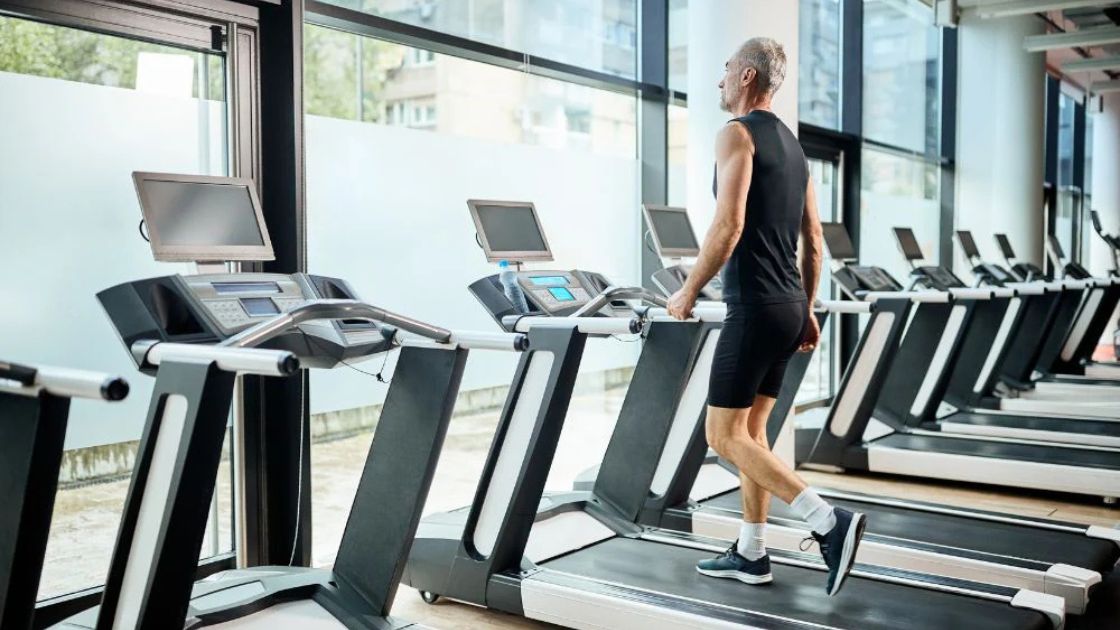
Treadmill incline workouts are a simple way to make your cardio more effective without running faster or spending extra time at the gym. By changing the incline, you shift how hard your muscles and heart work, which can help you lose weight, build strength, and improve your overall health.
Below, you will learn how incline works, what the benefits are, and how to build safe, effective treadmill incline workouts that match your fitness level.
Understand how incline changes your workout
When you walk on an incline, you are moving your body against gravity. That extra effort increases how many calories you burn and how hard your muscles have to work.
Research shows that:
- Walking at a 5 percent incline raises the metabolic cost of walking by about 52 percent compared to flat walking
- At a 10 percent incline, that increase can be around 113 percent (NordicTrack)
In other words, a modest incline can double the energy you use in the same amount of time.
Incline also changes which muscles you use. Walking uphill shifts more work into your glutes, hamstrings, and calves and can ease strain on your knees by changing your foot strike and joint angles (NordicTrack).
Key health benefits of incline treadmill workouts
Burn more calories in less time
If weight loss or fat loss is one of your goals, incline can help you get more out of each minute of cardio.
Studies and brand research consistently show that:
- Walking at inclines between 5 and 12 percent significantly increases calorie burn compared to flat walking (NordicTrack)
- Walking at a 10 percent gradient raises metabolic energy cost by about 22.9 percent, and a 16 percent gradient raises it by about 44.2 percent compared with 0 percent incline (Healthline)
Put simply, your body has to work harder on an incline, which means more calories burned in the same time frame.
Reach the fat‑burning zone more easily
Incline encourages your heart rate to rise faster, which helps you reach and maintain an intensity often called the “fat‑burning zone.” Increasing incline during cardio can help you stay in this range longer so you maximize fat loss during and after your workout (TRUE Fitness).
A popular example is the viral 12-3-30 treadmill workout. You walk at a 12 percent incline, 3 miles per hour, for 30 minutes. A recent lab study with 16 recreationally active adults found that compared with self‑paced running matched for total energy use, 12-3-30 had:
- Lower energy expenditure per minute
- Higher fat utilization, about 7.5 percent more fat used as fuel on average (International Journal of Exercise Science)
This suggests incline walking at moderate speed can favor fat metabolism more than faster running, which is useful if fat loss is a priority and you are willing to spend a bit more time on the treadmill.
Strengthen lower body muscles
Incline treadmill workouts are not just cardio. They are also a form of strength and endurance training for your legs and hips.
Walking uphill recruits more muscle fibers in your:
- Glutes
- Hamstrings
- Quadriceps
- Calves
- Smaller stabilizers in the lower leg, such as the peroneal muscles and tibialis anterior (PureGym)
One report noted that at a 9 percent incline, calf activity increased by 175 percent, glute engagement by 635 percent, and hamstring activation by 345 percent compared with flat walking (TRUE Fitness). This is a big jump in muscle work without needing heavy weights.
Support joint and heart health
Incline walking is usually lower impact than running. It reduces anterior knee loading and can ease pressure on knees, hips, and ankles compared to flat surface running (NordicTrack). This makes it a good choice if you have joint concerns but still want to challenge your cardiovascular system.
Incline workouts also:
- Make your heart beat faster to supply more oxygen to working muscles
- Improve cardiovascular fitness over time
- Support insulin sensitivity and overall metabolic health (TRUE Fitness, PureGym)
For many people, this combination of lower impact and higher intensity is ideal.
If running hurts your joints or feels intimidating, incline walking lets you get similar or greater benefits with less pounding on your body.
Choose the right incline for your goals
You do not need extreme inclines to see results. The best incline for treadmill workouts depends on your fitness level and what you want from your workouts.
If you are a beginner
Start gently so your muscles, tendons, and joints can adapt:
- Begin with a 1 to 3 percent incline and a comfortable walking pace
- Limit your first incline sessions to about 10 minutes
- Alternate a few minutes of incline walking with a few minutes on a flat surface (PureGym)
Experts often suggest beginners keep inclines in the 3 to 5 percent range at first to avoid calf or Achilles tendon strain and to reduce the risk of lower leg soreness (NordicTrack).
If you want weight loss and fat loss
To make incline part of a weight loss strategy:
- Use inclines in the 5 to 12 percent range to significantly boost calorie burn (NordicTrack)
- Aim for a Rate of Perceived Exertion (RPE) around 6 to 7 out of 10, where you are breathing hard but can still talk in short sentences (NordicTrack)
- Include 20 to 30 minutes of incline work, 3 to 5 days per week, as part of a routine that also focuses on nutrition and recovery
Remember, workouts like 12-3-30 increase intensity and calorie burn, but long term weight loss still depends heavily on what you eat and how consistent you are (NordicTrack).
If you want strength and performance
If you are more experienced or want to build power and endurance:
- Use higher inclines, 10 to 15 percent or more, for short intervals
- Adjust speed so you can maintain good form
- Include recovery periods at a lower incline or flat walking
Some incline trainers offer up to 30 or even 40 percent incline, which can simulate steep mountain climbs and provide a very intense workout for your legs and cardiovascular system (NordicTrack, TRUE Fitness). These options are best if you already have a solid fitness base.
Sample treadmill incline workouts to try
Use these as starting points and adjust incline, speed, and duration to match how you feel. Always begin with a 5 minute warm‑up on a flat or very slight incline and end with a 5 minute cool‑down.
Beginner incline walk, 20 minutes
This workout eases you into incline without overwhelming your joints.
- Warm‑up, 5 minutes
- 0 to 1 percent incline, easy walking pace
- Main set, 12 minutes
- 3 minutes at 2 percent incline
- 3 minutes at 3 percent incline
- 3 minutes at 4 percent incline
- 3 minutes back at 2 percent incline
- Cool‑down, 3 minutes
- 0 to 1 percent incline, slow walking pace
If any level feels too intense, lower the incline or shorten the time at that level.
Fat‑loss incline intervals, 30 minutes
This is a steady but challenging workout to keep your heart rate up and boost calorie burn.
- Warm‑up, 5 minutes
- 0 to 1 percent incline, comfortable walking pace
- Interval block, repeat 4 times, 4 minutes each
- 2 minutes at 5 to 7 percent incline, brisk pace
- 2 minutes at 2 to 3 percent incline, easier pace
- Finisher, 3 minutes
- 4 to 6 percent incline, moderate pace that feels like a 6 to 7 out of 10 effort
- Cool‑down, 3 minutes
- 0 to 1 percent incline, easy pace
Stay within an intensity where you can still speak in short phrases. If you cannot, lower the incline or speed.
12-3-30 style workout, 35 to 40 minutes
This popular format is simple and can be adapted to your level.
- Warm‑up, 5 minutes
- Start at 0 percent incline and build gradually to 5 percent
- Main set, up to 30 minutes
- Up to 12 percent incline, 3 mph, or a speed that feels brisk but sustainable
- If 12 percent is too much, start at 5 to 8 percent and increase 1 to 2 percent at a time over several weeks
- Cool‑down, 5 minutes
- Lower the incline back to 0 to 1 percent
- Gradually slow your pace
The original 12-3-30 workout was designed as a low‑impact method to promote fat loss using lower intensity aerobic exercise (Healthline, NordicTrack). You can think of 12 percent incline as a long‑term target, not a starting requirement.
Stay safe and avoid common incline mistakes
Incline is powerful, but more is not always better. A few simple habits will keep your treadmill incline workouts effective and safe.
Progress slowly
If you jump into high inclines too quickly, you increase the demand on muscles in the front and side of your lower leg, such as the tibialis anterior, peroneals, gastrocnemius, and soleus. This can create soreness or even pain and injury around the ankles and shins (Healthline).
To reduce your risk:
- Increase incline or duration by small steps, such as 1 to 2 percent incline or 2 to 3 minutes per week
- Alternate harder incline days with easier flat or low‑incline walks
- Pay attention to any new pain in your calves, shins, or Achilles and back off if needed
Use good posture and limit handrail use
When incline gets tough, it is tempting to lean forward and hold on tightly to the rails. That reduces how hard your muscles work and can strain your back and shoulders.
Try to:
- Stand tall with your chest open and eyes forward
- Lightly touch the rails only for balance, not to support your weight
- Shorten your stride slightly on higher inclines and focus on driving through your glutes and hamstrings
If you need to hang on just to stay on the belt, lower the incline or speed until you feel more in control.
Balance incline with the rest of your routine
For best results, think of treadmill incline workouts as part of a broader plan for your health.
That plan might include:
- Strength training two or three days per week to build muscle
- Flat or lower intensity cardio days for recovery
- Flexibility or mobility work to keep your joints happy
- A nutrition approach that supports your weight and health goals
Incline is a versatile tool, not the whole toolbox.
Turn incline into a sustainable habit
You do not need to master every setting on the treadmill to benefit from incline. Start with where you are today and add small challenges over time.
You might:
- Add 3 minutes of 3 percent incline to the middle of your usual walk
- Try one 20 minute beginner incline workout this week
- Gradually work toward a goal like 20 to 30 minutes at an RPE of 6 to 7, three times per week
The key is consistency. When you use incline thoughtfully, you make your treadmill time work harder for you, so every step brings you closer to better health, stronger legs, and more confidence in your fitness.
About the Author