Whether you are brand-new to fitness or already have some training under your belt, shoulder workouts can be a game-changer for your upper body. Your shoulders help stabilize your arms during everyday movements like lifting groceries or reaching overhead, so strengthening them supports both your daily activities and your long-term health. In this article, you will discover how your shoulder muscles work, which exercises build them safely, and how to develop a routine that delivers lasting results.
Understand why strong shoulders matter
Your shoulders are one of the most mobile and flexible joints in your body. The main shoulder muscles include the deltoids (front, middle, and rear) and the rotator cuff (a group of four smaller muscles that stabilize the shoulder joint). Because they connect your arms to your torso, strong shoulders make it easier to carry heavy items, perform compound lifts at the gym, and maintain good posture.
At the same time, unstable or weak shoulder muscles can lead to discomfort or reduced range of motion. When you have a well-rounded shoulder routine, you improve your overall upper-body strength and decrease the chance of injuries from daily or athletic activities. Even if you are more focused on other muscles, paying attention to your shoulders can balance your physique and enhance your performance.
Warm up to protect your joints
A shoulder that is not properly prepared for exercise can quickly become vulnerable to strains, tears, or overuse issues. A simple warm-up strategy can help ensure you are ready to train without risking unnecessary damage.
Most of your warm-up time should be spent stimulating blood flow and gently mobilizing the shoulder area. Start with dynamic arm circles: extend both arms out to your sides at shoulder height, then rotate them forward and backward in small circles. Gradually increase the circle size to engage the entire shoulder joint. Afterward, you can incorporate light resistance band movements such as pull-aparts or shoulder external rotations. These exercises encourage proper scapular (shoulder blade) movement and increase the stability of your rotator cuff.
Consider a single short set of push-ups or wall push-ups too. This slight activation of your chest, arms, and shoulders signals your body to prepare for heavier work. By dedicating a few minutes to mobility and lighter drills, you can often avoid larger setbacks later on, like soreness or joint pain.
Master essential exercises
Once you have a solid warm-up in place, it is time to focus on key shoulder workouts that target different parts of your deltoids and supporting muscle groups. Several beginner-friendly exercises provide an excellent foundation for building shoulder strength.
-
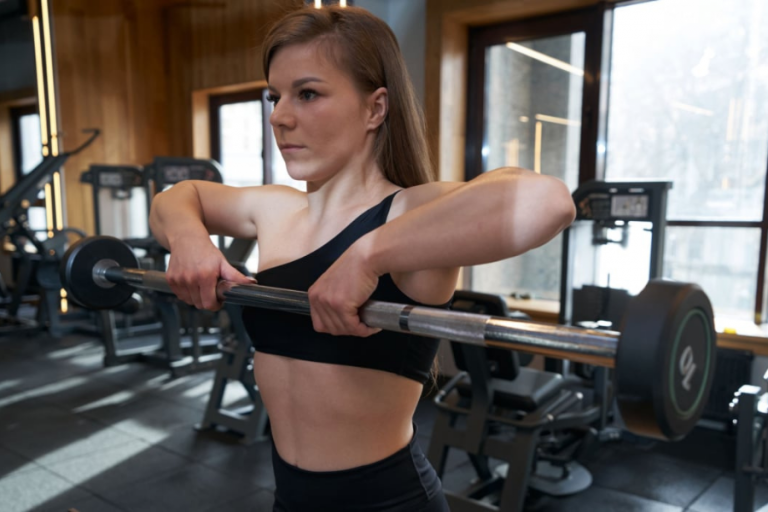
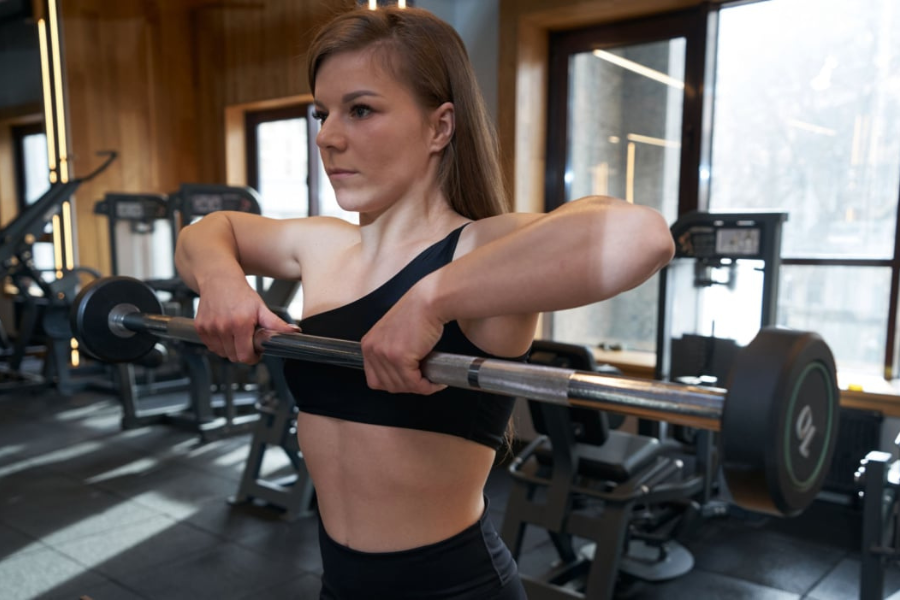
Overhead press. Sometimes called the military press, the overhead press involves pressing a barbell or pair of dumbbells straight overhead. Keep your core tight and your lower back stable. Focus on smooth, controlled reps rather than rushing.
-
Seated dumbbell shoulder press. Seated versions of the overhead press are a good choice if you need extra support for your core or want to limit overall trunk movement. This variation allows you to isolate the shoulder muscles more effectively.
-
Lateral raise. The lateral raise primarily targets the middle deltoid. Holding a dumbbell in each hand, stand or sit upright and raise your arms out to your sides until they are parallel with the ground. This movement is simple but effective for building that classic side-shoulder shape.
-
Face pull. Face pulls activate the rear deltoids and can help counteract imbalances from pressing movements. With a cable machine or resistance band set at eye level, pull the handles toward your face by drawing your shoulder blades together and focusing on a slow, controlled motion.
You will get the most benefit by mixing these exercises and varying your number of reps and sets. For instance, include exercises where you press overhead (either standing or seated) in one session, then do lateral raises and face pulls in the next. When you are a beginner, aim for moderate weights that allow 8 to 12 reps per set with good form.
Add variety with advanced moves
As your shoulders adapt and grow stronger, you will want to challenge them further. Adding variety to your routine not only brings new growth potential, but it also helps prevent plateaus and boredom. Advanced exercises can include slight modifications to standard moves or brand-new lifts that require more muscle coordination.
• Arnold press: Popularized by Arnold Schwarzenegger, this press starts with dumbbells held at shoulder height and palms facing you. As you press upward, rotate your palms to face forward. This rotation ensures that all three heads of the deltoid are heavily involved.
• Push press: The push press is a powerful exercise that lets you use your lower body to generate momentum for an overhead press. You start with the barbell at your shoulders, bend slightly at the knees, then drive the bar overhead as you straighten your legs. It is a bit more explosive than a strict overhead press and engages your hips and legs, making it ideal for building power.
• Handstand push-up: This bodyweight move is advanced and should be tackled only when you have an excellent base of strength and no major joint restrictions. In a handstand position, you slowly lower your head toward the floor and press back up, relying almost entirely on your shoulders and triceps. If you are not comfortable going fully vertical, start with pike push-ups on the floor or with your feet elevated on a box.
Even advanced exercises require a proper warm-up and attention to form. Keep your core supported, your spine neutral, and your shoulders stable. By mixing these advanced lifts into your shoulder workouts, you tap into new strength gains while challenging your entire body.
Design a balanced routine
Whether you are targeting muscle growth, improved performance, or simply wanting to feel stronger in everyday life, a well-designed program makes the difference. Balancing frequency, sets, and other training details will help you reach your shoulder goals.
Consider training your shoulders one to two times a week. Beginners often see good progress with a full-body routine that includes a mix of shoulder, chest, back, and lower-body work. Intermediate and advanced lifters might opt for a dedicated upper-body session, which can focus on shoulders and arms to ensure they get the attention they need.
Aim for 3 to 4 exercises per workout, pairing a pressing move with one or two isolation exercises. For instance:
- Overhead press (3 sets of 8-10 reps)
- Lateral raise (3 sets of 10-12 reps)
- Face pull (3 sets of 12-15 reps)
Rest for about 60 to 90 seconds between sets, giving you enough time to catch your breath but not so long that your muscles cool down completely. On the other hand, if you are lifting heavier weights, extending rest to two minutes can help maintain strength from set to set.
Progressive overload is key. This means gradually increasing weight, reps, or exercise difficulty over time. For example, if you comfortably finish all 10 reps in every set for a few sessions, you can likely handle a bit more weight, or maybe one or two extra reps. Listen to how your shoulders feel. Occasional muscle soreness is normal, but sharp or persistent pain signals that you should take a step back to avoid injury.
Finally, remember that shoulders do not work in isolation. Exercises like rows and pull-ups also strengthen parts of your upper back that support healthy, upright posture. Pairing good shoulder practice with a strong back, chest, and core fosters long-term stability and helps you avoid overloading any single muscle group.
In any exercise journey, it is consistency that truly pays off in the long run. Shoulder workouts might feel challenging at first, but the payoff is worth it: greater shoulder definition, a confident posture, and the functional strength to handle daily tasks with ease. Whether you stick to beginner-friendly moves or venture into advanced territory, keep your workouts balanced, track your progress, and make room for adequate rest and recovery. Over time, you will see exactly how much strong shoulders can transform your entire upper body.
About the Author