A rowing machine can look a little intimidating at first, but rowing workouts for beginners do not have to be complicated. With a few simple routines and basic technique, you can turn the rower into a low-impact, full-body way to improve your health, support weight loss, and build confidence.
This guide walks you through how to use an indoor rower safely, how to structure short beginner sessions, and how to progress over time without burning out.
Why rowing is great for beginners
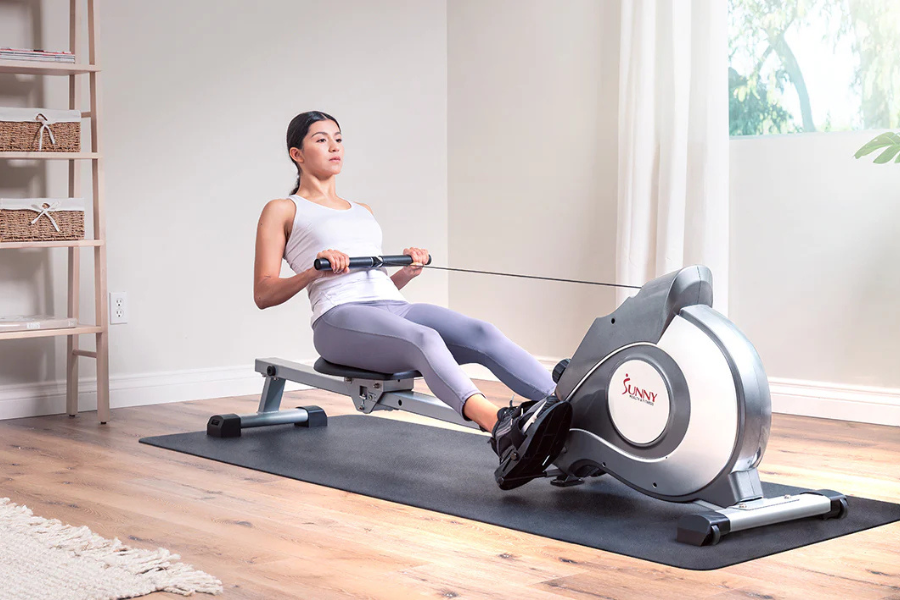
A rower, also called an indoor rowing machine or ergometer, works your legs, core, and upper body in a single smooth motion. In fact, it engages about 80% of your major muscle groups, which makes it a true full-body workout that can help you burn calories efficiently and build strength at the same time (Asphalt Green).
Unlike running or high-impact classes, rowing is non-impact and easy on your joints, so it suits many body types and fitness levels, including older adults and those returning from time off exercise (UCanRow2). You still elevate your heart rate and get solid cardio benefits, you just do it in a way that is gentler on your knees, hips, and ankles.
There is a small learning curve compared with walking on a treadmill, but once you understand the basic stroke and how to pace yourself, rowing becomes a very approachable way to work out.
Learn the basic rowing stroke
Good technique makes your workouts more effective and more comfortable. Rowing mechanics are usually broken into four stages: catch, drive, finish, and recovery (Garage Gym Reviews, Asphalt Green).
The four stages of each stroke
-
Catch
Slide forward on the seat until your shins are vertical. Hinge slightly at the hips, keep your spine neutral, and reach your arms straight toward the handle. This is your starting position. -
Drive
Push hard through your feet first. Your legs should do most of the work. Once your legs are almost straight, lean back slightly from the hips and then pull the handle toward the bottom of your ribs. This sequence is legs, then body, then arms, instead of pulling with your arms right away (Asphalt Green). -
Finish
At the back of the stroke, your legs are straight but not locked, your torso leans back just a bit, and your elbows are tucked in as you hold the handle close to your body. Your shoulders stay relaxed, not hunched. -
Recovery
Reverse the order to return to the catch. Straighten your arms first, then hinge your body forward, and finally bend your knees to slide back up. This phase should feel slower and more relaxed than the drive.
Olympic rowers spend a lot of time practicing these four phases to avoid injury and move efficiently, and beginners benefit from the same focus on form (EXR). Start slowly so your body can learn the pattern before you try to go faster.
Set up your rowing machine correctly
If your rower has a damper or resistance lever, resist the urge to set it to the maximum. Many new rowers, especially in CrossFit settings, crank it up to 10, which can strain your back and encourage poor form (EXR).
For most beginners, a moderate setting is best:
- On a Concept2, aim for a damper between 3 and 5, which is similar to what many competitive rowers use in training (Asphalt Green, UCanRow2).
- Remember that the real resistance comes from how hard you push and pull, not just the damper number.
Adjust the foot straps so the strap crosses over the widest part of your foot, usually around the ball. Your feet should feel secure without being pinched. Sit tall on the seat, keep your chest open, and gently brace your core as you start rowing.
Focus on pacing, not speed
One of the most common beginner mistakes is trying to row as fast as possible instead of rowing well. It is easy to get caught up watching the stroke rate climb and thinking higher is always better.
Your rower display can show you three numbers that matter most when you are starting out (Garage Gym Reviews):
- Elapsed time to track how long you have been rowing
- Stroke rate which is strokes per minute
- Effort level or pace which you can judge by breathing and how hard the workout feels
For technique and endurance, you are usually better off staying around 20 to 26 strokes per minute at first. That lower stroke rate forces you to use strong, controlled drives and longer, calmer recoveries. Some rowers recommend a drive to recovery ratio of 1 to 2 or even 1 to 3 at an easy pace, which helps you keep control and avoid early burnout (UCanRow2).
If you sprint from the start, you may end up exhausted in just a few minutes, which is exactly what many new rowers experience when they first experiment on the machine (Reddit r/Fitness). A steady, manageable pace will help you last longer and feel better afterward.
Try these simple beginner rowing workouts
You do not need long or complicated sessions to see benefits. Start with short, focused workouts that teach your body how rowing should feel. Aim to row two or three nonconsecutive days per week and build gradually.
1. Ten minute technique session
Use this workout when you are completely new or returning after a break.
- Set the damper between 3 and 5.
- Row very gently for 2 minutes to warm up.
- For the next 6 minutes, alternate 30 seconds of focused rowing with 30 seconds of very easy rowing. Pay attention to the legs, body, arms sequence on the drive and the reverse on the recovery.
- Finish with 2 minutes of slow rowing or simply sit and stretch.
During the main block, aim for a comfortable 20 to 22 strokes per minute, which is a common beginner target and lines up with many easy workout recommendations (UCanRow2, Asphalt Green).
2. Easy intervals for fat loss
Intervals help you burn more calories in a short time, but as a beginner you still want to stay in control.
- Warm up for 3 to 5 minutes at an easy pace.
- Row 1 minute at a moderate effort where you can talk, then 1 minute very easy.
- Repeat this 6 times for a total of 12 minutes.
- Cool down for 3 to 5 minutes with light rowing or walking.
Keep your stroke rate around 22 to 26 strokes per minute during the moderate intervals, and drop it slightly on the easy minutes. This simple pattern lets you push and recover without overcomplicating the workout.
3. Short HIIT rowing finisher
Once you are comfortable with basic intervals and want a bit more intensity, try a brief high intensity session. High intensity rowing is very effective, so less time is more than enough.
One beginner friendly structure is based on research-backed suggestions: 30 seconds of harder rowing, followed by a short rest, repeated for several rounds (Garage Gym Reviews).
- Warm up for 5 minutes at an easy pace.
- Row hard for 30 seconds, focusing on strong leg drive and good form.
- Rest 30 to 60 seconds. During rest, you can lightly move your legs on the machine or step off and walk.
- Start with 2 to 3 rounds and gradually build up to 5 rounds.
- Cool down for 5 minutes.
As you progress, this workout can form the intense part of a 15 minute session, but there is no need to rush there. If you feel your form breaking down, ease off and shorten the work intervals.
4. Beginner endurance row
Endurance rows help your heart and lungs adapt so longer workouts feel comfortable. Many guides eventually recommend 30 to 40 minute rowing sessions, but that can feel impossible at first (Reddit r/Fitness). You can build up step by step.
Try this approach:
- Start with 10 minutes of continuous rowing at a pace you could maintain while chatting.
- Once that feels doable, move to 12 or 15 minutes.
- Over several weeks, add a few minutes at a time until you can row for 20 to 30 minutes comfortably.
During endurance work, keep your stroke rate and breathing steady. The goal is time on the machine, not going as fast as possible (Garage Gym Reviews).
Avoid common beginner mistakes
Being aware of a few pitfalls can save you frustration and help you see results faster.
One frequent mistake is cranking up the damper to the highest setting because it feels like more of a challenge. That might seem effective, but it can overload your back and shorten your stroke, especially if you are lighter or new to strength work. Instead, use a moderate damper setting and let intensity come from how forcefully you push and pull (EXR, UCanRow2).
Another issue is letting the arms dominate the movement. When you pull mostly with your upper body, you miss out on leg power and may irritate your shoulders. Remind yourself that the drive should begin with the legs, then the body, then the arms (Asphalt Green).
Finally, do not ignore hand comfort. New rowers often experience hot spots or blisters on the palms and fingers, even when gloves are used (Reddit r/Fitness). Lighten your grip so you are holding the handle like a hook rather than a clamp. A relaxed grip reduces friction and tension in your forearms.
If something hurts sharply or feels wrong, stop and reassess your form or adjust your settings. Discomfort from working muscles is normal. Joint pain or sudden sharp pain is not.
Build a simple rowing routine
Consistency is more important than perfection when you are beginning. You do not need a complex training plan to make progress, but a loose structure helps you stay on track.
Here is one example of a weekly layout:
- Day 1: Technique session plus easy intervals
- Day 2: Rest, walking, or other light activity
- Day 3: Endurance row
- Day 4: Rest
- Day 5: Short HIIT finisher after strength training or a brisk walk
- Weekend: Optional extra easy row or active recovery
As you grow more comfortable, you can follow a coach led program or use pre-made training plans from indoor rowing apps. Some apps, such as EXR, offer progressive workouts that match your fitness level and help you work toward goals like a half marathon row or improved 2,000 meter time, often starting with a free trial period so you can test the structure before committing (EXR).
Aim for gradual improvements. Over a few weeks you might notice that you can row a little longer, keep your stroke smoother, or recover more quickly between intervals. These are all signs that your cardiovascular fitness is improving.
Key takeaways and next steps
Rowing workouts for beginners are powerful precisely because they are simple. By prioritizing technique, choosing a moderate damper setting, and focusing on manageable time and stroke rates, you give yourself room to progress without overwhelming your body.
To get started, pick one of the short workouts above and try it on your next gym visit. Pay attention to how your breathing, muscles, and joints feel, and adjust your pace so you finish feeling challenged but not wiped out. Over time, those small, consistent sessions can add up to better health, improved endurance, and a workout you actually look forward to.
About the Author