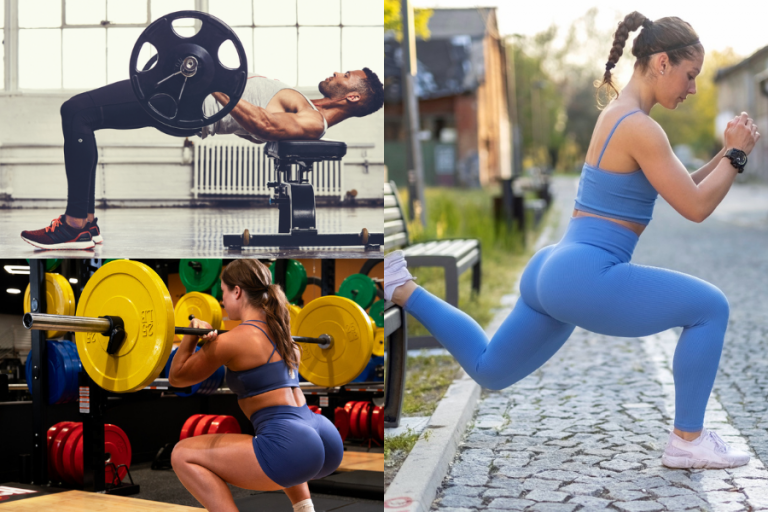
You might think of leg day as an intimidating obstacle, but it becomes much more approachable when you focus on a quad workout with dumbbells. Even if you’re new to lower-body training or simply looking to refresh your routine, these easy-to-follow tips help you capitalize on each rep. By targeting your quadriceps with dumbbells, you’ll discover how to build stability, enhance everyday movement, and feel more powerful in your favorite activities.
No matter your fitness level, a well-structured quad workout pays off in the long run. Strong quadriceps guide you through tasks as simple as strolling through the grocery store or conquering a local 5K. And if you’re dreaming of more athletic pursuits, like sprint training or recreational sports, developing your quads is an absolute must. Keep reading to learn how to hit your quads effectively and safely.
Understand your quadriceps
Your quads are the four main muscles in the front of your thigh: the vastus lateralis, vastus medialis, vastus intermedius, and rectus femoris. Together, they allow you to straighten your knee, stabilize each step, and propel you forward. Without proper quad strength, even basic movements like climbing stairs can feel tougher than they should.
It’s easy to overlook these muscles because you engage them daily for walking or standing. However, adding targeted training ensures you strengthen them evenly and effectively. By focusing on a quad workout with dumbbells, you can gradually push each muscle to adapt, enhancing your ability to lift, jump, balance, and more.
Equip yourself for leg day
You don’t need a bulky machine to engage your quads. Dumbbells are a versatile, user-friendly tool that let you control your weight load and adjust intensity one step at a time. Whether you exercise at home or at the gym, keeping a range of dumbbells around ensures you can fine-tune your workout depending on how you feel each session.
Think about your space and comfort before you begin. Make sure you have enough room to lunge or squat without knocking into furniture. Wear supportive athletic shoes and stretch out your hip flexors, hamstrings, and calves beforehand. Warming up might involve gentle leg swings or bodyweight squats to activate your lower body. The goal is to enter your workout feeling prepared rather than rushed or cold.
Master essential dumbbell exercises
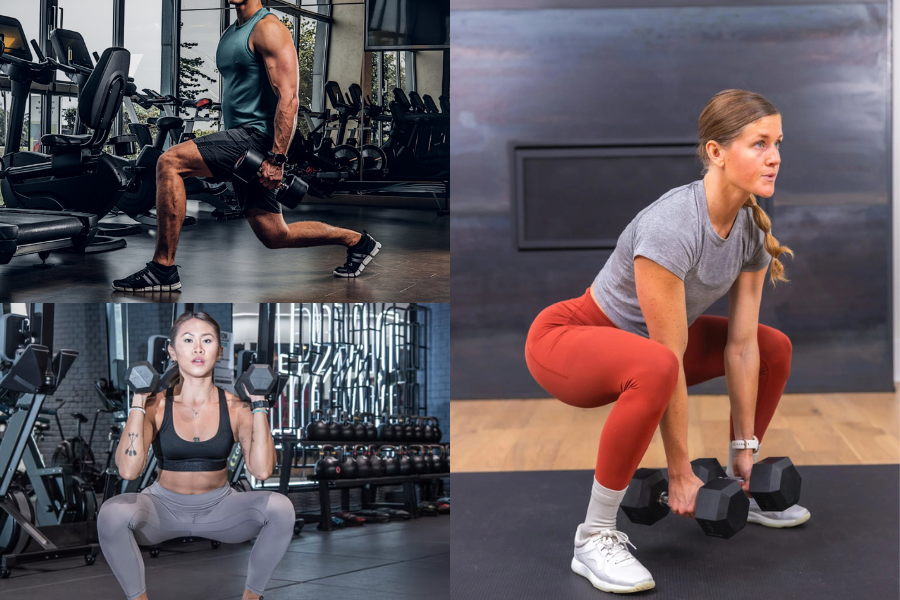
Dumbbells bring variety and control to your quad routine by allowing you to hold weights at your sides, in front of you, or above your shoulders. Below are four core exercises known for building quad strength while boosting your functional fitness:
-
Goblet squats
Stand with your feet shoulder-width apart and hold a dumbbell vertically against your chest. Push your hips back and lower into a squat, keeping your chest upright. Aim for thighs parallel to the floor, then drive your heels into the ground to stand back up. -
Dumbbell lunges
Hold a dumbbell in each hand and step one foot forward. Lower your back knee toward the ground until both legs form about a 90-degree angle. Press through the front heel to bring your body back to standing, then switch sides. You can alternate legs every rep or complete all reps on one side before switching. -
Dumbbell step-ups
Place one foot on a sturdy bench or step while holding dumbbells. Shift your weight onto that same leg, pushing through your foot to rise up until both legs are extended. Then lower your opposite foot back to the floor. Keep your balance by looking forward and maintaining a strong core. -
Bulgarian split squats
Stand facing away from a low bench and place the top of one foot behind you on the surface. With a dumbbell in each hand, bend your front knee to lower your hips until you feel a stretch in the back leg. Push through your front heel and return to standing. Switch legs after your set.
These moves challenge your quads from various angles and also engage your glutes and core for stability. If you’re new to any of these exercises, begin with very light weights. Focus on form first, then add heavier dumbbells once you’re confident.
Avoid common form mistakes
One of the most effective ways to protect your knees and lower back—and to maximize results—is learning proper technique. Steer clear of these pitfalls to stay safe during your quad workout with dumbbells:
• Dropping your shoulders. If you let your shoulders slump forward, your back may round and pull tension away from your legs. Keep your chest open and spine neutral.
• Letting your knees collapse inward. Think about driving your knees slightly outward to maintain proper alignment over your feet. This prevents undue stress on your knee joints.
• Rising onto your toes. Aim to push through your heels. When you bounce onto your toes, you reduce your quads’ workload and risk straining your calves.
• Holding your breath. Breathing continuously during each rep helps keep you steady and powered. Inhale before lowering into a squat or lunge, then exhale as you drive back up.
If you’re unsure about your form, record yourself briefly on your phone or ask a friend to observe your technique. Small repositioning—like adjusting your stance width—can make a significant difference in how your muscles fire and how your body responds to each exercise.
Structure your workout routine
Making quads a regular part of your training plan can bring noticeable improvements in strength and mobility. Consider dedicating one or two sessions a week specifically to quad-focused movements:
• Start with dynamic warmups such as leg swings or high-knee marches.
• Perform two or three sets of each exercise, aiming for 8–12 reps per set.
• Add a complementary exercise for your hamstrings or glutes to keep your posterior chain strong, too, such as dumbbell deadlifts or hip thrusts.
• Finish with a cooldown, which might include gentle quad stretches.
Adjust your sets, reps, and rest periods based on your current fitness level. If you’re more advanced, you can add supersets by combining a quad exercise with a move that targets another muscle group—like pairing goblet squats with overhead presses. Keeping rest times around 60 to 90 seconds ensures you recover enough to maintain proper form but don’t lose momentum.
Maintain long-term progress
Consistency is the key to successful quad training. Challenge yourself gradually by increasing dumbbell weight, adjusting the angle of your torso during squats, or experimenting with new variations. Tracking your progress in a journal or app keeps you motivated, showing exactly where you’ve improved over time. If you hit a plateau, consider shifting your rep range or emphasizing a slightly slower lowering phase to spark fresh gains.
Take time to listen to your body, too. Soreness after a new workout is common, but intense pain signals you might have pushed too hard or missed a form cue. Recovery practices like foam rolling, gentle stretching, or light walking can help you bounce back faster for your next session.
By focusing on proper form, progressive overload, and consistent scheduling, your quad workout with dumbbells will help you see and feel results. You’ll likely notice a stronger stride and the confidence that comes from knowing your lower body is up to daily tasks and athletic adventures alike. Ultimately, the best workout is one that aligns with your goals, keeps you safe, and encourages steady progress. Enjoy the journey, and give your quads the attention they deserve!
About the Author