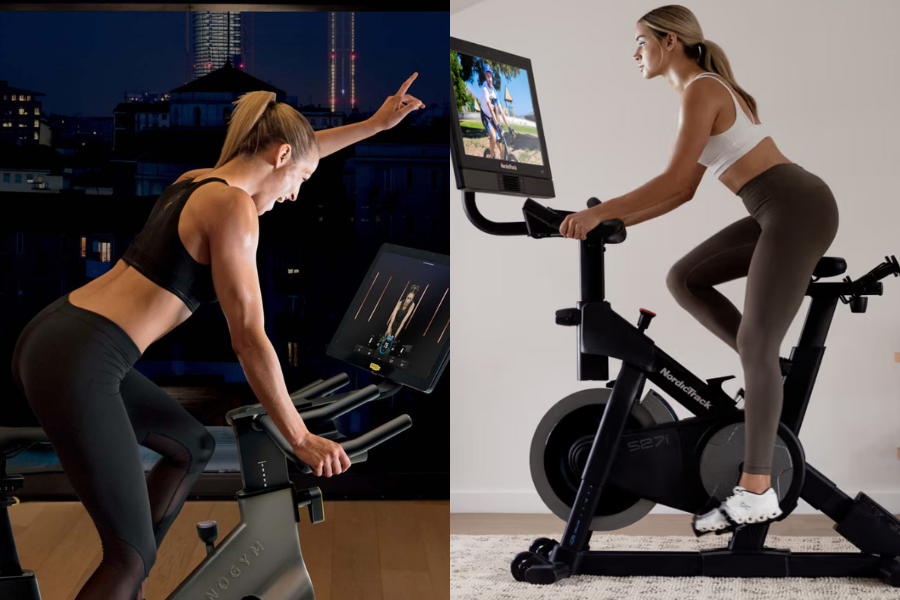
Interval training on an exercise bike can turn short, focused rides into powerful workouts for weight loss, fitness, and overall health. Instead of pedaling at one steady speed the whole time, you alternate harder efforts with easier recovery periods. This simple shift in how you ride can help you burn more calories, improve your endurance, and see results faster.
Below, you will learn what interval training is, why it works so well on a stationary bike, and exactly how to set up effective workouts whether you are a beginner or more advanced.
What is interval training on an exercise bike?
Interval training on an exercise bike means you cycle hard for a short burst, then back off to an easier pace so you can recover, and repeat. These harder bursts might be 20 to 60 seconds of vigorous pedaling, followed by 40 to 90 seconds of slow or moderate pedaling.
High intensity interval training (HIIT) is a specific form of interval training where the hard efforts are very intense, typically at or above 80 percent of your maximum heart rate or power output. On a stationary bike, this might feel like you are pushing close to your limit, but only for a brief period.
Researchers describe HIIT on a bike as repeated short bursts at very high intensity, at least 90 percent of maximal oxygen uptake or more than 75 percent of maximal power, interspersed with easier recovery intervals. Even though the total workout time can be shorter than a traditional steady ride, this style of training can produce similar or greater fitness benefits (NCBI – MDPI).
Why interval training on an exercise bike works so well
Using intervals on an exercise bike is not just about working harder. It is about working smarter in less time.
During the intense intervals, you push your heart, lungs, and muscles to a higher level of effort. During the recovery periods, you allow your body to partially rest while staying in motion. This repeated stress and recovery pattern drives powerful adaptations.
Studies using stationary bikes and cycle ergometers show that interval and sprint style workouts can:
- Improve cardiovascular endurance and VO2 max
- Increase your muscles’ ability to use oxygen efficiently
- Boost insulin sensitivity and resting fat oxidation
- Reduce body fat, including visceral fat around the abdomen
In one review, people who did sprint interval training on bikes, such as 4 x 30 second all out efforts, improved muscle oxidative capacity, insulin sensitivity, endurance, and reduced fat mass, even with very low total training time (NCBI – MDPI). Another comparison found that sprint intervals produced similar improvements to longer moderate-intensity cycling despite roughly 90 percent less total training volume (NCBI – MDPI).
In practical terms, that means you can get very meaningful results with shorter, structured rides if you are willing to work hard during the intervals.
Benefits for weight loss and body composition
If you are using an exercise bike to lose weight or change your body composition, interval training can help in several ways.
First, intense intervals burn a lot of calories in a short period. For example, one clinical trial on a commercial REHIT style bike showed that a 15 minute fat burn ride with 30 sprint intervals burned an average of 281 calories when you include both the ride and the afterburn effect (Carolbike).
Second, intervals can trigger a greater “afterburn” or excess post exercise oxygen consumption. This is the elevated calorie burn that continues after you finish your workout. CAROL Bike’s reduced exertion HIIT protocol, just 5 minutes with two 20 second sprints, was shown to burn more calories in 15 minutes than a 30 minute run because of these prolonged metabolic effects (Carolbike).
Third, high intensity cycling helps reduce body fat and visceral fat. In a 12 week cycling HIIT program using 10 x 45 second intervals at 80 to 85 percent of maximal heart rate, men with overweight or obesity lost body weight and fat mass, including deep abdominal fat (PubMed). Running intervals produced even larger abdominal fat losses in that study, but cycling still led to significant improvements.
It is worth noting that the same study found that changes in gut microbiota composition were linked with how much total and abdominal fat people lost, which suggests your gut bacteria may influence how your body responds to interval training on a bike (PubMed).
For everyday use, combining steady state cycling with 2 to 3 interval workouts per week can create a hybrid routine that burns calories, keeps your motivation up, and helps you avoid plateaus (Carolbike).
Health and fitness gains beyond calories
You might start interval training mainly to burn fat, but the health benefits go much further.
Short interval workouts on a bike have been shown to:
- Increase cardiovascular fitness and VO2 max
- Improve your ability to sustain higher intensities
- Build muscular endurance and power in your legs
- Enhance pedaling efficiency and cadence control
- Improve metabolic markers that relate to long term health
For instance, short 20 to 30 second micro-intervals on an exercise bike can quickly boost VO2 max, fat burning, and endurance (Bicycling). Specific formats like the “Flying 40s” develop muscular endurance by forcing you to produce power and then recover repeatedly, which translates well to outdoor hills or sprints (Bicycling). Even 10 second speed intervals can refine your pedal stroke and rhythm (Bicycling).
A 5 year trial in older adults who did twice weekly 4 x 4 minute HIIT cycling sessions at 85 to 95 percent of peak heart rate found that HIIT was at least as safe as moderate cycling, with the lowest mortality rate in the HIIT group, which points to potential longevity benefits (NCBI – MDPI).
So when you practice intervals, you are not just chasing a calorie number. You are training your heart, lungs, muscles, and even your metabolism to work more efficiently.
How interval training compares to steady rides
You might wonder if you should ride steadily for 40 to 60 minutes or choose a shorter, more intense interval workout. In reality, you do not have to choose only one.
Steady state cycling keeps your effort consistent at a moderate level. It is easier to sustain and is great for building a cardiovascular base and burning calories at a comfortable pace. Many people lose significant weight this way. For example, one individual lost about 40 pounds through outdoor riding that naturally included stops, coasting, and hills before adding gym bike sessions (Reddit Fitness).
Interval sessions, like 2 to 3 minutes at moderate resistance followed by 1 minute at high resistance, push your heart rate higher and can feel more intense, but you can finish them in less time for similar or greater benefits (Reddit Fitness).
Experts often suggest an 80 / 20 balance. About 80 percent of your weekly training time at lower, below threshold intensity, and about 20 percent as higher intensity interval work (Shimano). This approach gives you the metabolic advantages of hard efforts while still allowing enough easy or moderate riding for recovery and overall health.
Getting started safely with intervals
If you are new to interval training on an exercise bike, start more gently than you think you need to. You can always increase intensity later, but you cannot undo overtraining or an injury.
Before you begin, it helps to:
- Warm up for at least 5 to 10 minutes at an easy pace
- Adjust the seat and handlebars so your knees are slightly bent at the bottom of the pedal stroke
- Use a resistance level that feels like a mild to moderate hill for your harder efforts, not a wall
For beginners, cycling experts recommend building a base first with longer intervals at a comfortable pace, gradually increasing the difficulty, and then adding lighter anaerobic intervals to challenge your heart and lungs (Shimano).
Pay attention to how your body feels. Consistency and self awareness are critical. Try to compete only against your own past efforts, balance harder days with easier ones, and be willing to back off if you feel unusually fatigued or unwell (Shimano).
If you have heart disease, joint issues, or any medical concerns, talk with your doctor before starting high intensity training.
Sample interval workouts for different levels
You can customize interval training on an exercise bike to match your current fitness and goals. Use these as templates and adjust resistance and speed so that “hard” feels challenging but sustainable for the time given.
Beginner: Intro to intervals (20 minutes)
This workout eases you into the pattern of effort and recovery.
- Warm up: 5 minutes easy pedaling
- Main set:
- 8 rounds of
- 30 seconds faster pedaling at moderate resistance
- 60 seconds easy pedaling
- Cool down: 5 minutes very easy pedaling
The hard 30 seconds should feel like a 6 or 7 out of 10 effort, not an all out sprint. You should breathe heavier but still feel in control.
Intermediate: Time efficient fat burn (25 minutes)
Once you are comfortable, you can shorten the recovery and increase intensity.
- Warm up: 5 minutes easy, gradually adding a bit of resistance
- Main set:
- 10 rounds of
- 40 seconds hard effort at 7 to 8 out of 10
- 40 seconds easy pedaling
- Cool down: 5 minutes at light resistance
This kind of 1:1 work to rest pattern is similar in spirit to many fat burn style rides and can significantly increase calorie burn in a short time, especially when done 2 to 3 times per week (Carolbike).
Advanced: Short sprint intervals (15 to 20 minutes)
If you already have a strong fitness base, you can experiment with very short, intense sprints.
- Warm up: 6 to 8 minutes, ending with 2 short 10 second pickups
- Main set:
- 10 to 15 rounds of
- 20 seconds all out or near maximal effort at high resistance
- 60 seconds very easy pedaling
- Cool down: 5 minutes easy
This resembles the micro-intervals and sprint based training that research links to rapid improvements in VO2 max, muscle capacity, and fat burning (NCBI – MDPI, Bicycling). Because the intensity is high, keep this type of session to a couple of times per week and allow easy days in between.
Tip: On your “off” or easy days, a light 30 to 45 minute steady ride can help you recover while still burning extra calories.
How often to do interval training on your bike
For most people who want better health and weight loss, 2 to 3 interval sessions per week is plenty. On the other days, you can walk, lift weights, or do easier steady bike rides.
Here is a simple weekly structure:
- 2 days: Interval training on the exercise bike
- 2 to 3 days: Easy or moderate cardio or strength training
- 1 to 2 days: Full rest or very light movement
Low volume HIIT protocols that include less than 15 minutes of actual high intensity work per session have been shown to be time efficient for improving cardiometabolic health and endurance (NCBI – MDPI). You do not need to spend hours on the bike for benefits, but you do need to be consistent over weeks and months.
If you are using intervals to prepare for outdoor rides with hills or long distances, you can mimic those demands on your stationary bike by progressively increasing resistance and adding more climbing style intervals, similar to how one rider built up endurance on a recumbent bike while recovering from an arm injury (Reddit).
Bringing it all together
Interval training on an exercise bike is a practical way to get more results in less time. You cycle hard for short bursts, recover just enough to go again, and repeat. The research supports this style of training for weight loss, fat reduction, cardiovascular health, and performance across different ages and fitness levels.
You do not need to copy complex protocols or push to the edge every day. Start with simple intervals, listen to your body, and gradually increase the challenge. With a consistent routine that blends intervals and easier rides, your exercise bike can become one of the most efficient tools you have for improving your health and reaching your goals.
About the Author