A little work on hamstring mobility goes a long way toward keeping you moving well and staying injury free. When you focus on the right hamstring mobility exercises, you improve flexibility, protect your lower back, and boost your performance in everyday life and in sport.
Below you will find practical, research backed exercises and tips you can use at home or in the gym, even if you are starting from a place of “tight everything” and long days sitting at a desk.
Understand what you are actually stretching
Before you dive into hamstring mobility exercises, it helps to know what you are feeling when you stretch.
Many people feel a sharp, burning pull right behind the knee and assume they are stretching the hamstring. In reality, that intense sensation is often your sciatic nerve under tension, especially if you are rounding your back and leaning forward aggressively. It feels dramatic, but it is not the muscle stretch you are aiming for.
To actually target your hamstrings, you want to feel the stretch in the middle of the back of your thigh, not behind the knee and not deep in the calf. You get there by adjusting your position and focusing on a controlled hip hinge instead of collapsing forward from your spine.
A simple rule of thumb: if you soften or slightly bend your knee and the sensation eases out of the back of the knee and into the middle of your thigh, you are much closer to a true hamstring stretch.
Warm up the whole back of your body first
Your hamstrings rarely work in isolation. They share the load with your calves, glutes, hips, and lower back, so it makes sense to prepare the whole area before asking for more mobility.
A short warm up can be as simple as 5 to 8 minutes of:
- Easy walking or cycling
- Dynamic leg swings front to back and side to side
- Gentle bodyweight squats
- A few walk outs from standing into a plank and back
This type of movement increases blood flow and makes every stretch and mobility drill feel more comfortable and effective. It also helps you avoid forcing positions that your body is not ready for yet.
Use dynamic hamstring mobility before you work out
Dynamic hamstring mobility exercises are best before running, lifting, or sports. They move your muscles through range without long holds so your legs feel awake and ready rather than sleepy and over stretched.
Supine dynamic hamstring swings
You can do this on the floor with a towel or band.
- Lie on your back with both legs straight.
- Loop a towel around the ball of your right foot and lift that leg so your thigh points toward the ceiling.
- Keep a soft bend in your knee, then gently pull your leg toward you until you feel a light stretch in the back of your thigh.
- Slowly lower the leg about 20 to 30 degrees, then raise it again, moving in a smooth swing.
- Perform 10 to 15 reps, then switch sides.
Aim for a gentle, rhythmic motion instead of jerking the leg closer every time. You are inviting more range of motion, not wrestling your hamstrings into submission.
Runner’s lunge to hamstring rock back
This move doubles as a hip opener and a hamstring mobilizer, which makes it ideal before runs or strength sessions that involve squats and deadlifts.
- Start in a low lunge with your right foot forward, left knee on the floor, and hands framing your front foot.
- Hug or gently squeeze your front thigh with your arms to keep your torso close.
- Pivot back on your front heel as you push your hips backwards, gradually straightening the front knee until you feel a stretch in the belly of the hamstring.
- Hold for 1 to 2 seconds, then shift your weight forward into the lunge again.
- Repeat 8 to 12 times per side.
This “rocking” motion takes you in and out of the stretch so your body learns to control that range, not just tolerate it passively.
Make static stretches count after your workout
Static hamstring stretches, where you hold a position without moving, work best after activity. At that point your muscles are warm and more receptive to lengthening, and you are less likely to overdo it.
Experts recommend shorter holds of around 15 to 30 seconds, repeated a few times, over one long marathon stretch. This is especially helpful when you are new to flexibility work, because your body resists less and relaxes more.
Bent knee hamstring stretch
Starting with a bent knee takes pressure off the calf and the attachment behind the knee so you can hinge from the hip more safely.
- Sit tall on the floor with your right leg extended and left leg bent, foot resting near your right inner thigh.
- Place a small bend in your right knee instead of locking it out.
- Hinge forward from your hips, keeping your back flat or slightly arched rather than rounded.
- When you feel a moderate stretch in the middle of your hamstring, pause and breathe.
- Hold for 20 to 30 seconds, then relax and repeat up to 3 times per side.
You should feel a firm but manageable stretch that you can breathe through. If the sensation shifts behind your knee or into your calf, back off slightly and re bend the knee.
Supine wall or towel stretch
This option lets you completely relax your upper body.
- Lie on your back near a wall or door frame.
- Place your right heel on the wall and slide it up until your knee is slightly bent.
- Gently scoot your hips closer to the wall until you feel a stretch in the hamstring.
- If you do not have a wall, loop a towel around your foot and hold the ends to guide the leg into position.
- Hold 20 to 30 seconds, then switch sides.
Because your torso is supported, you can focus on breathing and letting the muscle lengthen instead of gripping through your lower back or neck.
Never force a hamstring stretch. Pushing aggressively triggers a protective reflex that makes the muscle tighten, which is the opposite of what you want.
Build strength to protect your hamstrings
Tight hamstrings are not always just short hamstrings. They can also be weak, especially if you spend long hours sitting with your hips and knees flexed. Strengthening through a full range of motion is one of the best long term “mobility tools” you have.
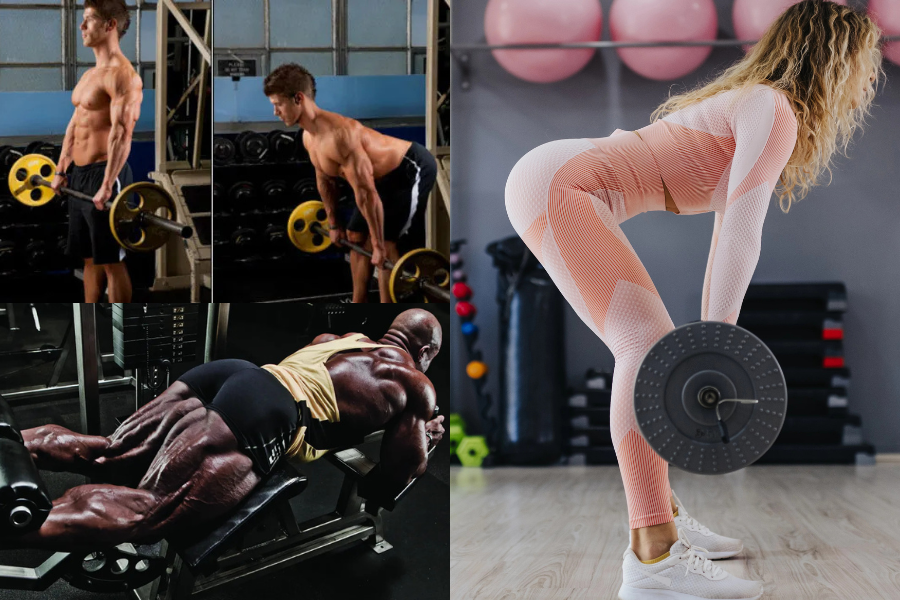
Eccentric Romanian deadlifts
Eccentric isometric Romanian deadlifts are a standout exercise for improving hamstring mobility, strength, and control. You focus on the slow lowering phase and a pause in the stretched position, which helps lengthen muscle fibers and build resilience.
- Stand tall holding dumbbells or a barbell in front of your thighs.
- Soften your knees and keep your spine neutral.
- Hinge at your hips, pushing them back while the weights travel down your thighs toward mid shin.
- Take 3 to 7 seconds to lower, feeling your hamstrings load as you reach the bottom.
- Pause for 2 to 5 seconds in that stretched position without rounding your back.
- Drive your hips forward to stand back up at a normal tempo.
Start with 2 to 3 sets of 6 to 8 controlled reps. As your hamstrings adapt, you can gradually increase weight or time under tension.
Single leg deadlifts and glute bridges
Single leg deadlifts, Bulgarian split squats, kettlebell swings, and weighted glute bridges all show up frequently in lists of effective hamstring mobility and strength builders as of 2024. They teach each leg to stabilize and generate force on its own, which is crucial for running, court sports, and daily balance.
You can organize a simple lower body session around:
- 3 sets of 8 single leg deadlifts each side
- 3 sets of 10 to 12 glute bridges or hip thrusts
- 2 to 3 sets of kettlebell swings if you are comfortable with the technique
Performed two to three times per week, this kind of work supports both flexibility and durability in your hamstrings over time.
Try advanced techniques when you are ready
Once you have a base of strength and comfortable range of motion, you can explore more advanced methods that blend stretching and active control.
PAILs and RAILs for lasting flexibility
PAILs and RAILs are techniques where you contract the muscle at its end range, then gradually explore more range. They combine static stretching with isometric contractions so your nervous system “saves” the new flexibility rather than snapping back to old patterns.
A simple example with a seated hamstring stretch:
- Sit with one leg extended and lean forward until you feel a moderate stretch.
- Gently press your heel into the floor as if you are trying to bend the knee or pull the leg backward, holding that contraction for 10 to 20 seconds.
- Relax, then see if you can ease slightly deeper into the stretch without forcing it.
- Hold the new position and lightly contract the muscle on the opposite side of the joint to support that range.
Over time this helps reduce stiffness while improving your confidence and control at the edge of your flexibility.
Integrate pelvic control with leg raises
Reverse active straight leg raises and band pullover straight leg raises are useful when you want to connect hamstring flexibility with solid pelvic positioning. Instead of letting your lower back move to “cheat” extra range, you train your hips to perform the work.
This matters for athletes in particular, because good sprinting and jumping mechanics rely on clean hip movement, not bending from the spine to make up the difference.
Do not forget your sciatic nerve
If you often feel that sharp, electric pull behind your knee during stretches, your sciatic nerve may need attention too. Sciatic sliders are gentle mobility drills that help the nerve glide more freely, which can reduce the feeling of chronic tightness along the back of your leg.
A basic version looks like this:
- Sit tall on a chair with one leg extended and heel on the floor.
- As you straighten the knee, gently pull your toes toward you and tuck your chin.
- Then bend the knee, point the toes slightly, and lift your head back to neutral.
- Move slowly in and out of this pattern for 10 to 15 reps, staying well under your pain threshold.
Nerve mobility is not about stretching to the max. It is about smooth, pain free motion and a steady, relaxed breath.
Match your routine to your goals
How often you use hamstring mobility exercises depends on what you want out of them.
If your main concern is general comfort and injury prevention, daily light stretching plus strength work two to three times per week is a solid baseline. Short static holds of 15 to 30 seconds, repeated several times, fit easily into the end of a walk, run, or lifting session.
If you play sports that involve sprinting, jumping, or quick direction changes, research and expert insights as of 2024 highlight the value of combining:
- Dynamic stretches and foam rolling before workouts to increase blood flow and prepare your muscles
- Strength exercises like Romanian deadlifts, single leg deadlifts, kettlebell swings, Bulgarian split squats, glute bridges, and Nordic raises
- Static stretches and mobility drills afterward to improve flexibility and reduce soreness
A 2023 meta analysis of 14 randomized controlled trials including 735 participants found that targeted hamstring stretching can significantly reduce pain intensity, improve straight leg raise performance, increase range of motion, and enhance functional ability in people with various types of low back pain, which supports including these exercises in rehab and prevention plans.
Keep your gains with everyday movement
Finally, your hamstring mobility is not decided only by what you do in the gym. Long hours sitting with your knees and hips bent can leave your hamstrings both tight and weak, and that tension can ripple up into your back, shoulders, and even your neck.
You can protect the progress you make by:
- Standing up and walking for a few minutes every hour
- Using deep squats, light jumps, or controlled kicks as quick “movement snacks”
- Taking the stairs when you can to keep your posterior chain engaged
- Practicing a couple of your favorite stretches daily, even on rest days
Think of hamstring mobility exercises as maintenance for the way you move. A few focused minutes, done consistently, can mean fewer aches, better posture, and more confidence in everything from picking up groceries to sprinting for a bus.
Start with one or two exercises from this guide today. As they become easier, layer in strength work and more advanced techniques. Your legs will thank you with smoother, stronger movement for years to come.
About the Author