A smart glute workout for women does more than shape your butt. Strong glutes support your lower back, stabilize your hips, and power almost every step, squat, and jump you take. When you train them intentionally, you build a body that not only looks toned but also feels stronger and more comfortable in daily life.
Below you will learn why your glutes matter so much, how to tell if they are underactive, and how to build a simple, effective glute workout you can follow at home or in the gym.
Understand your glute muscles
Your “glutes” are actually three muscles that work together every time you walk, stand up, or climb stairs.
- Gluteus maximus is the largest muscle in your body and gives your butt most of its shape and size.
- Gluteus medius sits on the outer side of your hip and helps you balance and keep your knees stable.
- Gluteus minimus lies underneath the medius and helps control hip and pelvic movement.
These muscles are a major stabilizer for your pelvis and spine. Trainers sometimes describe them as the gateway between your spine and legs because they help control how your upper and lower body move together. When your glutes are strong and active, everyday movements feel more powerful and controlled. When they are weak, other areas have to pick up the slack.
Why strong glutes matter for women
If you sit a lot for work or school, your glutes are probably underused. Over time, that can lead to tight hip flexors, a forward-tilted pelvis, and extra strain on your lower back. Women often notice this as stiffness or discomfort in the low back after long periods of sitting or standing.
Strong glutes help you:
- Stabilize your pelvis and spine. This supports better posture and can reduce low back pain, especially if you sit frequently.
- Move with more power. Your glutes generate force for walking, running, climbing stairs, and sprinting. Better glute strength makes these activities feel easier and more efficient.
- Protect knees and hips. When your glutes do their job, your knees are less likely to cave inward during squats or lunges, which helps protect your joints.
- Support pregnancy and postpartum recovery. Active glutes help support the pelvic floor and may reduce the risk of back pain as pregnancy progresses.
As trainer Dana Santas notes, strong glutes are essential for stabilizing the pelvis, supporting the spine, and powering everyday movements like walking and climbing stairs, all of which are crucial for posture and pain prevention in women. Glute specialist Leigh Weissman also highlights that targeting this large muscle group is key not just for aesthetics but for controlling pelvic function and hip movement.
Signs your glutes might be weak
You do not need a complex assessment to get a sense of your glute strength. Pay attention to how your body feels during and after common movements and workouts.
You may have underactive or weak glutes if you notice:
- You feel squats and lunges mostly in your quads or lower back, not so much in your butt
- Your knees collapse inward during squats, lunges, or when you land from a jump
- You struggle to balance on one leg for more than a few seconds
- Your hip flexors, quads, or hamstrings always feel tight, even if you stretch often
- You experience recurring low back stiffness, especially after sitting for long periods
If a few of these sound familiar, a focused glute workout for women can help you retrain these muscles so they fire when they should.
Start with glute activation
Before you lift heavy or add complex movements, you want your glutes “awake” and ready to work. Activation exercises are simple moves that help you create a strong mind muscle connection, improve blood flow to the area, and prepare your hips for bigger lifts.
Try this basic activation mini routine
Do this before your lower body workouts or on its own as a quick wake up session:
-
Glute bridges
Lie on your back with knees bent and feet flat, hip width apart. Press through your heels to lift your hips until your body forms a straight line from shoulders to knees. Squeeze your glutes at the top, pause for one to two seconds, then lower with control.
Aim for 2 sets of 12 to 15 reps. -
Lateral band walks
Place a light resistance band around your thighs or just above your ankles. Bend your knees slightly and step sideways, keeping tension on the band and your hips level. You should feel the side of your hips and glutes working.
Take 10 to 15 steps in one direction, then 10 to 15 back. Repeat 2 times. -
Bodyweight hip hinges
Stand with feet hip width apart. Push your hips back as if you are closing a car door with your butt, keeping your back flat. You should feel a stretch in your hamstrings and engagement in your glutes. Return to standing by driving your hips forward and gently squeezing your glutes.
Do 2 sets of 10 to 12 reps.
Spend a few minutes on activation before each glute workout and you will notice better muscle engagement and less strain on your lower back.
Build your beginner glute workout
If you are new to strength training or returning after a break, start with bodyweight movements and light resistance. You do not need a gym, and you do not need heavy weights to see progress.
Try this simple beginner glute workout for women two to three times per week, with at least one day of rest between sessions.
- Bodyweight squats
-
Reps: 10 to 15
-
Sets: 2 to 3
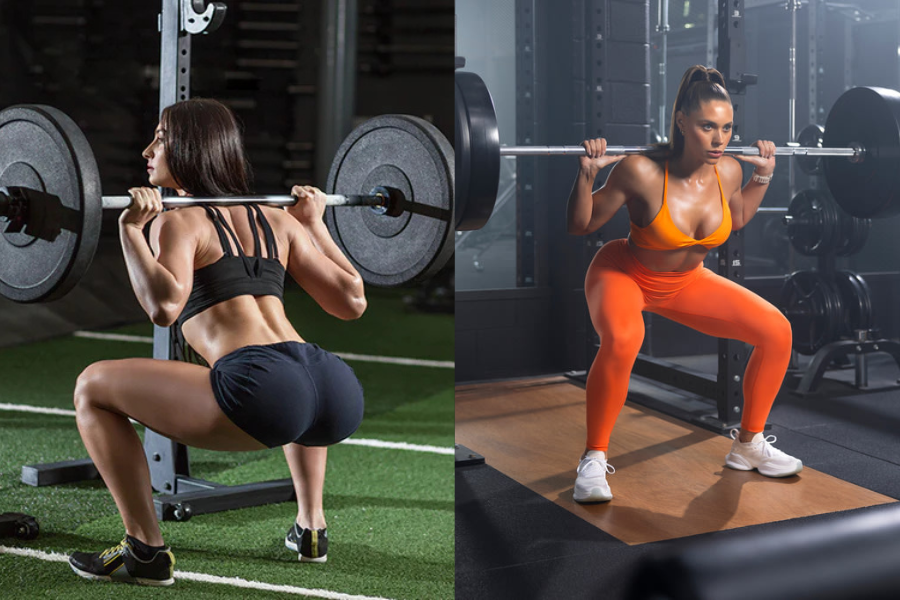
Stand with feet slightly wider than hip width and toes turned out a little. Sit your hips back and down as if you are lowering into a chair, keeping your chest up and knees tracking in line with your toes. Press through your heels to stand and gently squeeze your glutes at the top.
- Reverse lunges
-
Reps: 8 to 10 per leg
-
Sets: 2 to 3
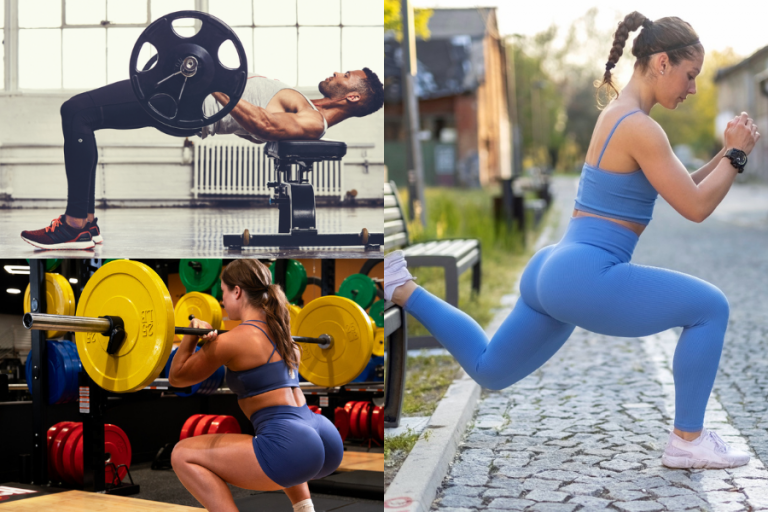
From standing, step one foot back and lower into a lunge. Both knees bend to about 90 degrees. Keep most of your weight in your front heel and push through that heel to return to standing. This targets your glutes more than a forward lunge and is often easier on your knees.
- Glute bridges
-
Reps: 12 to 15
-
Sets: 2 to 3
Use the same movement as in the activation section, but now treat it as a main strength move. To make it harder, hold a single dumbbell or a heavy book on your hips.
- Split squats
-
Reps: 8 to 10 per leg
-
Sets: 2
Stand in a staggered stance with one foot forward and the other back, heel lifted. Lower your back knee toward the floor while keeping your torso tall. Press through the front heel to stand. You should feel this in your front glute and quad.
Rest 45 to 60 seconds between sets. Focus on slow, controlled movement and quality form instead of rushing.
Progress to an intermediate glute workout
As your strength improves, you can add more challenging exercises and extra resistance. At this stage you might use dumbbells, a bench, or a barbell if you have access to a gym.
Here is an example of an intermediate glute workout for women:
- Dumbbell squats or goblet squats
-
Reps: 8 to 12
-
Sets: 3
Hold a dumbbell at your chest or two dumbbells at your sides. Squat as you did in the beginner workout, keeping your core tight. Adding weight increases the challenge and helps you build more muscle.
- Romanian deadlifts (RDLs)
-
Reps: 8 to 10
-
Sets: 3
Hold a pair of dumbbells in front of your thighs. Soften your knees and hinge at your hips, sliding the weights down your thighs until you feel a stretch in your hamstrings. Keep your back flat and shoulders pulled back. Drive your hips forward and squeeze your glutes to return to standing.
Single leg RDLs are especially effective for the upper glutes and help improve balance and hip stability.
- Hip thrusts (bodyweight or barbell)
-
Reps: 8 to 12
-
Sets: 3
Sit with your upper back against a bench or couch edge and feet flat on the floor. With or without a barbell across your hips, press through your heels to lift your hips until your torso forms a straight line from shoulders to knees. Hold for a second at the top with a strong glute squeeze, then lower with control.
- Bulgarian split squats
-
Reps: 8 to 10 per leg
-
Sets: 2 to 3
Place your back foot on a bench, step, or sturdy chair behind you. Lower your back knee toward the floor while keeping your front knee in line with your toes. Press through your front heel to return to standing. This single leg move is excellent for glute strength, balance, and stability.
- Lateral band walks or cable hip abductions
-
Reps: 12 to 15 per side
-
Sets: 2 to 3
These moves target your glute medius and minimus, which are important for upper glute shape and pelvic stability. Lateral band walks can be done anywhere with a loop band. In the gym, cable hip abduction lets you adjust resistance more precisely.
Rest 60 to 90 seconds between sets. As the weights feel easier, increase the load, reps, or sets so that your last few reps feel challenging but doable with good form.
Simple rule of thumb: if you finish a set and feel like you could easily do 10 more reps, it is time to increase the difficulty.
Train for upper glute lift
If you are aiming for more shape and lift at the top of your butt, you will want to specifically target the glute medius and minimus along the side and upper portion of your hips. These muscles help with hip abduction and pelvic stability, and they contribute to that “top shelf” look many women are after.
Effective upper glute moves include:
- Lateral band walks
- Side plank with hip abduction
- Cable hip abduction
- Dumbbell walking lunges
- Single leg Romanian deadlifts
According to glute training experts, focusing on single leg and abduction movements is particularly effective for the upper glutes. Aim to train your glutes at least twice per week, and up to three times if your schedule allows, with 48 to 72 hours of recovery between hard sessions.
Frequency, rest, and recovery
Most women do well training glutes two to three times per week. Bret Contreras, a well known glute specialist, notes that effective programs can range from two to six glute sessions per week depending on your physiology, exercise selection, and overall training volume. For most people, three focused sessions is a sweet spot.
Keep these guidelines in mind:
- Allow 24 to 48 hours between intense glute workouts for the same muscle group
- Use light activity on rest days, such as walking, stretching, or gentle mobility work
- Support recovery with hydration, sleep, and enough protein to support muscle repair
- If you are very sore, reduce volume or intensity slightly until your body adapts
Consistency matters more than perfection. A workable routine that you can stick with will always beat a “perfect” plan that feels overwhelming.
How long results usually take
With steady training and progressive overload, you can start to notice changes in how your glutes feel and function within a few weeks. Many women see visible differences in glute size and shape in about 4 to 8 weeks of consistent upper glute training, with more dramatic changes often appearing over 3 to 6 months or longer, depending on genetics, nutrition, and training habits.
If you prefer to train at home, you can still grow your glutes using bodyweight and resistance bands. Increase challenge over time by:
- Adding more repetitions
- Adding pauses or holds at the hardest part of the movement
- Reducing rest between sets
- Progressing to single leg versions of exercises
- Introducing bands or dumbbells when you have access to them
Beginners who train at least twice a week and eat enough protein can see noticeable glute growth in roughly six weeks.
Putting your glute plan together
To turn all of this into something you can use right away, choose one of these simple setups:
-
2 days per week:
Day 1: Beginner or intermediate workout
Day 2: Same workout or a mix of hip thrusts, RDLs, and lunges -
3 days per week:
Day 1: Squat focused (squats, lunges, bridges)
Day 2: Hinge focused (RDLs, hip thrusts, single leg work)
Day 3: Upper glute and stability (lateral band walks, side planks with leg lifts, Bulgarian split squats)
Start with weights and variations that feel manageable, then challenge yourself gradually. Pay attention to where you feel each exercise. When your butt is working more and your lower back and knees are working less, you are on the right track.
Try adding just one or two of the exercises above to your next workout. Over time, those small changes add up to stronger, more toned glutes and a body that feels more powerful in everything you do.
About the Author