Glute building workout: why it boosts confidence
When you follow a smart glute building workout, you are not just training a single muscle group. You are strengthening the largest and most powerful muscles in your body, which support your posture, protect your lower back, and help you feel more stable and capable in everyday life. As your glutes get stronger and more defined, you tend to stand taller, move with more ease, and feel more confident in and out of the gym.
This guide walks you through what makes an effective glute building workout, how to fuel your body for growth, and how to structure a beginner friendly routine you can actually stick with.
Understand your glute muscles
To build your glutes with intention, it helps to know what you are training. Your “glutes” are actually three muscles that work together:
- Gluteus maximus, the largest muscle that shapes most of your butt and powers hip extension, like when you stand up from a chair or drive your hips forward in a hip thrust.
- Gluteus medius, a smaller muscle on the outer hip that stabilizes your pelvis when you stand on one leg, walk, or run.
- Gluteus minimus, the smallest and deepest muscle, which helps with hip stability and rotation.
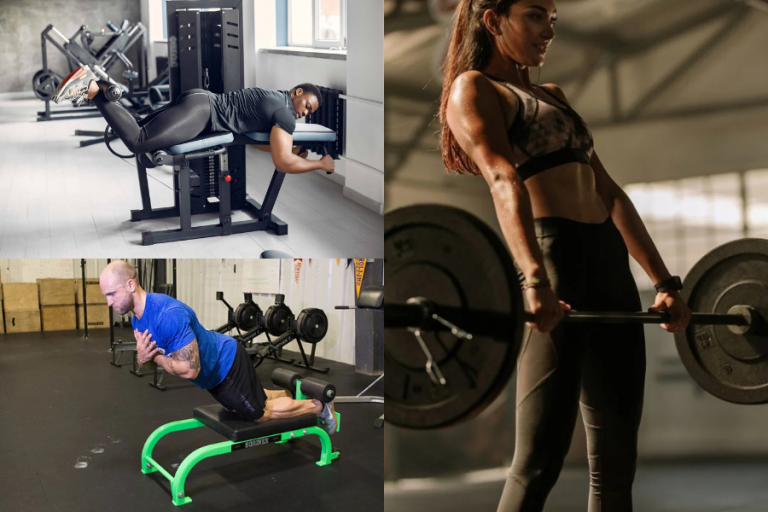
Glute workouts that only focus on one type of movement or one small corner of your range of motion will leave some of these muscles under trained. To get rounded, strong, and functional glutes, you want a mix of squatting, hinging, hip thrusting or bridging, and abduction or lateral movements. Guidance from brands and coaches like Gymshark highlights the value of combining big compound lifts with focused accessory work to fully cover these muscle groups.
Pair nutrition with your glute training
You cannot out train an under fueled body. Up to 80% of your health outcomes, including muscle building and glute toning, come down to what you eat according to Dr. Mar Mira of Mira+Cueto Clinic in Madrid. That is why a glute building workout works best when you support it with a “glute diet” that targets both muscle and skin firmness.
Dr. Mira recommends focusing on:
- High quality proteins, to provide the building blocks for new muscle
- Healthy fats, to support hormones and overall health
- Low glycemic index carbohydrates, to give you steady energy for tough sessions
- Micronutrients like collagen, vitamin C, zinc, and magnesium, to support collagen production and muscle function
A practical guideline for glute growth is to aim for roughly 2 grams of protein per kilogram of body weight per day, 2 to 4 grams of carbohydrates per kilogram, and about 0.8 grams of fat per kilogram. This combination supports a modest calorie surplus, which your body needs to add muscle. If you are not gaining any strength or size despite consistent training, lack of calories or protein is often the missing piece.
Timing also matters. For better performance and recovery, try to eat about 25% of your daily carbs plus 20 to 30 grams of protein 1 to 2 hours before training, then another 25% of your carbs and 20 to 30 grams of protein within 60 to 90 minutes after you finish. This strategy helps fuel your workout and gives your glutes what they need to repair and grow.
You will see the best changes in firmness and tone if you follow this style of eating for at least six to eight weeks while you train and sleep well. Dr. Mira notes that this approach does not just build muscle, it also supports collagen production in your skin, which can help your glutes look smoother and more lifted, and can give you an overall feeling of strength and well being.
Choose exercises that truly target glutes
Many popular moves that are marketed as “booty exercises” do not actually load your glutes in the most effective way. Fitness coach Jeremy Ethier points out that a lot of trendy routines overemphasize hip abduction, or simply moving your leg out to the side, instead of your glutes’ main job, which is hip extension. To build real strength and shape, you want exercises where you are driving your hips forward or pushing through your heels.
Ethier recommends basing your glute building workout around big movements like:
- Back squats or front squats
- Leg presses
- Romanian deadlifts and conventional deadlifts
- Bulgarian split squats
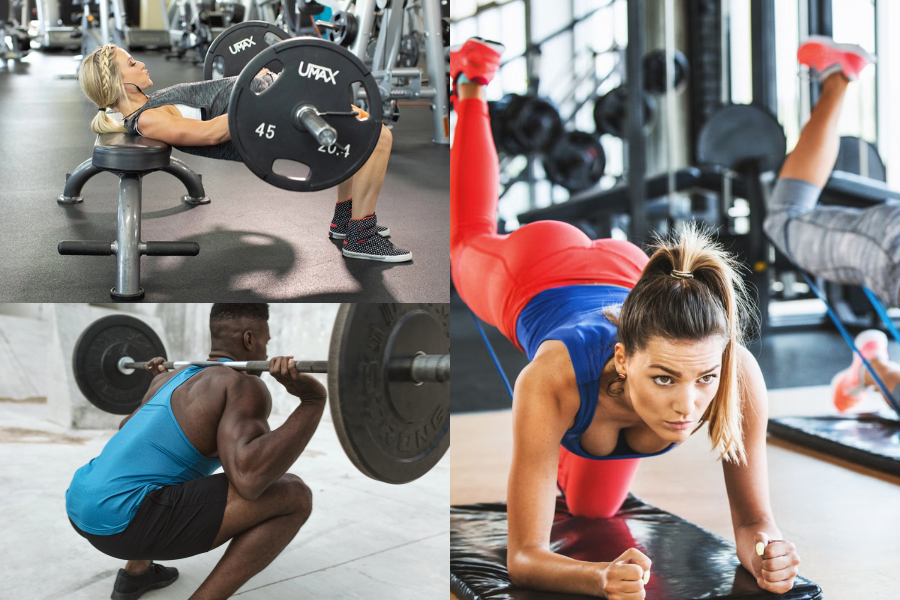
- Hip thrusts
From there, you can layer in isolation exercises such as glute bridges, cable kickbacks, and band work to really fatigue the muscles. Research and coaching experience, including work cited by Gymshark and Oxygen Magazine, consistently highlight barbell hip thrusts as one of the strongest glute developers. They create very high activation in the gluteus maximus, which makes them especially useful if your goal is a natural “booty lift” and better strength for other lifts.
You also want to think in movement patterns. The Ladies Who Lift glute training approach, for example, suggests covering four key patterns every week:
- Squatting, like back squats or goblet squats, to train deep hip flexion and extension
- Hinging, such as Romanian deadlifts, to target hamstrings and glutes together
- Thrusting, like hip thrusts and glute bridges, to hit the glutes hardest at lockout
- Abduction or lateral work, such as side steps, to strengthen the glute medius and minimus
This pattern based view ensures you are not leaving parts of your glutes undertrained just because they are less visible.
Fix common form mistakes that kill glute gains
If you have ever finished “leg day” and only felt your quads or lower back, your form is probably letting your glutes off the hook. Jeremy Ethier notes three frequent issues that limit glute activation:
- Your quads take over. This often happens in squats and leg press. To shift more work to your glutes, try a slightly wider stance, point your toes out a bit, and sit your hips back rather than letting your knees slide far forward.
- Your lower back and hamstrings dominate. In deadlifts or good mornings, if you only feel a stretch in your hamstrings and pressure in your low back, you may be rounding, dipping your chest too fast, or not driving your hips forward at the top. Think about squeezing your glutes to stand tall instead of just pulling the bar up.
- You rush through the movement. Speed often turns powerful glute exercises into momentum based swings. Slow your reps down, especially on the way down, and pause where the tension is highest to bring the work back into the muscle.
Working through a full range of motion is another big factor. Squatting to at least parallel, or slightly below if your hips and knees are comfortable, increases glute activation compared to shallow reps. The same idea applies to hip thrusts. Let your hips drop under control, then fully extend and squeeze at the top instead of doing half reps.
Use time under tension and progressive overload
Muscles grow in response to clear, repeated signals. For your glutes, that signal is a mix of mechanical tension, muscle damage, and metabolic stress. Effective glute building workouts use more than one of these pathways and gradually increase the challenge over time, a principle known as progressive overload.
According to training guidance from Gymshark and Oxygen Magazine, you can apply this by:
- Increasing weight over time, once your form is solid and your last few reps feel challenging but controlled
- Increasing time under tension, for example by slowing the lowering phase, adding a 1 to 2 second pause at the bottom or top, or doing 1.5 reps
- Working across rep ranges, such as 4 to 8 reps heavy for strength, 8 to 12 for hypertrophy, and 12 to 15 plus for endurance and “burn” work
- Decreasing rest times slightly, once you have built a strength base, to increase metabolic stress
Oxygen Magazine suggests deliberately slowing your reps, especially during movements like single leg split squats and hip thrusts, and adding holds at the hardest point of the exercise. This extra time under tension can help maximize glute growth without needing to add weight too quickly.
Progressive overload does not have to be dramatic. You might add 2.5 to 5 pounds to your hip thrust every week or two, add 1 or 2 reps to a set, or keep the same weight but extend your pause at the top. The key is that you are not repeating the exact same easy workout week after week.
Balance training frequency and recovery
You might be tempted to train glutes every day, especially if you are chasing fast changes. In reality, your muscles grow when you rest, not while you are lifting. Personal trainers and glute specialists like Bret Contreras, often called a leading expert in glute training, tend to see the best results with glute workouts around three times per week, with an overall effective range of two to six sessions depending on the person.
For most people, a simple and sustainable target is to train your glutes two to three times per week. This gives you enough total volume while still allowing for recovery. Aim for 24 to 48 hours between hard lower body sessions so that your muscles have time to repair the tiny tears that resistance training creates. Over days and weeks, your body repairs these and makes the muscle thicker and stronger, which leads to visible growth and a firmer shape.
Sleep is also non negotiable. About 7 to 9 hours per night helps your body produce the hormones that support muscle growth and keeps your energy steady enough to actually push yourself in your workouts. Without enough rest, both your performance and results will stall, no matter how perfect your program looks on paper.
Keep supplements simple
The supplement world is full of products that promise a rounder butt with almost no effort. The research reviewed here suggests that most of these are unnecessary and often overpriced. For a glute building workout routine, the only aids that really make sense for most people are:
- Protein powder, especially if you struggle to hit your daily protein target through food. Plant based options can work just as well as whey when your total protein intake is high enough.
- Creatine, a well studied supplement that can improve strength and power so you can lift slightly heavier over time.
- Moderate caffeine sources, like coffee or simple pre workout drinks, if you tolerate them and they help you focus.
Beyond that, your money is usually better spent on quality whole foods or basic equipment like resistance bands or a gym membership. Supplements cannot replace progressive training, enough calories, or consistent rest.
Try this example glute building workout
Here is a sample glute focused workout that brings together many of the principles above. You can perform this routine two or three times per week with at least one rest day in between sessions. Adjust the weights so that the last 1 or 2 reps of each set feel demanding but not sloppy.
- Warm up, 5 to 10 minutes
- 5 minutes on a bike, cross trainer, or brisk walk
- Dynamic leg swings forward and sideways, 10 each leg
- Bodyweight squats, 2 sets of 10
- Glute activation, such as banded side steps, 2 sets of 15 per side
- Barbell or goblet squats, 3 sets of 6 to 8 reps
- Focus on sitting your hips back and down.
- Drive through your whole foot and squeeze your glutes to stand.
- Romanian deadlifts, 3 to 4 sets of 8 to 10 reps
- Keep a soft bend in your knees and hinge at your hips.
- You should feel a stretch in your hamstrings and strong engagement in your glutes.
- Hip thrusts, 3 sets of 10 to 12 reps
- Rest your upper back on a bench, feet flat and knees bent.
- Lower your hips, then drive them up until your torso and thighs form a straight line.
- Pause and squeeze your glutes hard at the top for 1 to 2 seconds.
- Bulgarian split squats, 3 sets of 8 to 10 reps per leg
- Elevate your back foot on a step or bench.
- Keep your chest tall and think about dropping your back knee toward the ground.
- Push through the front heel to come up, which emphasizes the glutes.
- Cable or banded glute kickbacks, 3 to 4 sets of 12 to 15 reps per leg
- Move slowly and avoid swinging your leg.
- Focus on squeezing your glute, not arching your lower back.
- Lateral band walks or curtsy lunges, 2 to 3 sets of 12 to 15 reps per side
- These target the glute medius and minimus for stability and shape around the hips.
- Cool down and stretch, 5 to 10 minutes
- Light walking or cycling
- Static stretches for hips, glutes, hamstrings, and quads
Quick guideline: Choose weights that make the last 2 reps of every set tough but doable in good form. If you could easily do 5 more reps, it is time to increase the load or slow your tempo to add more tension.
As you get stronger, you can rotate variations of these movements, such as front squats instead of back squats, single leg hip thrusts, or step ups in place of Bulgarian split squats. Gymshark and other coaching sources also highlight unilateral work like single leg deadlifts and walking lunges to fix imbalances, strengthen your core, and reduce injury risk.
Build confidence one workout at a time
A smart glute building workout does more than change how your jeans fit. When you train with purpose, fuel your body well, and see strength numbers go up, you naturally feel more capable and confident.
Start by choosing two or three sessions per week, plan your pre and post workout meals, and commit to tracking your weights and reps. Give yourself six to eight weeks of consistent effort with solid sleep and you will likely notice firmer glutes, better posture, and a stronger, more energized version of yourself every time you walk into a room.
About the Author