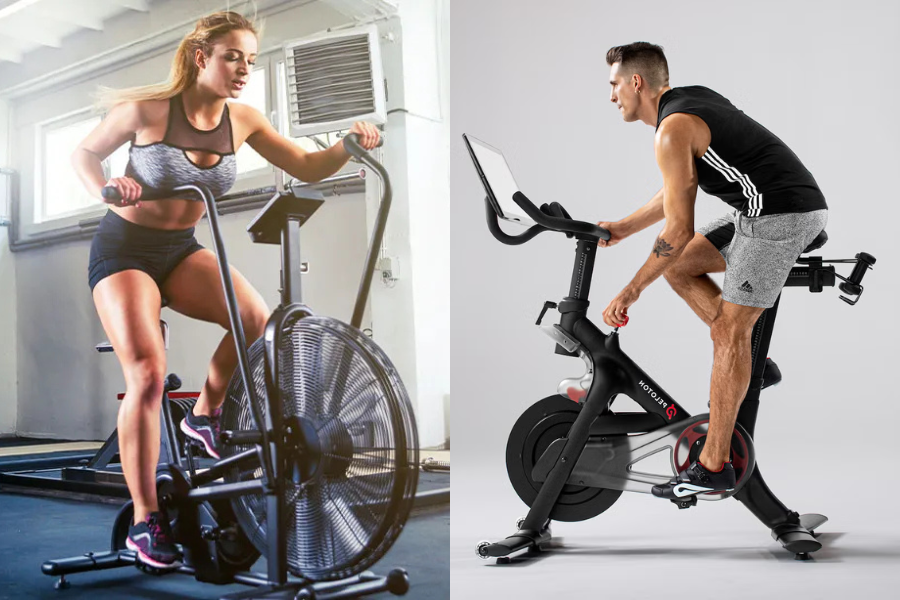
A stationary bike can be one of the easiest tools for fat loss, especially if you like the idea of working out at home. With the right exercise bike fat burning workouts, you can burn a significant number of calories, protect your joints, and build cardio endurance without complicated routines or equipment.
Below, you will find simple, effective workouts plus clear guidance on how often to ride, how hard to push, and how to make your routine sustainable.
Understand how the bike burns fat
You burn fat when you create a calorie deficit, which means you use more energy than you eat. An exercise bike helps by increasing how many calories you burn each day.
For example, riding a stationary bike for 30 minutes at a moderate intensity can burn around 210 to 294 calories, depending on your body weight and effort level (Crunch Fitness). If you ride harder, the burn goes up. A 155 pound person can burn about 252 calories in 30 minutes of moderate cycling and up to 330 calories with a 30 minute HIIT session, which is about 30 percent more than steady state riding (CarolBike).
The key idea is simple. Your bike is the tool that increases your calorie burn. Fat loss happens when that increased burn is paired with a sensible, calorie controlled diet.
Choose your workout style: LISS vs HIIT
Most effective exercise bike fat burning workouts fall into two main types: LISS and HIIT. Each has a role, and you do not have to choose only one.
Low intensity steady state (LISS)
LISS means maintaining a steady, moderate pace for a longer time. You should feel like you are working, but still able to speak in short sentences.
- A 60 minute LISS ride at moderate effort can burn about 390 calories for a 155 pound person, and doing this three times per week can roughly equal a 3,500 calorie deficit, or about one pound of fat, if your food intake is controlled (Crunch Fitness).
- Three 60 minute LISS sessions per week can burn around 1,512 calories for that same 155 pound rider, which is a meaningful boost to your weekly calorie burn (PureGym).
LISS is great for beginners, for active recovery days, and for anyone who prefers a more relaxed style of cardio that still supports fat loss.
High intensity interval training (HIIT)
HIIT alternates short bursts of hard effort with easier recovery periods. These intense intervals raise your heart rate quickly and keep your metabolism elevated even after you stop riding.
- HIIT cycling often involves working at 80 to 95 percent of your maximum heart rate during the hard bursts, followed by lower intensity pedaling to recover (Studio Three).
- This style of training can burn a lot of calories in a short time and also benefits from the afterburn effect, where your body continues to use extra energy for hours after the workout (Crunch Fitness, SOLE Fitness).
HIIT is ideal when you are short on time or when you want to push fat burning and fitness improvements a bit faster. If you are new to intense exercise or have health issues, talk with your doctor first and start with shorter, gentler intervals (Studio Three).
Try these beginner friendly fat burning workouts
You do not need to guess your way through a ride. Use these simple, structured workouts as a starting point and adjust speed and resistance to match your fitness level.
1. 30 minute LISS fat burning ride
Perfect if you are getting back into exercise or want a low impact routine that still moves the needle on fat loss.
-
Warm up, 5 minutes
Pedal very easily with low resistance. Aim for a light effort where you could chat comfortably. -
Main set, 20 minutes
Increase resistance slightly. Your breathing should be deeper, but you should still be able to say a sentence or two. This often sits around 60 to 70 percent of your max heart rate, which is a classic fat burning zone for longer rides (SELF). -
Cool down, 5 minutes
Reduce resistance and gradually slow your pedaling. Focus on relaxed breathing.
You can extend the main set to 30 or even 45 minutes as your fitness improves. At moderate intensity, a 30 minute ride can burn roughly 210 to 294 calories depending on your body weight (PureGym).
2. 20 minute HIIT session for fast calorie burn
This workout gives you more burn in less time by alternating hard work with easy recovery.
-
Warm up, 5 minutes
Easy pedaling with low resistance. Gradually increase your speed near the end. -
Intervals, 12 minutes total
Repeat the following for 6 rounds:
-
40 seconds at hard effort. Think 7 to 8 out of 10 on a rate of perceived exertion scale, where talking is difficult.
-
1 minute easy pedaling at low resistance to recover.
You are working in that 76 to 85 percent range of your max heart rate during the harder parts, similar to effective interval formats recommended by cycling instructors (SELF).
- Cool down, 3 minutes
Slow your speed and drop the resistance. Let your heart rate come down gradually.
HIIT sessions like this only need to last about 10 to 20 minutes of total work to significantly raise your daily calorie burn and improve your cardio fitness (PureGym).
3. Tabata style bike finisher
Tabata is a very short, very intense interval format. Use this only if you already have a base level of fitness and feel comfortable working hard.
A classic Tabata set is 4 minutes total, made up of:
- 20 seconds of high intensity cycling at about 80 to 100 percent of your max effort (RPE 8 to 10)
- 10 seconds of very easy pedaling or complete rest
Repeat that 8 times. You can add this after a shorter LISS ride or use it as a standalone quick hit on busy days. Exercise physiologists note that Tabata style intervals are an efficient way to burn fat in a short time when you adjust resistance and speed to your level (SELF).
Add variety with climbs and longer sessions
Once you feel comfortable with the basics, you can add different formats that target your muscles and metabolism in new ways.
Hill and climb intervals
Climb intervals mimic riding uphill. You increase the resistance so your legs work harder and your heart rate rises, which boosts calorie burn and strengthens your glutes, quads, and core (PureGym).
Try this 25 minute climb session:
- Warm up for 5 minutes at easy effort.
- Alternate 3 minutes of seated climbing at moderate to high resistance with 2 minutes of easier spinning. Repeat 3 times.
- Cool down for 5 minutes at low resistance.
Structured climb workouts similar to this, with specific RPM and effort targets, have been shown to significantly increase fat burning throughout the day by activating your anaerobic system and taking advantage of the EPOC effect, which is the extra calorie burn after intense exercise (Men’s Health UK).
Longer endurance rides
If you have time and enjoy zoning out on the bike, a weekly longer ride can be very effective.
- Aim for 45 to 90 minutes at a moderate intensity, around 60 to 70 percent of your max heart rate.
- Include a few short surges at a slightly harder pace if you feel good.
Combining these longer aerobic sessions with interval workouts on other days trains your body to burn fat efficiently and improves overall endurance (SELF).
Plan your weekly schedule for fat loss
You do not need to ride every day to see results, but you do need consistency. Many experts suggest 3 to 5 exercise bike sessions per week, each lasting 30 to 60 minutes, to maximize fat burning when combined with a balanced diet and some strength training (Crunch Fitness, SOLE Fitness).
Here is one simple weekly layout:
- 2 days of LISS rides, 30 to 45 minutes
- 2 days of intervals or HIIT, 15 to 30 minutes
- 1 day of a longer, moderate ride if you enjoy it
Pairing your cycling with 2 to 3 days of basic strength training can help maintain or build muscle, which supports your metabolism and long term fat loss (Crunch Fitness).
Stationary bike workouts work best for fat loss when they are consistent and paired with a realistic eating plan you can stick to.
Make your workouts sustainable and joint friendly
One of the big advantages of an exercise bike is that it is low impact and joint friendly. This makes it a good option if you are overweight or have knee or hip concerns, compared to higher impact activities like running or some aerobics classes (PureGym).
To keep your routine sustainable:
- Adjust the seat height so your knees have a slight bend at the bottom of the pedal stroke.
- Start with lower resistance and gradually increase as your legs get stronger.
- Mix up LISS and HIIT so you are not going all out every day.
- Make riding enjoyable by listening to music, podcasts, or audiobooks. Many riders on Reddit credit simple enjoyment tricks like watching TV during rides for staying consistent long term (Reddit).
Real users have reported losing 20, 30, and even 70 plus pounds by combining regular stationary bike sessions with a calorie deficit, which shows what is possible when you stick with it (Reddit).
Support your rides with smart nutrition
Your exercise bike can burn a lot of calories, but you will not see much fat loss if your eating habits completely cancel out that effort.
A few simple guidelines:
- Aim for a modest calorie deficit instead of severe restriction so you still have energy to ride.
- Focus on lean protein, whole grains, fruits, vegetables, and healthy fats to stay satisfied.
- Stay hydrated before, during, and after your sessions.
- Before intense HIIT rides, it can help to eat a carb rich meal a couple of hours earlier so you have enough fuel and do not break down muscle unnecessarily (Studio Three).
When you pair consistent workouts with a reasonable, nutrient dense diet, you give yourself the best chance of steadily burning fat and keeping it off (CarolBike).
Putting it all together
If you want to use exercise bike fat burning workouts to lose weight and improve your health, think in terms of small, repeatable steps rather than one perfect routine.
Start with a couple of 30 minute LISS rides this week. Add one short HIIT or interval session when you feel ready. Keep your seat comfortable, your resistance manageable, and your entertainment lined up so you actually look forward to getting on the bike.
Over the next month and beyond, those regular sessions, combined with better food choices, can add up to noticeable changes in your energy, fitness, and body fat.
About the Author