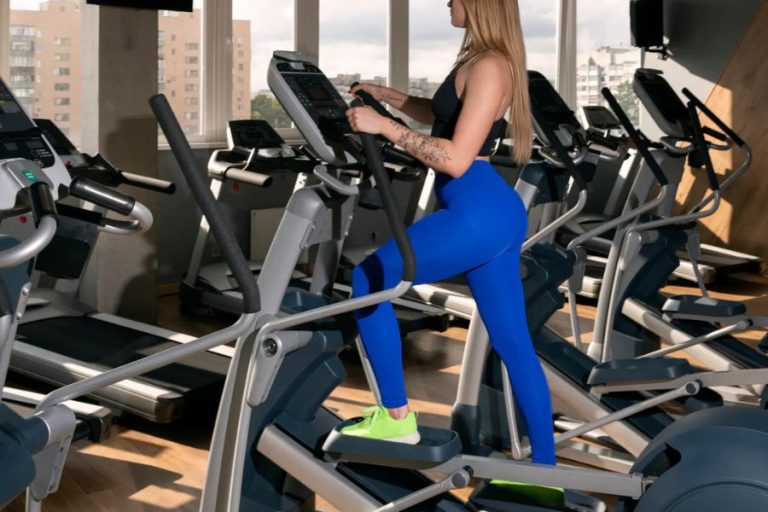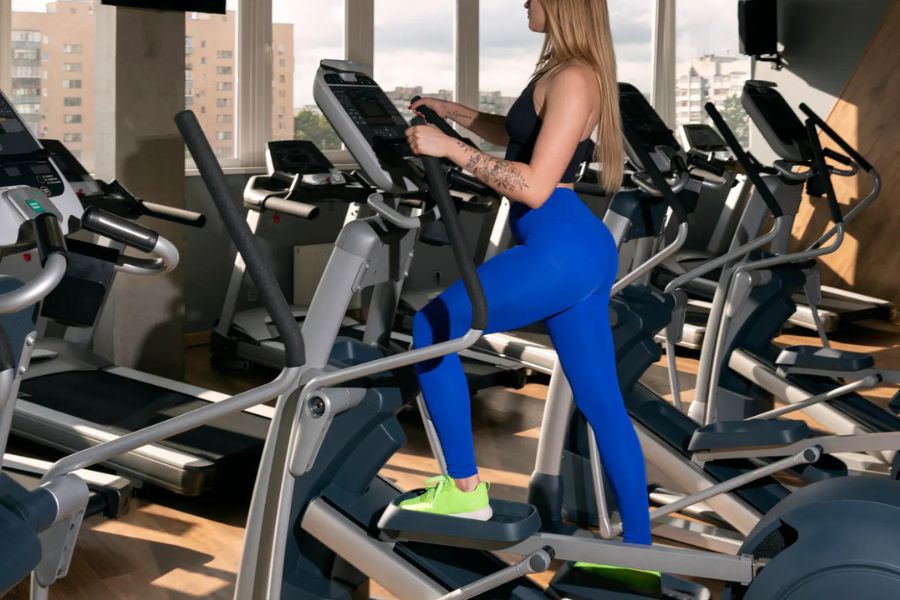
An elliptical workout for muscle toning might not be the first thing you think of when you step into the gym, but it quietly checks a lot of boxes. You get low impact cardio, full body engagement, and the ability to dial resistance up or down so your muscles have to work harder over time. When you use the machine with intention, it can become one of your most efficient tools for shaping and strengthening your body.
Below, you will see how an elliptical actually tones muscle, which muscles it works, and specific ways to adjust your routine so you are not just burning calories but building definition too.
How an elliptical tones your muscles
When you step onto the elliptical, you are doing more than a simple cardio session. You are combining aerobic exercise with resistance, which is exactly what your muscles need to become firmer and more defined.
Ellipticals are considered weight bearing because you support your own body weight while you move. That helps build muscular endurance and also supports bone health over time (Hospital for Special Surgery). As you increase resistance, your legs, glutes, and core have to push and pull harder through each stride, which promotes strength and definition in those muscles (Tousains).
The key thing to remember is that the elliptical is not a replacement for heavy strength training if your goal is large muscle size. It shines at helping you build lean muscle tone, better endurance, and visible definition when you pair it with good form and smart settings.
Muscles worked during an elliptical workout
Knowing exactly which muscles are working helps you fine tune your elliptical workout for muscle toning. With good technique, you are engaging close to 80 percent of your body’s muscles in each session (Hone Health).
Lower body focus
The elliptical is especially effective from the hips down. Each stride targets:
- Glutes, including the gluteus maximus, medius, and minimus
- Hamstrings along the back of your thighs
- Quadriceps on the front of your thighs
- Calves, mainly the gastrocnemius and soleus
These muscles work through different types of contractions as you move. You push down and back to engage the quads and glutes, then pull up and forward to activate hamstrings and calves in a continuous cycle (Garage Gym Reviews). When you add incline, glute and hamstring activation jumps even higher, with one analysis noting a dramatic increase in both muscles when the incline is set around nine degrees (Hone Health).
Upper body engagement
If your machine has moving handles, your arms and upper back get in on the work too. Pushing and pulling the handles recruits your chest, back, shoulders, triceps, and biceps, especially when you coordinate your arm drive with your leg motion (Healthline).
By using the handlebars intentionally instead of resting on them, you can turn what might have been a lower body only session into a true full body workout. That means more muscle engagement in less time.
Core stability and balance
Your core does more on the elliptical than you might think. The rectus abdominis, obliques, and deep transverse abdominals work isometrically to keep your torso stable and help transfer power between your upper and lower body (Garage Gym Reviews). If you occasionally let go of the handles, your balance and core activation increase even more, as long as you can maintain control (Healthline).
This constant, low level core engagement is one of the quiet benefits that contributes to better posture and overall muscle tone through your middle.
Why the elliptical is great for joint friendly toning
If high impact workouts leave your knees, hips, or ankles complaining, the elliptical gives you a way to keep training without the same level of stress. Because your feet do not leave the pedals, the impact on your joints is much lower than with running, but you still get effective muscle and cardiovascular work at the same time (Healthline).
At the same time, you are still bearing your own weight, which is important for keeping bones strong and muscles active around your joints (Hospital for Special Surgery). That makes the elliptical a smart choice if you are returning to exercise, managing joint issues, or simply want a lower stress option that still helps shape your legs and glutes.
How to set up your elliptical for toning
The way you set the machine matters just as much as how long you stay on it. To turn a casual ride into a muscle toning session, pay attention to resistance, incline, and stride.
Get resistance right
For toning, you want moderate to challenging resistance, not the easiest setting. Increasing resistance makes your quadriceps, hamstrings, calves, and glutes work harder through each cycle, which encourages strength and definition (Tousains). Many machines offer up to 20 levels, so you have room to progress gradually (ACE Fitness Equipment Blog).
Aim for a level where you can maintain good form and steady breathing, but your legs feel noticeably challenged by the end of each working interval. If you are barely feeling it, bump the resistance up one or two levels.
Use incline to target different muscles
Incline is your secret weapon for adding variety and emphasis. A higher incline shifts more work into your glutes and hamstrings and makes each stride feel more like climbing stairs or hiking uphill (Planet Fitness). Research has shown that hamstring and glute activation can increase many times over as incline goes up, so even a small adjustment can make a big difference (Hone Health).
Start with a low incline until you are comfortable, then gradually raise it over the course of several workouts. You can also cycle between lower and higher inclines within one session to hit more muscles and keep your body guessing.
Adjust stride and direction
If your machine allows you to vary stride length, shorter strides tend to emphasize quads and calves, while longer strides shift more work to hamstrings and glutes (ACE Fitness Equipment Blog). Alternating between the two in a workout helps build more balanced lower body strength.
Pedaling backward is another simple tweak. Reverse motion asks more of your hamstrings and calves and can wake up muscles that forward only sessions sometimes underuse (Mr. Treadmill).
Form tips that boost toning and prevent injury
Good form keeps the right muscles working and protects your joints. It also makes your time on the elliptical feel smoother and more intentional.
Try to keep these cues in mind:
- Stand tall with your shoulders back and chest open, do not hunch over the console
- Keep your feet flat on the pedals and distribute your weight evenly
- Engage your core lightly to prevent excessive swaying
- Use the full range of motion in your legs, driving down and back, then up and forward, so you do not lose quadriceps activation during the cycle (Hospital for Special Surgery)
- Hold the handles with relaxed hands and elbows bent around 90 degrees if you are using the upper body feature
Avoid bouncing or leaning heavily on the handles, which shifts work away from your muscles and into your joints (ACE Fitness Equipment Blog). Starting with moderate resistance instead of the highest level is also important for staying in control and avoiding strain (Hospital for Special Surgery).
Interval ideas to maximize toning and fat loss
If you want both muscle tone and fat loss, intervals are your friend. Alternating between harder efforts and easier recovery periods keeps your heart rate up and challenges your muscles in a focused way.
Here is a simple 30 minute elliptical workout for muscle toning you can try:
- Warm up for 5 minutes at low resistance and flat incline.
- Increase resistance to a moderate level and incline slightly for 2 minutes of steady, brisk effort.
- Raise resistance another level and possibly incline for 30 seconds of hard work where talking is difficult.
- Reduce resistance back to your moderate level for 90 seconds of active recovery.
- Repeat steps 3 and 4 eight times.
- Cool down for 5 minutes at low resistance.
This type of high intensity interval training, or HIIT, has been shown to maximize fat burning and muscle engagement in less time than steady state cardio (Healthline). You can adjust the hard and easy periods to match your fitness level, but keep the pattern of short, challenging bursts followed by active recovery.
How the elliptical supports weight loss and visible definition
If your main goal is to lose weight and see more muscle definition, the elliptical can play a central role. It lets you burn a significant number of calories while also challenging your muscles enough to maintain or slightly build lean mass, especially in your lower body and core.
Because the workout is low impact and joint friendly, you can usually use the elliptical more consistently than higher impact options, which supports steady progress over time (Planet Fitness). For fat loss, you will still need a slight calorie deficit and adequate protein in your diet, along with some dedicated strength training off the machine. The elliptical cannot spot reduce belly fat or replace heavy lifting, but it does help reduce overall body fat and reveal the muscle tone you are building underneath (Garage Gym Reviews).
Think of it as a flexible tool you can shape to your needs. On some days it can be your main workout, combining cardio and muscle endurance. On others it can be a lower impact supplement between strength sessions, keeping you active while your joints and muscles recover.
If you start with one or two focused elliptical workouts each week and build from there, you will likely notice not only better stamina, but also firmer legs, a stronger core, and the quiet satisfaction of knowing you are getting a lot of benefit from one simple machine.
About the Author