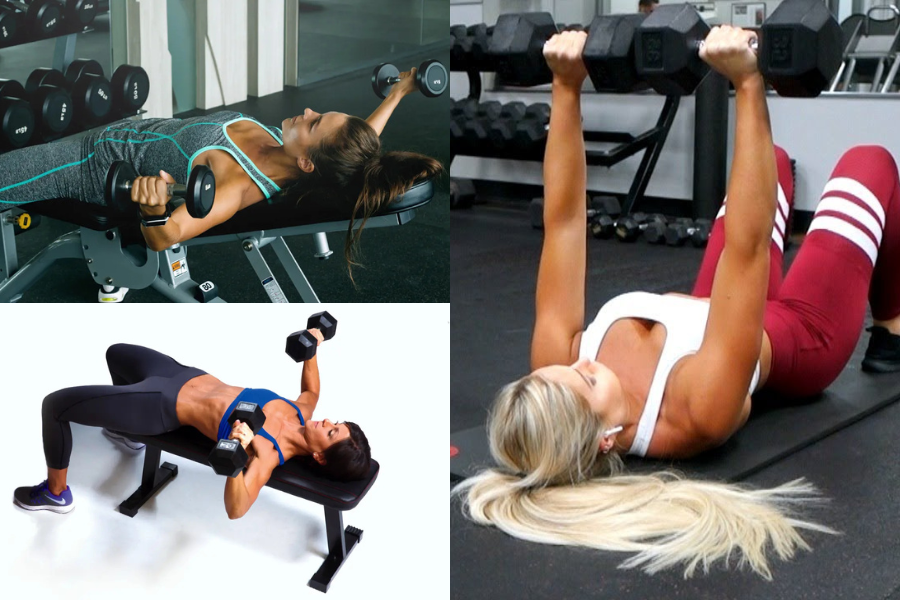
A simple, fun chest workout for women at home can be the missing piece in your strength routine. Training your chest does far more than shape your upper body. It supports better posture, helps protect your shoulders, and makes everyday tasks like carrying groceries or lifting boxes feel easier, according to trainers like Elise Young, CPT, CFSC and the National Osteoporosis Foundation, as cited by SheFit in 2024.
Below, you will find a beginner friendly chest workout for women that you can do in 20 to 25 minutes with just a mat and a pair of dumbbells. You will also learn why chest training matters for women, how to warm up safely, and how to adjust exercises to your current strength level.
Why chest workouts matter for women
If you tend to focus on squats, glutes, and core, you are not alone. Many women overlook chest training, yet your pectoral muscles are some of the largest muscles in your upper body. When you train them, you get benefits that go beyond looks.
Strong chest muscles help balance the front and back of your body, support the shoulders, and maintain spinal alignment. That means better posture and less strain on your neck and upper back in daily life, something Elise Young, CPT, CFSC, highlights as a key reason for women to work their chest.
Chest workouts also:
- Improve body balance by stabilizing the shoulder joint and supporting the clavicle and scapula
- Reduce risk of upper body overuse injuries by working with the rotator cuff muscles
- Increase overall calorie burn by adding lean muscle mass, which keeps your metabolism more active even when you are resting
According to the SheFit at home chest guide, strengthening your chest can even help counter osteoporosis risk by building the muscles and tissues that support your upper body and protect your bones.
What about breast size and bulkiness?
You might wonder if a chest workout for women will make your chest look smaller or overly muscular. The SheFit article notes that targeted chest exercises can actually lift and shape the breast area so they look fuller, not flatter, because the pectoral muscles sit underneath the breast tissue.
You also will not suddenly become bulky. The best chest exercises for men are the same ones that work for you, but your hormone profile and training volume make dramatic muscle size gains very unlikely. What you will notice instead is more definition, better posture, and a stronger upper body.
Warm up before you start
Before you pick up a weight, give your muscles a few minutes to wake up. A proper warm up is essential in chest workouts for women because cold muscles are less flexible. Jumping straight into pushups or presses makes you more vulnerable to sprains, strains, or muscle tears.
Spend 3 to 5 minutes on gentle movements that raise your heart rate and prepare your shoulders and chest, such as:
- Marching in place or light jogging
- Arm circles in both directions
- Shoulder rolls
- Wall pushups for 1 to 2 easy sets
You should feel warmer and looser, not tired. The goal is to improve your range of motion so your working sets feel controlled and comfortable.
How to structure your at home chest workout
You do not need a complicated routine to get results. A simple circuit works well for beginners and keeps the workout moving so it feels fun and not intimidating.
Here is a structure that matches recommendations seen in SheFit’s at home chest workout and other trainer guidelines:
- Choose 5 to 7 exercises
- Perform 8 to 12 reps each, or work for 40 to 50 seconds per move
- Rest 15 to 20 seconds between exercises
- Complete 3 rounds of the circuit
- Aim for 20 to 25 minutes total, 1 to 2 times per week
If you are new to strength training, start with one chest focused day per week. As you get stronger, you can perform this workout twice weekly, leaving at least one rest day between sessions for recovery.
Simple at home chest workout for women
You only need a mat and a pair of light to moderate dumbbells. If you do not have dumbbells, you can start with water bottles or cans and progress as you feel ready.
1. Incline press up
This is a beginner friendly pushup variation that uses a raised surface, such as a bench, sturdy chair, or staircase. The incline makes the move easier while still challenging your chest.
- Place your hands on the edge of your support, slightly wider than shoulder width.
- Walk your feet back so your body forms a straight line from head to heels.
- Brace your core and keep your neck neutral.
- Bend your elbows, lowering your chest toward the support. Aim to keep your elbows about 45 degrees from your ribs, not flared straight out.
- Press through your palms to return to the starting position.
Start with 8 to 10 reps. As you get stronger, move to a lower incline to make the exercise more challenging.
2. Dumbbell floor press
The dumbbell floor press targets your chest, shoulders, and triceps and is easier on your shoulders than a traditional bench press. It also helps you spot strength imbalances between sides.
- Lie on your back on the floor with your knees bent and feet flat.
- Hold a dumbbell in each hand, elbows bent at 90 degrees and resting on the floor. Your upper arms should be at about a 45 degree angle from your torso.
- Press the dumbbells straight up over your chest until your arms are almost fully extended.
- Slowly lower back down until your elbows gently tap the floor.
Perform 10 to 12 reps. Control the movement both up and down, and avoid locking out your elbows so your chest stays engaged.
3. Lying chest fly
Chest flys are excellent for targeting the inner portion of your chest without needing heavy weights. You can do these on a mat or bench.
- Lie on your back with your knees bent. Hold a dumbbell in each hand directly above your chest, palms facing each other, arms slightly bent.
- With a soft bend in your elbows, open your arms out to the sides in a wide arc until your upper arms hover just above the floor.
- Squeeze your chest to bring the dumbbells back together over your chest, as if you are hugging a large tree.
Aim for 8 to 12 reps. Focus on a gentle stretch at the bottom and a strong squeeze at the top, instead of rushing through the motion.
Tip: At the top of any fly or press, think about “pinching” your chest together, not just tapping the weights.
4. Close grip chest press
A narrow hand position shifts more work to your triceps while still engaging your chest, which adds variety to your routine.
- Lie on your back with a dumbbell in each hand, arms straight above your chest, palms facing each other.
- Keep the dumbbells close together so they lightly touch.
- Lower the weights together toward the center of your chest, keeping your elbows tucked closer to your sides.
- Press back up while maintaining that narrow grip.
Perform 10 to 12 reps. This move pairs well after regular presses because your triceps will feel the extra challenge.
5. Hand release pushup
The Hand Release Pushup, mentioned in women’s chest training guides, is a powerful way to work your entire chest and increase your pushup range of motion.
- Start in a high plank with hands under your shoulders and body in a straight line.
- Lower all the way down until your chest and thighs touch the floor.
- Briefly lift your hands off the floor, squeezing your shoulder blades together.
- Place your hands back down and press yourself back up to the starting position.
If a full plank is too challenging, drop to your knees while keeping a straight line from shoulders to knees. Begin with 5 to 8 repetitions and build up over time.
6. Bear plank shoulder taps
Bear plank shoulder taps, similar to plank shoulder taps recommended 2 to 4 times per week in Temple Fitness style routines, challenge your chest, shoulders, and core all at once.
- Start on all fours with your hands under your shoulders and knees under your hips.
- Lift your knees a few inches off the floor so they hover, keeping your back flat.
- Keeping your hips as steady as possible, lift your right hand to tap your left shoulder.
- Place it back down and repeat on the other side.
Work for 40 seconds, then rest. Move slowly and focus on stability. Your chest and core should feel engaged the whole time.
Form tips that make your chest work harder
Good form lets you feel your chest working and protects your joints.
Retract your shoulder blades
During presses and flys, gently pinch your shoulder blades together and keep them stable against the floor or bench. Trainers note that retracting the scapula helps you engage your outer, upper, and inner chest more effectively and reduces the load on your shoulder joints.
Imagine you are tucking your shoulder blades into your back pockets. This tiny adjustment can dramatically increase how much you feel each rep in your pecs instead of in your shoulders.
Use a weight you can control
Avoid ego lifting, even at home. If the weight is so heavy that you need momentum or you feel everything in your shoulders and arms, your chest is not getting the stimulus it needs. Lighter weights with slow, controlled reps will give you better results and a lower risk of injury.
A helpful guideline is to choose a weight that lets you complete your last 2 reps with effort but still with clean form.
Focus on the muscles, not just the movement
Bodybuilders often talk about working the muscles, not the weight. That idea applies to your chest workout for women as well. Instead of thinking, “I have to move these dumbbells up,” think, “I want to squeeze my chest to bring my arms together.”
Slowing down the lowering phase by one or two extra seconds, known as emphasizing the eccentric contraction, is another simple way to increase tension on the chest without adding more weight. Some advanced routines even use partial reps and drop sets, but you can save those for later once you are comfortable with these basics.
How often to train and when to progress
If you are just starting, aim to complete this chest workout once per week. After a few weeks, if you are recovering well and feeling stronger, add a second weekly session.
You will know it is time to progress when:
- The last few reps of each set feel easy
- You can maintain perfect form throughout the circuit
- You no longer feel moderate fatigue in your chest after the workout
At that point you can:
- Increase your dumbbell weight slightly
- Add another round of the circuit
- Move from incline pushups to floor pushups or from knee pushups to full plank pushups
Women can benefit from building chest strength just as much as men do, and small, consistent increases in challenge will keep you moving forward without overwhelming your joints or your schedule.
Putting it all together
A chest workout for women does not need a gym membership or complicated equipment. With a mat, a pair of dumbbells, and 20 minutes, you can strengthen your pecs, support your shoulders and spine, and make everyday movements feel easier.
Start by warming up, then move through 5 to 7 of the exercises above for 3 rounds, resting briefly between moves. Pay attention to your form, especially your shoulder blade position and elbow angle, and choose weights you can control.
Try one or two of these exercises in your next workout, such as the dumbbell floor press or incline press up, and notice how your chest and posture feel afterward. As your confidence grows, you can build out the full routine and enjoy a stronger, more balanced upper body from home.
About the Author