A focused chest workout for upper chest does not have to be complicated or time consuming. With the right angles and a few smart exercise choices, you can start building that lifted, square look around your collarbones today.
Below, you will find a simple routine you can follow at the gym or adapt for home, plus beginner tips so you feel confident with every rep.
Understand your upper chest muscles
Your upper chest is mostly the clavicular head of the pectoralis major, the part of the pecs that runs from your collarbone down toward your upper arm. Because of how these fibers are angled, you target them best when your arms move up and across your body on a slight diagonal.
This is why incline presses and low to high fly variations show up in almost every effective chest workout for upper chest. Research highlights that incline bench angles of around 30 to 45 degrees increase activation in these upper fibers compared to flat pressing. Using movements that follow the natural line of the muscle lets you work your upper chest more directly and more safely.
How to set up your workout
You can use this upper chest workout 1 or 2 times per week, either as part of a full upper body session or as a focused chest day.
Aim for:
- 3 to 4 exercises
- 3 to 4 sets per exercise
- 8 to 15 reps per set depending on the movement and weight
Rest 60 to 90 seconds between sets. If you are new to strength training, start on the longer end of that rest range and use lighter loads so you can perfect your form before increasing weight.
Start with incline dumbbell bench press
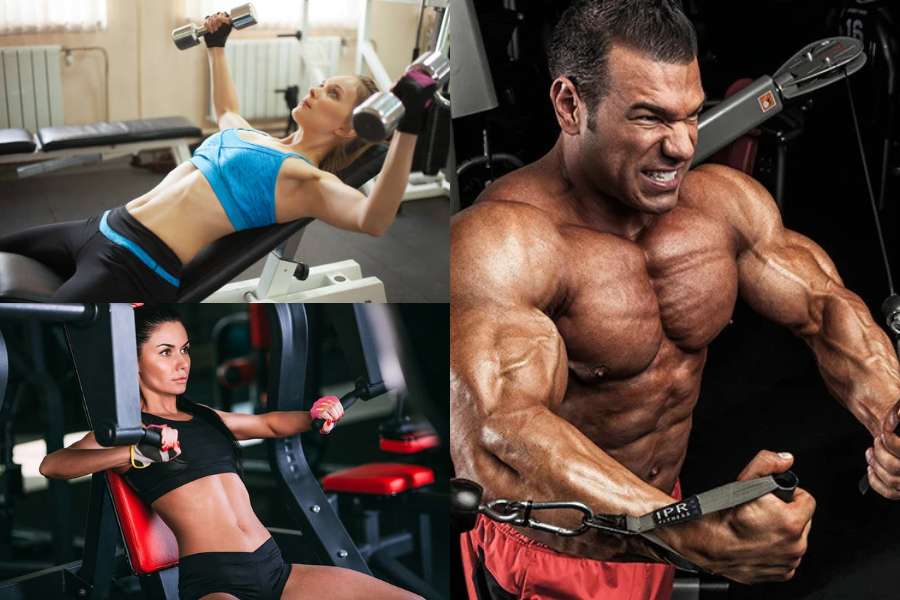
The incline dumbbell bench press is one of the most efficient ways to train your upper chest. Setting the bench at roughly 30 to 45 degrees angles your arms slightly upward, which favors the clavicular head. A 2010 study found that these incline angles activated the upper chest more effectively than a flat bench press.
How to do it
- Set an adjustable bench to about 30 degrees to begin.
- Sit down holding a dumbbell in each hand on your thighs, then lie back and bring the dumbbells to chest height.
- Position your wrists over your elbows, palms facing forward, and keep your shoulder blades gently pulled back into the bench.
- Press the weights up until your arms are straight but not locked.
- Lower slowly until your elbows are just below the level of the bench and you feel a stretch in your upper chest.
Control the descent and avoid bouncing or dropping the weights. For most people, 3 sets of 8 to 12 controlled reps is a solid starting point.
Why dumbbells help your upper chest
Compared to a barbell, dumbbells give your shoulders and wrists more freedom to move in a natural path. That added range of motion at the bottom of the press can increase muscle activation in the chest and help you correct left to right imbalances that might develop with barbell-only training.
If you struggle to feel your upper chest working, think about bringing your biceps slightly in toward each other at the top instead of pushing straight up and out. That subtle inward angle encourages more upper chest involvement.
Try the incline dumbbell squeeze press
Once you are comfortable with the standard incline dumbbell press, you can add the incline dumbbell squeeze press to your routine. This variation keeps constant tension on the upper chest and reinforces your mind muscle connection.
How to do it
- Set the bench at 30 to 45 degrees.
- Hold two dumbbells together above your chest with your palms facing each other. The inner sides of the dumbbells should be pressed firmly together.
- Squeeze the dumbbells toward each other as if you were trying to crush them. Maintain that squeeze for the entire set.
- Lower the dumbbells together to your upper chest, keeping your elbows at about a 45 degree angle from your torso.
- Press back up, still squeezing the dumbbells together, until your arms are nearly straight.
Because the weights are pressed together, you will not use as much load as a regular incline press, but the tension on the upper chest can feel significantly higher. This makes the squeeze press an effective moderate weight, higher rep option, such as 3 sets of 10 to 15 reps.
Add a reverse grip bench press option
You can still prioritize your upper chest even if you only have a flat bench. The reverse grip bench press uses an underhand grip to shift more work to the clavicular head and away from the mid and lower pec fibers.
Research published in the Journal of Strength & Conditioning Research found that this underhand variation increases activity in the upper chest and biceps, and may reduce strain on your shoulders by keeping your elbows closer to your sides.
How to do it
- Lie on a flat bench and grasp the bar with an underhand grip, palms facing your face. Your hands should be slightly wider than shoulder width.
- Unrack the bar carefully. This grip can feel unstable at first, so have a spotter if you are new to the movement.
- Lower the bar to the lower part of your chest or upper ribs, keeping your elbows tucked near your torso.
- Press the bar back up in a straight line over your shoulders.
Because this grip is less familiar, start with much lighter weight than your usual bench press. Add it as a second or third exercise in your workout, for 3 sets of 8 to 10 reps, rather than trying to max out with it.
Use low to high cable flyes for definition
Pressing movements build strength and size. To carve out more shape and detail along your collarbones, it helps to include a fly or crossover variation that follows the upper chest fibers.
Low to high cable flyes are especially effective because they pull your arms in an upward arc, from roughly hip level to shoulder or collarbone height. This angle places high mechanical tension on the clavicular head and keeps constant resistance throughout the entire range of motion.
How to do it
- Set both cable pulleys to the lowest setting and attach single handles.
- Stand in the middle, grab the handles, and take a small step forward so the weights lift slightly from the stack.
- With a slight bend in your elbows and palms facing forward or slightly up, sweep your hands upward and inward so they meet in front of your chest or just under your collarbone.
- Squeeze your chest at the top for a brief pause.
- Slowly trace the same arc back down until you feel a stretch through your upper chest.
Focus on smooth, controlled movement. This is not a heavy, heaving exercise. Keep the weight moderate and prioritize the quality of each rep. Aim for 3 sets of 12 to 15.
Try decline push ups for a home alternative
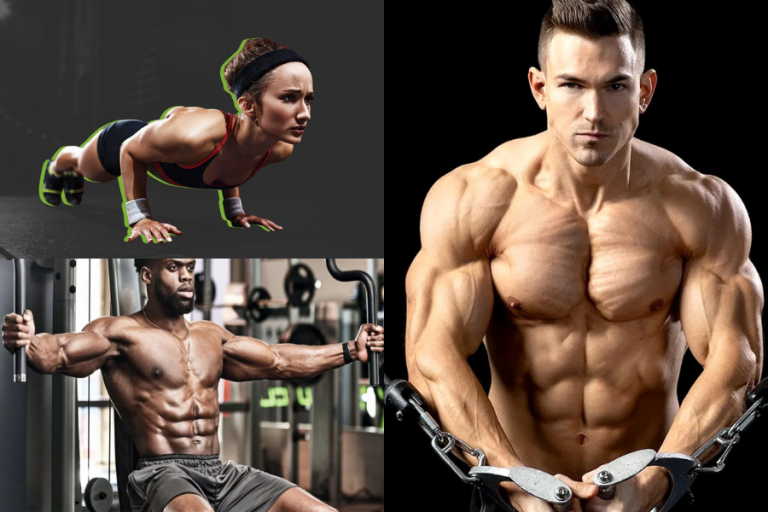
If you do not have access to a bench or cables, you can still get an effective chest workout for upper chest using bodyweight alone. Decline push ups are a simple way to load your upper chest and front shoulders more heavily by elevating your feet.
Studies and coaching guides note that raising your feet shifts more of your body weight onto your hands and mimics the pressing angle of an incline bench, making it a strong option for upper chest strength and definition.
How to do it
- Place your feet on a stable elevated surface such as a bench, box, or sturdy step. Start lower, around knee height, if you are new to this variation.
- Walk your hands forward until your body forms a straight line from heels to head.
- Place your hands slightly wider than shoulder width, and keep your core engaged so your hips do not sag.
- Lower your chest toward the floor until your elbows reach about a 45 degree angle from your sides.
- Push back up to the starting position, keeping your body straight.
To make decline push ups harder, increase the height of your feet or wear a weighted vest. To make them easier, lower the height of your feet or reduce the total reps per set. You can build up to 3 or 4 sets of 8 to 15 reps over time.
Sample easy upper chest workout you can do today
Here is a simple routine you can follow right away. Choose one version depending on your equipment.
Pick a weight that leaves 1 to 2 reps in the tank at the end of each set. If your form breaks down, lower the weight or the number of reps.
Gym version
- Incline dumbbell bench press, 3 sets of 8 to 12
- Incline dumbbell squeeze press, 3 sets of 10 to 15
- Low to high cable flyes, 3 sets of 12 to 15
- Reverse grip bench press, 2 to 3 sets of 8 to 10
Rest 60 to 90 seconds between sets. If you are short on time, you can remove one pressing variation and still get an effective session.
Home or minimal equipment version
- Decline push ups, 3 to 4 sets of 8 to 15
- Pushaway push ups or standard push ups, 3 sets of 10 to 15
- Resistance band low to high flyes, 3 sets of 12 to 15
You can create a low to high fly pattern with bands by anchoring them near the floor, then sweeping your arms upward and inward in front of your chest, similar to the cable movement.
Train smart for better upper chest growth
Even the best exercise selection will not pay off if you neglect recovery and consistency. For most people, training chest 1 or 2 times per week with at least 2 upper chest focused movements per session is enough stimulus, as long as you use progressive overload and good form.
Make your progress more consistent by:
- Adding a small amount of weight, reps, or sets over time
- Eating enough protein to support muscle repair
- Getting adequate sleep so your body can actually grow between workouts
Choose one or two of the exercises above and add them to your next session. As you learn how your upper chest responds, you can adjust angles, rep ranges, and exercise order to keep making steady gains, without needing a complicated plan.
About the Author