A strong, defined chest is not just about how you look in a T‑shirt. The right chest workout exercises improve posture, protect your shoulders, and make everyday pushing movements feel easier. You do not need an advanced program or fancy equipment to start. With a handful of proven exercises and good form, you can build serious strength and size over time.
Below you will find 10 powerful chest workout exercises you can start today, whether you train at home or in the gym. You will see how to perform each move, how many sets and reps to aim for, and how to put them together into an effective routine.
Understand your chest muscles
Before you jump into chest workout exercises, it helps to understand what you are training. Your chest is mainly made up of two muscles: the pectoralis major and the pectoralis minor. The pectoralis major is the large, fan-shaped muscle across the upper chest, and the pectoralis minor is a smaller triangular muscle underneath it. Together they help you pull, rotate, and lift your arms, as explained in the 8fit chest workout guide published in 2024.
The pectoralis major has two main areas you want to target:
- Upper chest (clavicular head), which runs from your collarbones to about halfway down your chest
- Mid and lower chest (sternal head), which covers the rest of the chest down to your ribs
Balanced chest training means you do not just hammer away at flat bench presses. You give just as much attention to your upper chest so you avoid a droopy, bottom-heavy look and keep your shoulders healthier.
How to structure chest workouts for growth
If your goal is building muscle, the way you use chest workout exercises matters as much as which ones you choose. Research on hypertrophy shows that heavier loads in the 3 to 8 rep range with progressive overload are especially effective for building mass, as highlighted by Jacked Factory in 2017. Aim to perform most of your heavy compound sets at about 70 to 80 percent of your one rep max and gradually add weight or reps over time.
For general strength and size, a simple guideline works well:
- Beginners: 1 to 3 sets of 8 to 12 reps for each exercise, about twice per week, using lighter weights you can control
- Intermediate lifters: 3 to 5 working sets per big lift, mostly in the 6 to 10 rep range, plus 2 to 4 sets of isolation work in the 10 to 15 rep range
Try to leave 1 to 3 reps in the tank on most sets. You should finish feeling challenged, but still in control of the weight and your technique.
1. Barbell bench press
The barbell bench press is often treated as the king of chest workout exercises for a reason. It is a full upper body movement that works your chest, triceps, shoulders, lats, core, and even your glutes when you perform it correctly. This makes it a great choice if you are a beginner who wants to build overall strength.
To perform the barbell bench press, lie on a flat bench with your eyes under the bar. Plant your feet flat on the floor, squeeze your glutes, and lightly arch your lower back so your chest is high. Grip the bar slightly wider than shoulder width, unrack it, and lower it under control to the mid chest. Keep your upper arms at about a 45 degree angle to your torso, not flared out to 90 degrees. Press the bar back up in a slight arc until your arms are straight without locking your elbows aggressively.
You can start with 3 to 4 sets of 5 to 8 reps. Because this is a heavy compound lift, warm up with 1 or 2 lighter sets first to prepare your muscles and joints.
2. Dumbbell bench press
If you want one of the most joint friendly and effective chest workout exercises, the dumbbell bench press is hard to beat. Dumbbells allow each arm to move independently, which helps correct muscle imbalances and promotes better shoulder mechanics compared to a fixed bar. They also give you a larger range of motion, which increases muscle activation.
To perform it, lie on a flat bench with a dumbbell in each hand resting on your thighs. Kick the weights up to your chest as you lie back, then press them straight up so they are above your shoulders with palms facing forward or slightly turned in. Lower the dumbbells slowly until your upper arms are just below parallel to the floor, then press back up while squeezing your chest at the top.
Aim for 3 to 4 sets of 6 to 8 reps if you are focusing on strength or 8 to 10 reps for hypertrophy. Keep your glutes and abs engaged so your body stays stable on the bench.
Tip: Think about hugging a big tree as you press. This cue helps you keep your elbows at a safer 45 degree angle rather than flaring them out, which can irritate your shoulders.
3. Incline dumbbell press
If you want that defined line from your collarbones down into your chest, you need to target your upper chest. The incline dumbbell press is one of the best chest workout exercises for this area because changing the angle shifts more tension to the clavicular portion of your pecs.
Set an adjustable bench to a low incline, around 15 to 30 degrees. A moderate incline keeps tension on the chest instead of dumping it onto the shoulders. From there, perform the movement just like a flat dumbbell press. Keep your forearms perpendicular to the ground as you lower and press. This form cue is more important than the exact angle of the bench and helps protect your shoulders.
You can perform 3 to 4 sets of 8 to 10 reps. Many lifters find it helpful to place incline pressing early in the workout to ensure the upper chest gets enough high quality work, especially if you tend to over rely on flat benching.
4. Barbell incline bench press
The barbell incline bench press is another powerful upper chest builder if you prefer a bar to dumbbells. It allows you to use heavier loads, which is useful if your goal is strength as well as size.
Adjust the bench to a low to moderate incline, then lie back with your eyes under the bar. Grip the bar slightly wider than shoulder width. Just like the flat bench, keep your feet planted, your glutes tight, and your chest up. Lower the bar to the upper chest, around the line of your collarbone, without bouncing, then press it up under control.
For growth, try 3 to 4 sets of 6 to 10 reps. Pay close attention to elbow and forearm position. Beginners often let their forearms angle back toward their face, which puts a lot of stress on the shoulders. Instead, focus on keeping your forearms vertical and pressing the bar in a path that stays over your elbows.
5. Weighted chest dips
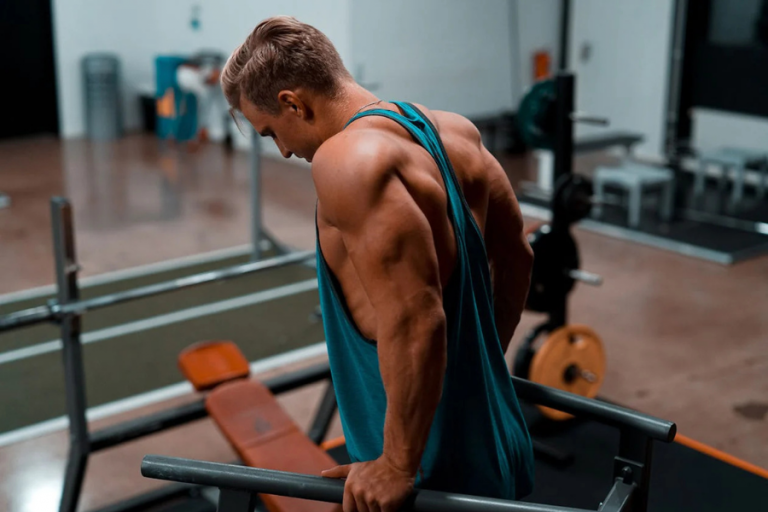
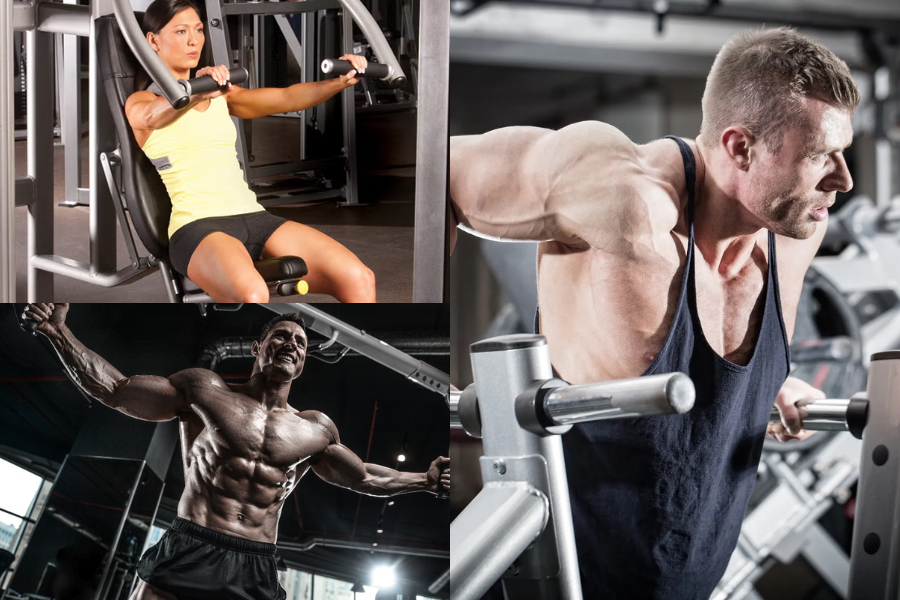
Chest dips are one of the most underrated chest workout exercises you can add to your routine. Done correctly, they build thickness and depth in the lower chest while also working your triceps and front delts. They also recruit stabilizer muscles in your shoulders and core as you balance on the parallel bars.
To bias dips toward your chest instead of your triceps, lean your torso slightly forward, keep your elbows flared just a bit more than you would for a triceps dip, and let your legs hang behind you. Lower your body until your upper arms are at least parallel to the ground, then press back up while thinking about driving your hands toward your hips.
Start with bodyweight dips and build up to 3 sets of 8 to 12 reps. Once that feels easy, you can add weight with a dipping belt or by holding a dumbbell between your feet. If full dips are too challenging, use an assisted dip machine or bands for support.
6. Dumbbell chest fly
The dumbbell chest fly is a classic isolation move that targets the chest differently from presses. Instead of focusing on pushing, you focus on bringing your arms together across your body, which is the primary action of the pec muscles. This makes it a good way to finish off a chest session with extra volume.
Lie on a flat bench with a dumbbell in each hand and arms extended above your chest, palms facing each other. With a slight bend in your elbows, open your arms out to the sides in a wide arc until you feel a deep but comfortable stretch across your chest. Then squeeze your chest to bring the dumbbells back together over your chest, as if you are hugging a barrel.
Perform about 3 sets of 10 to 12 reps. Use lighter weights than you would for presses and keep the movement controlled. The point here is not to throw heavy bells around. You are trying to maximize tension and contraction in the chest. Remember that resistance is lowest at the top of the fly, so pause briefly in the mid range where you feel the most tension instead of rushing through it.
7. Decline dumbbell fly
If you want more three dimensional chest development, the decline dumbbell fly is worth adding to your toolbox. This variation increases the stretch on the lower fibers of the pecs and combines that stretch with a strong contraction, which encourages muscle growth through fatigue and increased blood flow to the area.
Set a bench to a slight decline, about 15 degrees, and secure your feet. From there, perform the fly motion just like the flat version, moving in a controlled arc and stopping when you feel a strong stretch in the pecs, not in the shoulder joint. Bring the dumbbells back together over your chest while focusing on squeezing your chest, not just moving your hands.
Because of the extra stretch, keep the weight moderate and the reps in the higher range, around 10 to 15. Two or three sets at the end of your workout are usually enough.
8. Cable crossovers
Cable crossovers are another excellent isolation exercise when you want to directly target the chest without much help from other muscles. Standing between two cable stacks allows you to apply constant tension across the full range of motion, which can be very useful for shaping and refining your chest.
Set the pulleys slightly above shoulder height if you want to focus a bit more on the lower chest. Grab the handles, step forward, and take a staggered stance. With a slight bend in your elbows, bring your hands together in front of your lower chest in a wide arc, then slowly let them return to the start while keeping tension on the cables.
You can also set the pulleys low and pull up and across your body to target the upper chest more. In both versions, avoid letting the weights crash down at the end of each rep. Perform 3 sets of 10 to 15 reps, focusing on feeling the chest, especially in the contracted position when your hands are close together. This isolation work is especially helpful for bringing up weaker sides and addressing muscle imbalances.
9. Push-up variations
Push-ups are one of the most accessible chest workout exercises you can do, and they are far more powerful than many people realize. You can perform them virtually anywhere without equipment, and research on young men has shown no significant difference in muscle growth or strength gains between bench press and push-ups when training is matched over time.
Standard push-ups target your chest, triceps, front shoulders, and core. Start in a high plank with your hands slightly wider than shoulder width, body in a straight line from head to heels. Lower your chest toward the floor while keeping your elbows at about a 45 degree angle to your torso, then push back up.
You can adjust push-ups to match your strength level and target different areas of your chest:
- Incline push-ups with your hands on a bench or countertop are easier and perfect for beginners
- Decline push-ups with feet elevated place more tension on your upper chest and shoulders
- Time under tension push-ups, where you lower slowly and pause at the bottom, increase muscle stress
- Plyometric push-ups, where your hands leave the ground, train power and explosive strength
A simple no equipment home chest circuit might be 3 rounds of 10 regular push-ups, 10 incline push-ups, 10 decline push-ups, and 5 slow, time under tension push-ups, mixed with short bursts of cardio as suggested by 8fit in 2024.
10. Dumbbell pullover
The dumbbell pullover is a unique exercise that works the chest and lats together, and it has been a staple in chest training for decades. When you focus on the chest and keep the range controlled, it can help build upper chest thickness and ribcage expansion.
Lie across a bench with only your upper back supported and your hips slightly dropped, or lie fully lengthwise on the bench if that is more comfortable. Hold a single dumbbell with both hands over your chest with arms almost straight. Slowly lower the weight back and over your head in an arc until you feel a stretch in your chest and upper lats, then pull it back over your chest while focusing on squeezing your chest, not just your arms.
Use a moderate weight for 2 to 3 sets of 10 to 12 reps. Keep your elbows slightly bent throughout and move slowly to protect your shoulders.
Common form mistakes to avoid
Even the best chest workout exercises will not deliver results if your form breaks down. A few simple corrections can protect your shoulders and help you build more muscle where you want it.
A common mistake is flaring your elbows out to 90 degrees during presses. This position looks wide and powerful, but it puts a lot of stress on the shoulder joint and can feel uncomfortable or even painful. Keeping your upper arms at about a 45 degree angle to your torso activates your lats, gives you a more stable press, and usually lets you perform more reps for greater chest growth, as strength coach Ebenezer Samuel, C.S.C.S. observes in form guides for beginners.
On incline presses, many lifters press with forearms misaligned, almost at a 90 degree angle to the torso. This again overloads the shoulders and takes tension off the chest. A safer and more effective rule is to keep your forearms perpendicular to the ground on every press, regardless of bench angle, so you hit different fibers without sacrificing joint health.
Another frequent issue is relying on momentum. Moving heavy weights quickly with loose control might feel strong, but it often shifts the work to your triceps, shoulders, and connective tissues instead of the pecs. Slow down enough to feel the chest engage, especially in the bottom stretch and at the top of each rep. In presses and flyes, actively squeeze your chest at the top.
Finally, do not forget your back. Training your chest without balancing it with rows and other pulling exercises encourages rounded shoulders, poor posture, and greater injury risk. Strong back muscles help keep your shoulders healthy and also improve the way your chest looks by pulling you into a tall, open posture.
Sample chest workout you can start today
To pull everything together, here is a simple chest focused workout using exercises from this guide. Adjust sets and reps to your experience level, and always warm up before you start with light cardio and a few dynamic movements.
- Barbell bench press: 3 to 4 sets of 5 to 8 reps
- Incline dumbbell press: 3 sets of 8 to 10 reps
- Dumbbell bench press or dumbbell push-ups: 3 sets of 8 to 12 reps
- Dumbbell chest fly: 3 sets of 10 to 12 reps
- Cable crossovers or decline dumbbell fly: 2 to 3 sets of 12 to 15 reps
Rest about 60 to 90 seconds between sets for higher rep work and up to 2 or 3 minutes after heavy sets. Give your chest at least 48 to 72 hours to recover before training it hard again, since muscle recovery can take up to 72 hours and long term fitness gains build gradually over time.
If you train at home with no equipment, swap in a push-up circuit using different angles as your main chest workout twice per week. You can add dumbbell presses and flyes as soon as you get access to weights.
Moving forward with your chest training
You do not need a complicated program to build an impressive, strong chest. Focus on a handful of proven chest workout exercises, use form that protects your shoulders, and consistently push yourself a little harder over time. Make sure you train both the upper and lower chest, include a mix of presses and isolation work, and do not forget to balance your routine with back and shoulder friendly movements.
Pick two or three exercises from this list and try them in your next workout. Notice how your chest feels when you slow down, control the weight, and actually squeeze the muscle each rep. Over the coming weeks, that small shift in focus can make a big difference in how your chest looks and performs.
About the Author