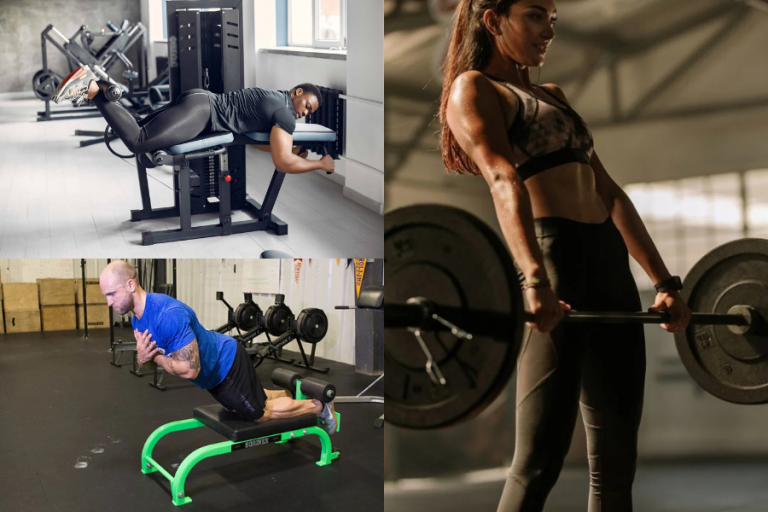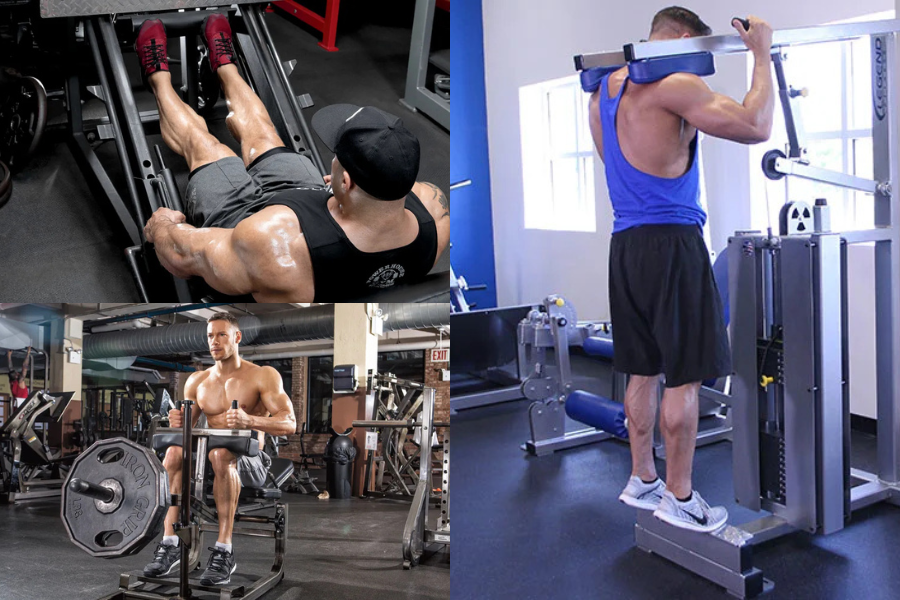
A strong calf workout at home does more than build muscle definition. Your calves support every step you take, help stabilize your knees and ankles, and power movements like walking, running, and jumping. With the right approach, you can train them effectively in your living room using just your body weight and a few household items.
Below, you will learn how your calf muscles work, which exercises to focus on, and how to put them together into a simple, effective routine.
Understand your calf muscles
Before you start your calf workout at home, it helps to know what you are actually training.
Your calves are mainly made up of two muscles:
- Gastrocnemius. This is the larger, visible muscle that gives your calf its shape. It crosses both your knee and your ankle and helps you point your toes and bend your knee. Because it does so many jobs, it is prone to tightness and strain.
- Soleus. This sits underneath the gastrocnemius. It does not cross the knee, but it plays a major role in stabilizing your lower leg and ankle, especially when you stand or walk for long periods.
A balanced calf workout at home should work both muscles. Standing movements tend to hit the gastrocnemius more, while bent knee or seated movements emphasize the soleus.
Why calf training matters
Targeted calf exercises are important for keeping your lower body moving well. Strong calves help you maintain balance, absorb impact when your foot lands, and push off the ground with more power. This can reduce the risk of knee instability and issues like Achilles strains, especially if you walk or run a lot.
When your calves are weak or too tight, other areas pick up the slack. Your shins, knees, or hips may start to ache after normal activities. Training your calves a few times per week can improve your comfort during daily tasks such as climbing stairs, carrying groceries, or playing sports with friends.
Warm up before you start
Because calf muscles work every time you stand or walk, they can be prone to cramps or strains if you train them hard without preparation. A short warmup can make your calf workout at home safer and more comfortable.
Spend 5 to 8 minutes doing light movement before you jump into intense sets. For example, you can:
- March in place, gradually lifting your knees higher.
- Do gentle ankle circles in both directions.
- Walk around your home on your toes for 30 to 60 seconds.
- Perform slow bodyweight squats, focusing on smooth movement through the ankles and knees.
If you feel sharp pain, significant swelling, or cannot put weight on your leg, stop the workout and rest. In those situations, it is better to speak with a healthcare professional instead of pushing through.
Key principles for calf growth and strength
To make your calf workout at home effective, focus on how you perform each movement, not just how many reps you do.
Use higher reps and enough sets
Your calves are used to working all day, so they often respond well to slightly higher reps. Aim for sets of 10 to 25 repetitions. You can mix lighter, high rep days with slightly heavier, moderate rep days to challenge the muscles in different ways.
Calves also tend to recover faster than big muscles like your glutes or hamstrings. That means you can train them more frequently, for example 2 to 4 times per week, as long as they do not stay sore or painful.
Train through a deep stretch
How far you move through each rep matters. Research on calf raises has shown that training in a deeper stretched position, where your heel drops down and your toes are pulled up toward your shin at the bottom, can lead to significantly more muscle growth than stopping early at the top shortened position in a limited range.
To use this idea at home, let your heels sink below a step or sturdy platform during calf raises. Pause briefly in that stretched position before lifting up. At the end of a set, you can finish with a few partial reps near the bottom of the movement to put extra tension on the muscle fibers, which is a key factor for hypertrophy.
Prioritize standing variations
If your main goal is visible calf size and strength, put most of your effort into standing calf raises and similar movements. In one 12 week comparison where people trained twice per week, standing calf work led to greater increases in gastrocnemius and overall calf size than seated calf raises, as seen on MRI scans.
You can still include bent knee or seated options to target the soleus. Just build your routine around standing work because it loads the calves at longer muscle lengths and often creates more muscle activation.
Best bodyweight calf exercises at home
You can build an effective calf workout at home with simple movements that do not require machines or heavy weights. Focus on control, full range of motion, and steady breathing.
Standing calf raises
Standing calf raises are your core movement. They are simple and very effective.
- Stand tall with your feet hip width apart, near a wall or chair for balance.
- Press through the balls of your feet and lift your heels as high as you comfortably can.
- Pause for a second at the top and squeeze your calves.
- Slowly lower your heels back down. If you have a step, let them drop slightly below the step for a deeper stretch.
Aim for 3 to 4 sets of 20 to 25 reps. When that feels easy, hold a backpack, water jug, or heavy book for added resistance.
Single leg calf raises
Once both leg calf raises feel manageable, move to single leg work. This increases the challenge and helps correct side to side strength differences.
- Stand on one leg, with your other foot slightly off the ground.
- Use a wall, countertop, or chair for light support.
- Lift your heel up, keeping your weight over the ball of your foot, then lower slowly back down.
- Complete all reps on one side before switching.
Start with 2 to 3 sets of 10 to 15 reps per leg and build from there. If your balance is shaky, reduce the range of motion until you feel more stable.
Seated calf raises without equipment
Seated calf raises target the soleus more because your knee is bent.
- Sit on a sturdy chair or bench with your feet flat on the floor.
- Place a heavy object, like a backpack loaded with books, across your thighs, over the knees.
- Raise your heels as high as possible, pause, then lower them to the floor.
Try 3 sets of 15 to 20 reps. Adjust the weight or rep count to keep the last few reps challenging.
Use full body moves to hit calves
You do not have to isolate your calves every time you train. Several common at home exercises quietly work them hard, especially when you adjust your technique.
Downward dog for stretch and strength
From a yoga position like downward dog, you support your weight with your hands and feet while your hips lift up. You can make this a calf move by gently pedaling your heels, pressing one heel toward the floor while the other knee bends, then switching sides.
This dynamic stretch builds endurance and flexibility in your calves while also working your shoulders and core.
Jumping jacks and jump squats
Plyometric movements such as jumping jacks and jump squats are powerful tools for a calf workout at home. Each takeoff and landing asks your calves to absorb force and then push off again.
To keep it joint friendly, land softly on the balls of your feet and immediately bend your knees and hips to share the impact. Start with short intervals, such as 20 seconds of jumping followed by 40 seconds of rest, and adjust based on your fitness level.
Raised heel squats and lunges
You can increase calf involvement in squats and lunges by elevating your heels slightly. Place your heels on a folded towel, a small weight plate, or the edge of a book.
During squats, focus on driving through the balls of your feet as you stand up. In lunges, keep your front heel lightly elevated and press firmly through the front forefoot on the way up. This change in angle boosts calf activation while still strengthening your quads and glutes.
Add cardio style calf work
Blending strength and cardio is an efficient way to train your calves and improve your heart health at the same time.
Jump rope sessions
Jump rope is a classic at home option for calf strength, coordination, and fat loss. The repeated hopping builds explosive lower body power, and it is easy to scale up or down.
A simple structure is:
- Jump for 30 seconds at a comfortable pace.
- Rest or walk in place for 30 seconds.
- Repeat for 3 to 4 rounds.
You can increase the total rounds over time or shorten the rest periods as your endurance improves. If you do not have a rope, mimic the motion with small, quick hops in place.
Incline walking or running
If you have access to a treadmill with incline or a nearby hill, walking or jogging uphill is an excellent calf workout. The incline forces your calves to work harder on every step.
At home without a treadmill, you can simulate incline by walking up and down stairs for a few minutes. Take your time and focus on pushing through the ball of your foot as you step up.
Sample calf workout at home
Use this simple routine two or three times per week. Rest 30 to 60 seconds between sets as needed.
-
Warmup
March in place and do ankle circles for 3 to 5 minutes. -
Standing calf raises on a step
3 sets of 15 to 20 reps
Pause at the bottom in a deep stretch and at the top in a squeeze. -
Single leg calf raises
2 to 3 sets of 10 to 15 reps per leg
Use a wall or chair for balance. -
Seated calf raises
3 sets of 15 to 20 reps
Add a backpack or similar weight over your knees if possible. -
Jump rope or low impact hops
3 to 4 rounds of 30 seconds on and 30 seconds off.
As you progress, you can increase the reps, add partial reps in the stretched position at the bottom of your calf raises, or add more resistance. Pay attention to how your calves feel the next day and adjust your volume to avoid constant soreness.
If you consistently train your calves through a full range of motion, with a mix of standing and seated movements and a blend of strength and plyometrics, you can build stronger, more powerful lower legs without leaving home.
Safety tips and when to rest
Calf tightness after a workout is normal, but sharp pain or sudden cramps during exercise usually signal that something is off. To stay safe:
- Always include a short warmup before intense jumping or running.
- Increase the difficulty of your workouts gradually, not all at once.
- Stretch your calves gently after training and throughout the day if they feel stiff.
- Rest and seek advice from a medical professional if you notice intense pain, visible swelling, or trouble bearing weight on one leg.
With steady practice and smart progression, your calf workout at home can boost your leg strength, support your joints, and help every step you take feel more powerful and controlled.
About the Author