A strong core does much more than reveal a six pack. The right ab workout for athletes improves your stability, power, and control in every sport you play. Whether you sprint, lift, jump, or change direction quickly, your core is the link that transfers force between your upper and lower body.
Instead of endless sit ups, you will get better results from a focused routine that builds functional strength across all planes of motion. Below, you will learn how your core actually works, why it matters for performance, and how to put together an ab workout for athletes that fits into your week without eating your entire training time.
Understand what your “core” really is
When you think of ab training, you might picture only the front of your stomach. In reality, your athletic core is a 360 degree system that wraps around your midsection and connects your spine, pelvis, and even your shoulders.
Key muscles include:
- Rectus abdominis, the visible “six pack” that flexes your spine
- Internal and external obliques, which rotate your trunk and control side bending
- Transverse abdominis, a deep muscle that acts like a corset to brace your spine
- Quadratus lumborum and other lower back muscles, which stabilize and extend your trunk
- Hip flexors like the psoas major, which link your legs to your spine
When these muscles work together, they stabilize your spine and pelvis so you can sprint faster, change direction smoothly, and lift heavier with less injury risk. A strong transverse abdominis in particular works like a natural weightlifting belt by stabilizing your spine and pelvis during heavy lifts.
Why athletes need targeted ab training
As an athlete, your core is not just for looks. It is central to how you move and stay healthy.
A strong, well trained core helps you:
- Maintain posture during long practices and games
- Reduce your risk of lower back pain
- Stabilize your trunk during squats, deadlifts, and presses so you can express more strength
- Transfer power from your legs to your upper body in throws, hits, and swings
- Stay balanced during cuts, jumps, and landings
Research and coaching insights highlight that many athletes overemphasize sit ups and crunch variations. These mainly work the rectus abdominis in one plane of motion and can create imbalances and even contribute to low back discomfort over time if they dominate your training. You get far more benefit by training your core to resist movement and to function in different directions, not just to fold your body forward.
Train all planes of motion
Every sport you play demands movement in three planes:
- Sagittal plane, flexion and extension, like crunching or arching
- Frontal plane, side to side, like leaning or cutting laterally
- Transverse plane, rotation, like twisting to throw, swing, or change direction
An effective ab workout for athletes includes exercises in all of these planes. That means:
- Traditional flexion work such as crunches or leg raises
- Lateral work such as side planks or loaded “teapot” style side bends
- Rotational and anti rotational drills such as Russian twists, woodchoppers, and Pallof presses
Coaches also increasingly focus on anti movement patterns, in other words teaching your core to resist motion rather than create it. Anti flexion, anti lateral flexion, anti rotation, and anti compression patterns build the stability you need when you absorb contact, land from a jump, or brace under a barbell.
Bodyweight ab exercises you can start with
You do not need special equipment to build serious core strength. You can accomplish a lot with just bodyweight, especially if you are consistent 2 to 3 times per week.
Here are some foundational bodyweight exercises that suit most athletes:
Plank and side plank
Planks teach you to brace your entire midsection while keeping a neutral spine. Start in a push up position on your forearms, feet together, and body in a straight line. Gently pull your ribs toward your hips, squeeze your glutes, and avoid letting your lower back sag.
Side planks target your obliques and deep stabilizers. Lie on your side, prop up on one forearm, and lift your hips so your body forms a straight line from head to feet. These train your ability to resist lateral flexion, which supports posture and reduces injury risk during cutting and lifting.
Begin with 10 second holds and work up toward 30 seconds or more as your endurance improves.
Deadbug
Deadbugs are a staple in many athletic programs because they teach you to keep your spine neutral while your arms and legs move. Lie on your back with arms straight up toward the ceiling and hips and knees bent at 90 degrees. Press your lower back gently into the floor, then slowly extend one leg and the opposite arm toward the ground, pause, and return. Alternate sides while keeping your core braced.
This pattern carries over directly to running mechanics and any sport that demands limb movement around a stable trunk.
Bird dog
Bird dogs build core and lower back stability without compressing your spine. Start on all fours with your hands under your shoulders and knees under your hips. Extend your right arm forward and your left leg back until they form a straight line with your torso. Pause, focusing on keeping your hips level and your spine neutral, then switch sides.
These are especially helpful if you experience back discomfort during more intense ab work, since they safely engage both your abs and back muscles and can improve lower back function over time.
Bicycle crunch
The American Council on Exercise ranks bicycle crunches among the most effective ab exercises because they recruit your obliques and deep transverse abdominis through controlled spinal rotation. Lie on your back, hands lightly behind your head, and bring one knee toward your chest as you rotate your opposite elbow toward it. Alternate sides in a slow, controlled pedaling motion.
Because they require no equipment, bicycle crunches make a great finisher at the end of your workout or an easy at home option.
Leg raises
Leg raises target your lower abs and hip flexors, which support sprinting, jumping, and squatting. Start with lying leg raises by lying flat on your back, gripping a sturdy object overhead if needed. Keep your legs together and slightly bent, then raise them until your hips lift slightly off the ground, and lower them slowly without letting your heels slam into the floor.
As your strength increases, you can progress to hanging leg raises or knee raises, which significantly increase the difficulty and demand even more core control.
Add resistance for more power
Once you can perform bodyweight ab exercises with good form, adding resistance helps you build real trunk strength and rotational power that carries into sport. Weighted core exercises also give you the chance to use progressive overload, which is the key to long term strength gains.
Useful weighted options include:
- Russian twists, sit in a V shape, hold a weight or medicine ball, and rotate your torso side to side. Lifting your heels from the ground increases difficulty.
- Cable or band woodchoppers, pull across your body from high to low or low to high to develop rotational strength used in sports like tennis, baseball, or golf.
- Cable crunches, kneel and flex your spine against resistance to strengthen your rectus abdominis through a full range of motion.
- Kettlebell “teapots”, stand tall with a weight in one hand and slowly lean to the side then return, which trains lateral flexion and the opposing side’s ability to resist that pull.
Coaches also recommend exercises such as Pallof presses, where you hold a cable or band at your chest and press it straight out in front of you while resisting the urge to rotate. This is a classic anti rotational movement that closely mimics how your core stabilizes during sudden changes of direction or when you brace against contact.
Sample 15 minute ab workout for athletes
If you want a simple, effective core routine that fits around your other training, try this three day per week circuit. It uses bodyweight only, so you can do it at home, on the field, or in the gym.
Perform 3 rounds with 45 seconds of work and 15 seconds of rest per exercise, then rest 1 to 2 minutes between rounds:
- Front plank
- Side plank, right
- Side plank, left
- Deadbug
- Bicycle crunch
- Lying leg raise or reverse crunch
Keep your movements controlled and focus on quality over speed. If 45 seconds is too challenging initially, start with 25 to 30 seconds and build up over a few weeks.
You can rotate in bird dogs in place of deadbugs on some days, especially if you are managing back fatigue from heavy lifting or intense practices.
Aim to train your core 2 to 3 times per week so you reinforce motor control and strength without overwhelming your recovery from sport and lifting. Consistency across months matters more than crushing one brutal ab session.
Progress your core through phases
To keep improving and to make your training more sport specific, it helps to think about building your core in phases:
- Stability, learn neutral spine and hip position, master planks, side planks, deadbugs, and bird dogs.
- Strengthening, increase loading and tempo. Add pauses, slow eccentrics, and resistance with bands, cables, or weights in exercises like Pallof presses, Russian twists, and loaded carries.
- Chaos, introduce unpredictability and reactive elements, such as partner perturbations, unstable but safe surfaces, or catching and throwing a medicine ball while maintaining trunk position.
This type of phased approach ensures that you have solid control before you layer on intensity. It also better reflects the chaotic reality of games, where you rarely move in perfect, predictable patterns.
How visible abs fit into the picture
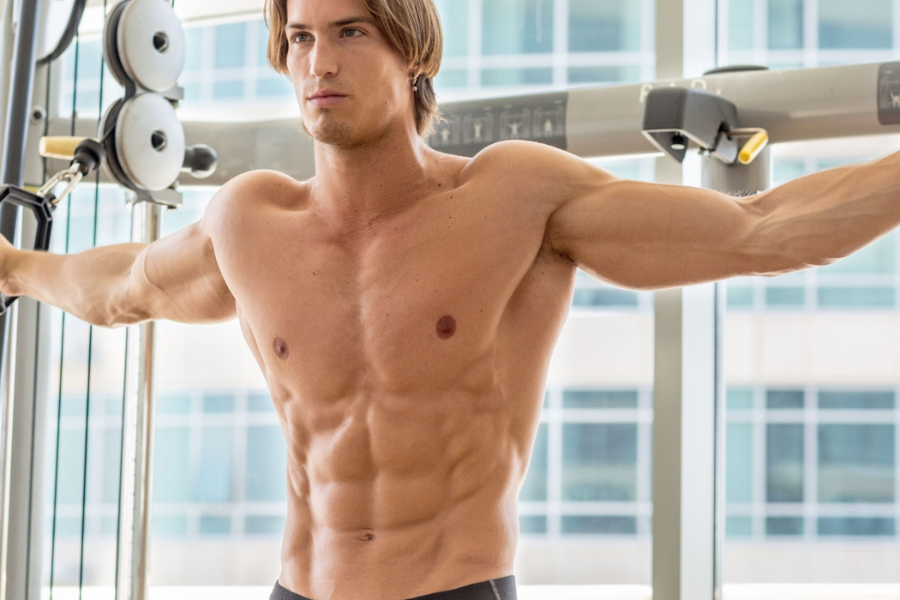
If you are also chasing visible abs, it helps to understand that ab exercises alone will not reveal them. Your body fat level largely determines whether your rectus abdominis is visible at rest. People often need to reach roughly 6 to 15 percent body fat for men and about 10 to 22 percent for women, depending on genetics, for a clear six pack to show.
That means you need a combination of:
- Smart nutrition that supports fat loss while fueling training
- Full body strength work and conditioning to burn calories and maintain muscle
- Consistent core training to build the actual muscles that you eventually want to show
You can build a strong, high performing core regardless of whether your abs are sharply defined. Focus first on performance and resilience, then let appearance follow as a byproduct of your broader training and nutrition.
Putting it all together
An ab workout for athletes should feel purposeful, not like an afterthought or a random crunch marathon.
If you remember these core ideas, you will be on the right track:
- Train your entire trunk, not just your “six pack”
- Include exercises across all planes of motion plus anti movement patterns
- Start with bodyweight staples such as planks, side planks, deadbugs, bird dogs, bicycle crunches, and leg raises
- Add resistance and rotational work as your control improves to build real sport specific strength
- Keep sessions short and consistent 2 to 3 times per week so they support, not sabotage, your main training
Try adding the 15 minute circuit to the end of your next workout. Pay attention to how your posture, balance, and power feel in practice or in the weight room over the next month. Your core may not be the most glamorous part of your training plan, but it is often the missing piece that makes everything else work better.
About the Author