A strong core does more than help you look toned. It supports your posture, improves balance, protects your lower back, and helps you move with more control during daily activities and workouts. You do not need long training sessions or advanced equipment to challenge your abs, either. A short, focused routine can create serious muscle fatigue when you use slow, controlled reps and keep tension on the core from start to finish.
This 10-minute strong abs workout proves that point. It uses timed intervals of 50 seconds of work followed by 10 seconds of rest. The pace stays controlled, but the burn builds quickly. Since the routine skips planks, it offers a good option for people who want to train their core in a different way while still getting an intense session.
The main goal of this workout is control. Instead of rushing through reps, you move with purpose. You press the lower back into the floor, lift through the upper body, and use your breath to support every crunch, reach, and twist. That approach helps you target the abdominal muscles more directly and reduces the chance that momentum will take over.
Why Controlled Core Work Matters
Fast ab workouts can feel productive, but speed often shifts the effort away from the muscles you want to train. When you slow down and stay deliberate, your abs have to stay engaged longer. That extra time under tension makes a short workout feel much harder.
Controlled movement also helps improve body awareness. You learn how to keep your ribs pulled in, how to avoid arching your back, and how to move from the core instead of the neck or hip flexors. Those details matter. They help you train the abs more effectively and help reduce strain in common problem areas such as the lower back and shoulders.
This routine also mixes upper abs, lower abs, obliques, and deep core stability. That gives you a more complete session than a basic crunch-only workout.
Workout Structure
50 Seconds of Work, 10 Seconds of Rest
The session follows a simple format. Each move lasts 50 seconds, and each rest break lasts 10 seconds. That structure keeps the intensity high while still giving you just enough time to reset before the next exercise.
Because the breaks are short, the workout feels continuous. Your core never fully relaxes, which adds to the challenge. Even when one area gets a brief break, another section of the abs takes over in the next move.
Minimal Equipment Needed
You only need a mat or a comfortable surface. Since the routine is floor-based, it works well at home, in a gym, or anywhere you have a bit of open space.
Focus Areas
This workout places a strong emphasis on:
- Core control
- Lower ab engagement
- Oblique strength
- Breathing and tension management
- Slow, clean movement patterns
How to Prepare Before You Start
Before you begin, lie on your back and take a few deep breaths. Press your lower back gently into the mat and draw your ribs down. This position will come up again and again during the workout.
Keep your neck relaxed. If you place your hands behind your head during certain moves, support the head lightly without pulling on it. Let your abs create the lift.
It also helps to remind yourself that range of motion matters less than control. You do not need to lower your legs all the way down if your lower back starts to lift. You do not need to twist as far as possible if it causes you to lose form. Stay in the range where you can keep your core engaged.
Exercise Breakdown
Alternating Twisting Knee Extensions
How the Movement Works
You start on your back with your knees stacked over your hips. From there, you extend one leg out while twisting your upper body toward the bent knee. Then you return to center and switch sides.
This move combines a bicycle-style action with a strong focus on lifting the chest upward instead of just rotating side to side.
What to Focus On
Press your lower back into the floor the whole time. As you twist, think about lifting through the upper body rather than yanking your elbow across. The twist should come from your torso, not from your arms.
Move at a steady pace. The goal is to keep the abs under tension, not to race through the reps.
Muscles Worked
This exercise targets the obliques, upper abs, and deep core muscles while also asking the lower abs to stabilize the pelvis.
Leg Lowers With Hip Lift
How the Movement Works
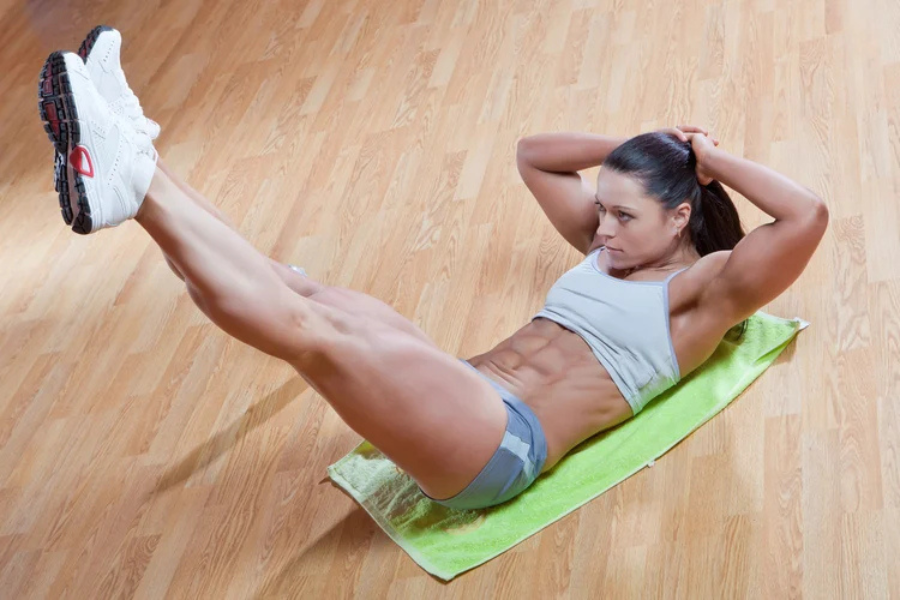
With your arms by your sides, extend your legs and slowly lower them toward the floor. Then bring them back up and add a small hip lift, reaching your toes toward the ceiling.
This combines a lower-ab lowering phase with a short upward pulse that increases the challenge.
What to Focus On
Lower your legs only as far as you can without arching your back. If needed, keep the range smaller. On the lift, use the lower abs to tip the hips upward instead of swinging the legs.
Keep your ribs drawn down and keep breathing. Many people hold their breath during tough lower-ab work, but steady breathing helps maintain control.
Muscles Worked
This move strongly targets the lower abs while also engaging the entire front of the core.
Side Ankle Reaches
How the Movement Works
With your hands behind your head or upper body lifted, you perform four ankle reaches on one side and then four on the other. The movement comes from side bending through the torso.
This exercise creates continuous tension in the obliques because the shoulders stay lifted while you shift side to side.
What to Focus On
Keep your chin away from your chest and lengthen through the upper body. Instead of collapsing, think about reaching long and bending through the side waist.
Stay lifted between reps. The challenge increases when you avoid dropping your shoulders back to the mat.
Muscles Worked
The side reaches mainly hit the obliques, but the upper abs also stay active throughout the set.
Overhead Reach to Single-Knee Crunch
How the Movement Works
Bring your hands together and reach overhead as you lower back slightly. Then draw one knee into your chest while lifting into a crunch. Alternate legs with each rep.
This move asks the abs to control both the lowering phase and the crunch phase, which makes it more demanding than a standard knee tuck.
What to Focus On
Exhale as you crunch and inhale as you lower. That breathing pattern helps you connect to the abs and stay in rhythm. Move slowly and avoid swinging the arms.
Keep the motion smooth. Each rep should feel deliberate from start to finish.
Muscles Worked
This exercise works the upper abs, lower abs, and hip flexors, with the core controlling the transition between extension and flexion.
Mason Twists With Pulse
How the Movement Works
Lean back partway with your hands clasped together. Twist through the shoulders, pulse upward slightly, come back down, and switch sides.
This is a seated twist variation that increases time under tension by adding the small pulse.
What to Focus On
Keep your chest open and maintain the lean back position. That backward angle keeps the abs active the whole time. Rotate through the torso rather than just moving your arms across the body.
Use control on every twist. The pulse should be small and intentional.
Muscles Worked
This move emphasizes the obliques and transverse core muscles while the rectus abdominis helps stabilize your position.
Sit-Ups With Alternating Knee Drive
How the Movement Works
Extend your legs and reach your arms overhead. Sit up, draw one knee toward your chest, lower back down, and alternate sides.
This exercise combines a full sit-up with a single-leg knee drive, which adds coordination and extra lower-ab involvement.
What to Focus On
Slow the movement down. Avoid jerking your body up with momentum. Think about rolling through the spine with control, then engaging the core again as the knee comes in.
Stay mindful of the muscles doing the work. When fatigue sets in, this attention to form matters even more.
Muscles Worked
This move challenges the full abdominal wall, especially the upper abs and lower abs, while also building coordination.
Cross-Body Reach With Figure-Four Leg Position
How the Movement Works
Cross one ankle over the opposite thigh, opening the knee into a figure-four position. Reach the opposite arm across your body, twist upward, then lower back down. Complete the full interval on one side before switching.
This move changes the angle of the twist and helps isolate one side of the core at a time.
What to Focus On
Reach across with intention and try to lift a little higher each time without forcing the motion. Exhale on the reach and inhale on the lower.
Since you stay on the same side for the full work period, the burn builds steadily. Focus on quality rather than speed.
Muscles Worked
This variation targets the obliques and upper abs while also improving rotational control.
Alternating Leg Lowers
How the Movement Works
Extend both legs with your arms by your sides. Lower both legs and lift them back up, then shift into a single-leg lowering pattern.
This combo creates another strong lower-ab challenge late in the workout, when the core is already tired.
What to Focus On
Pull your belly button toward your spine and keep your back pressed into the ground. If your back starts to arch, reduce the range or bend the knees slightly.
Stay patient with the reps. Lower-ab exercises become much more effective when you resist gravity instead of dropping quickly.
Muscles Worked
This section focuses heavily on the lower abs and deep core stabilizers.
Final Crunch Pulse Burnout
How the Movement Works
For the last move, you perform four small pulses, then reach and hold before returning down. This closing burnout keeps the shoulders lifted and the abs contracted through the end of the session.
What to Focus On
Lift higher with each pulse while keeping the elbows wide. During the hold, lengthen through the reach and keep breathing. In the last few seconds, continue pulsing without letting the shoulders drop.
This finishing sequence tests endurance more than range of motion. Stay with it and keep the movement clean.
Muscles Worked
The upper abs take the lead here, but the entire core works to maintain the lifted position.
Tips to Get More From This Workout
Press the Low Back Down
This cue shows up often for a reason. When your lower back lifts off the mat during leg work, tension leaves the abs and shifts into the back and hip flexors. Keep your pelvis stable and your spine supported.
Breathe Through the Hardest Part
Exhale during the crunch, twist, or lift. Inhale during the lowering phase. This pattern helps you brace your core and maintain better form.
Do Not Rush
The workout is short, so there is no need to speed through the reps. The controlled pace is what makes it effective.
Modify When Needed
If full leg extensions feel too hard, bend your knees slightly. If sit-ups strain your back, reduce the range and focus on the controlled lift. Good form matters more than doing the hardest version of every move.
Who This Workout Is Best For
This routine works well for anyone who wants a short but challenging ab session without planks. It fits nicely at the end of a strength workout, on an active recovery day, or as a quick stand-alone core session.
Beginners can use it by reducing range of motion and taking extra pauses when needed. More advanced exercisers can increase the challenge by staying very strict with tempo and minimizing rest.
Final Thoughts
A strong abs workout does not need to be long or flashy to work. This 10-minute routine shows how effective simple movements can be when you slow down, stay controlled, and keep constant tension on the core. With twisting knee extensions, leg lowers, side reaches, sit-up variations, and a final pulse burnout, the workout trains the abs from multiple angles and leaves very little room for your core to rest.
If you want to build better core strength, improve control, and feel a serious burn in a short amount of time, this routine is a solid choice. Stay consistent, focus on form, and let the quality of each rep do the work.
References
- Lieberman, B., & Winderl, A. M. (2022, January 28). The 10-minute abs workout you can do if you absolutely hate planks. SELF.
- Bomgren, L. (2025, October 16). 10-minute deep core workout. Nourish Move Love.
- Alkayat, Y. (2026, March 4). No planks or sit-ups—I’m a PT and these are the five moves I believe all beginners should start training their deep core with. Fit&Well.
- No equipment ab workout. (n.d.). Health Related Fitness. https://healthrelatedfitness.net/no-equipment-ab-workout/
About the Author