A steady supply of magnesium foods can do more for your health than you might think. This essential mineral quietly supports your heart, muscles, nerves, bones, and even how your body uses energy every day. Yet most people do not get enough magnesium from their diet, despite how widely available it is in everyday foods (Harvard T.H. Chan School of Public Health).
If you are curious about magnesium supplements, it is smart to start by understanding magnesium-rich foods first. You might be able to meet most or all of your needs simply by adjusting what is on your plate.
Why your body needs magnesium
Magnesium is involved in over 300 essential processes in your body, so you use it constantly. It helps keep your heartbeat steady, supports normal muscle contractions, assists with blood pressure control, contributes to bone health, and is involved in energy production (Cleveland Clinic). It also plays a role in nerve function and how your body processes protein and blood sugar (USDA WICWorks).
Adults generally need between 310 and 420 milligrams of magnesium per day, depending on age and sex, and needs are slightly higher during pregnancy and lactation (Harvard T.H. Chan School of Public Health, Healthdirect Australia). Experts from the Cleveland Clinic share similar guidance, with a recommended daily intake in the 310 to 420 milligram range (Cleveland Clinic).
Magnesium-rich eating patterns are linked with better bone mineral density and lower risks of high blood pressure and stroke, although these benefits are often tied to the overall quality of a diet that is also rich in other nutrients (Harvard T.H. Chan School of Public Health).
Are you getting enough magnesium?
Even though magnesium is found in many foods, national dietary surveys show that most Americans do not reach the recommended intake (Harvard T.H. Chan School of Public Health). Food processing and lower soil magnesium levels may also have reduced the magnesium content of some foods over time (Harvard T.H. Chan School of Public Health).
You might be at higher risk of low intake if you:
- Skimp on whole grains, nuts, seeds, beans, and leafy greens
- Rely heavily on ultra-processed or refined foods
- Have certain health conditions or are older, which can reduce absorption or intake (Healthdirect Australia)
- Take very high doses of zinc supplements, which can interfere with magnesium absorption (Healthdirect Australia)
If you suspect your magnesium intake is low, shifting toward magnesium-rich foods is a straightforward first step.
Top magnesium foods to add to your diet
Magnesium appears in both plant and animal foods, as well as in water, so you have plenty of options to work with. Here is where you can start focusing your attention.
Legumes and beans
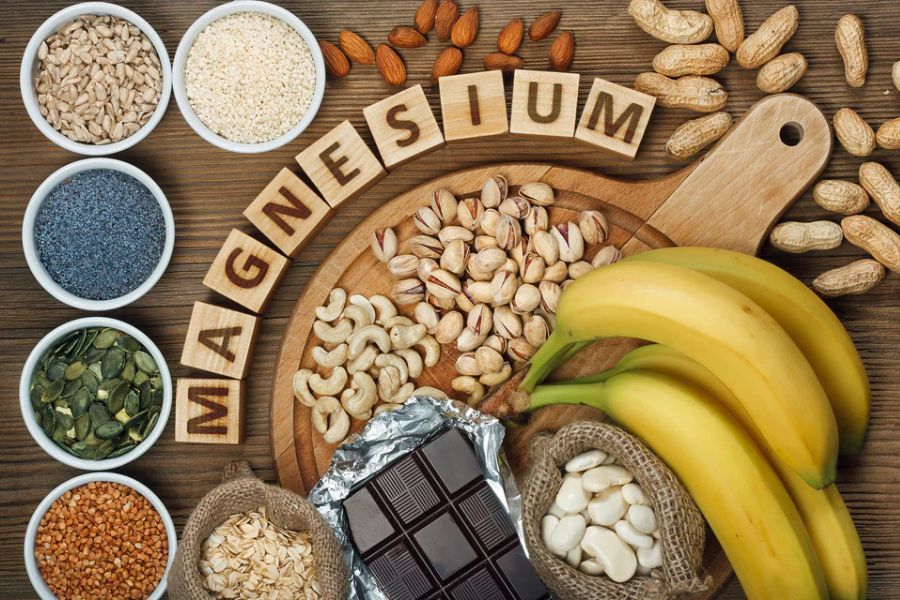
Legumes are one of the most reliable magnesium foods you can add to your meals. This group includes chickpeas, black beans, kidney beans, lentils, and soybeans. They provide magnesium along with protein, fiber, and several other minerals.
Legumes are also part of WIC-eligible food packages, including soybeans purchased fresh or frozen, which helps families with young children access this important mineral (USDA WICWorks). Since foods that contain dietary fiber generally provide magnesium, choosing beans and lentils more often can support both your digestive health and your magnesium intake (USDA WICWorks).
You might add beans to soups, toss chickpeas into salads, or use lentils as a base for grain bowls to boost your daily total.
Nuts and seeds
If you are looking for a compact, nutrient-dense magnesium source, nuts and seeds are hard to beat. They are rich in magnesium, healthy fats, protein, and fiber, so a small handful can make a noticeable difference in your intake (Cleveland Clinic).
Almonds, cashews, and peanuts are standout choices, as well as seeds such as pumpkin and chia. These foods are highlighted by both the Cleveland Clinic and USDA WICWorks as top magnesium options, and they can be eaten out of hand or sprinkled over oatmeal, yogurt, or salads (Cleveland Clinic, USDA WICWorks).
Keeping a jar of mixed nuts or seeds on your counter makes it easy to reach for magnesium-rich snacks instead of less filling alternatives.
Dark leafy greens
Dark leafy greens routinely earn their reputation as superfoods, and their magnesium content is one reason why. Greens such as spinach and kale supply magnesium along with vitamin K, folate, and a range of antioxidants. The Cleveland Clinic notes that dark leafy greens are considered a superfood partly because of how much magnesium they offer (Cleveland Clinic).
You can fold a handful of greens into scrambled eggs, blend them into smoothies, or layer them into sandwiches. Even a small serving at one or two meals a day can move you closer to your target intake.
Whole grains and fortified cereals
Whole grains are another steady source of magnesium, especially when you eat them regularly. Foods like whole wheat, oats, quinoa, brown rice, and barley provide magnesium along with B vitamins and fiber. Many breakfast cereals are also fortified with magnesium, which can help close nutrient gaps (Harvard T.H. Chan School of Public Health).
Since fiber-rich foods often contain magnesium, choosing whole grain versions of bread, pasta, and cereals is a simple way to raise your intake without dramatically changing your meals (USDA WICWorks).
Animal-based magnesium foods
While plant foods usually get the spotlight, you also find magnesium in several animal-based choices. Fish, poultry, and beef contribute useful amounts of magnesium and can help you reach your daily goals when combined with plant sources (Harvard T.H. Chan School of Public Health).
If you already eat animal protein, pairing it with beans, whole grains, or greens gives you a layered approach. For example, grilled chicken over quinoa with a side of sautéed spinach pulls magnesium from multiple directions in a single meal.
Fruits that provide magnesium
Fruit is not usually the highest source of magnesium, but some options contribute more than you might expect. A cup of raw prickly pear delivers about 127 milligrams of magnesium, roughly 30 percent of the daily value, making it a particularly rich fruit source (Health).
Other magnesium-supporting fruits include:
- Dried figs, which provide 101 milligrams of magnesium per cup and over half of the daily value for fiber (Health)
- Durian, with about 72.9 milligrams of magnesium per cup and over half of the daily value for vitamin C (Health)
- Jackfruit, offering 47 milligrams of magnesium and 16 percent of the daily value for potassium per cup, both of which support blood pressure and cardiovascular health (Health)
- Avocado, with about 43.5 milligrams of magnesium per cup and a low carbohydrate but high healthy fat profile, which works well if you follow a lower carb style of eating (Health)
Rotating these fruits into your snacks or desserts helps you layer magnesium into your day in a way that also feels enjoyable.
Water as a hidden source
You may not think of water as a nutrient source, but some water supplies contain magnesium. According to the Cleveland Clinic, drinking the typical recommendation of 2 liters of water per day can provide up to 240 milligrams of magnesium, depending on the source (Cleveland Clinic).
This amount will vary based on where you live and whether your water is filtered. Even so, staying hydrated can quietly contribute to your magnesium intake along with keeping you refreshed.
Quick reminder: Magnesium is not always listed on Nutrition Facts labels, but when it appears, you will see the amount in milligrams and as a Percent Daily Value. This can help you compare packaged foods as long as the serving sizes match (USDA WICWorks).
When you might consider magnesium supplements
Most people can get all the magnesium they need from a variety of plant and animal foods, as noted by Healthdirect Australia (Healthdirect Australia). However, supplements can be useful in some situations, especially if you have difficulty eating enough magnesium-rich foods or have conditions that affect absorption.
If you choose to try a supplement, it is important to:
- Stay within recommended doses so you minimize the risk of side effects
- Talk with your healthcare provider or pharmacist, especially if you take medications
High doses of magnesium supplements can cause digestive upset and may interact with medicines such as bisphosphonates, some antibiotics, acid reflux treatments, stomach ulcer medications, and diuretics (Healthdirect Australia). Some magnesium products also include vitamin B6 in different chemical forms. If you notice tingling, burning, or numbness in your hands or feet, which can signal peripheral neuropathy, you should stop taking the supplement and seek medical advice (Healthdirect Australia).
Using supplements to fill small gaps while you also improve your overall diet is often a more sustainable approach than relying on pills alone.
Simple ways to eat more magnesium foods every day
You do not need a complete menu overhaul to benefit from magnesium-rich choices. Instead, you can make a few targeted swaps and additions.
Here are a few ideas to get you started:
- Choose oatmeal or a fortified whole grain cereal for breakfast, and top it with nuts, seeds, or sliced figs
- Swap white rice for quinoa or brown rice at lunch or dinner
- Add a serving of beans or lentils to soups, salads, or tacos
- Toss a handful of spinach or kale into smoothies, pasta dishes, or stir-fries
- Snack on a small portion of almonds, cashews, or pumpkin seeds instead of chips
- Include avocado slices with eggs, sandwiches, or grain bowls
Since magnesium is spread across so many foods, each small change you make can quietly increase your intake. Over time, these changes can add up to a pattern of eating that supports your bones, heart, muscles, and energy levels.
By focusing on magnesium foods first and using supplements thoughtfully if you need them, you give your body consistent support from nutrients that also come packaged with protein, fiber, and other beneficial vitamins and minerals.
About the Author