Image by Flux
Meditation for stress and anxiety can be much simpler than it looks from the outside. You do not need a special cushion, an app, or a 60‑minute morning routine. You need a few minutes, a basic technique, and a realistic plan you can stick with.
Below you will find science-backed ways to use easy meditation to calm your mind, reduce tension, and build real resilience over time.
Why meditation helps your stressed brain
When you are under stress or caught in anxious thoughts, your brain keeps firing the same worry loops. Meditation interrupts that loop.
According to Mayo Clinic, meditation works by focusing your attention on one thing, which helps clear away the stream of stressful thoughts and supports both physical and emotional well‑being (Mayo Clinic). In other words, you give your mind a single anchor, and the noise slowly turns down.
Over time, regular practice does more than give you a few quiet minutes. It helps you:
- Feel calmer during the day, not only while you are meditating
- Cope better with stress and the symptoms of some stress-related conditions
- React less intensely to triggers that used to send you into a spiral (Mayo Clinic)
A large meta-analysis of 36 randomized trials with 2,466 people found that meditative therapies significantly reduced anxiety symptoms compared with waiting list, simple attention controls, and even some alternative treatments (NCBI). These benefits showed up across different ages, backgrounds, and types of meditation.
You are not trying to become a different person. You are training your brain to respond to stress instead of getting swept away by it.
How little you can do and still see results
If you picture serious meditators sitting for 45 minutes a day, you might assume that is the minimum. It is not.
Mindfulness‑Based Stress Reduction (MBSR) programs often recommend 40 to 45 minutes a day, and some styles like Transcendental Meditation suggest around 20 minutes (Manhattan CBT). That is useful if you want a deep dive, but you do not have to start there.
Several studies show that sessions as short as 10 to 12 minutes can begin to produce noticeable cognitive and emotional benefits, including less stress and anxiety (Manhattan CBT). Calm also notes that daily practice, even in short bursts, leads to better mental clarity, lower stress, and more emotional balance (Calm).
What matters most is:
- Consistency over intensity
- A length that you can honestly keep up with
- A style that feels natural enough that you will come back tomorrow
If you can give yourself 10 quiet minutes a day, you have enough to get started.
If you remember one thing: regular short sessions beat rare long sessions for stress relief.
The easiest meditation for stress and anxiety: breathing
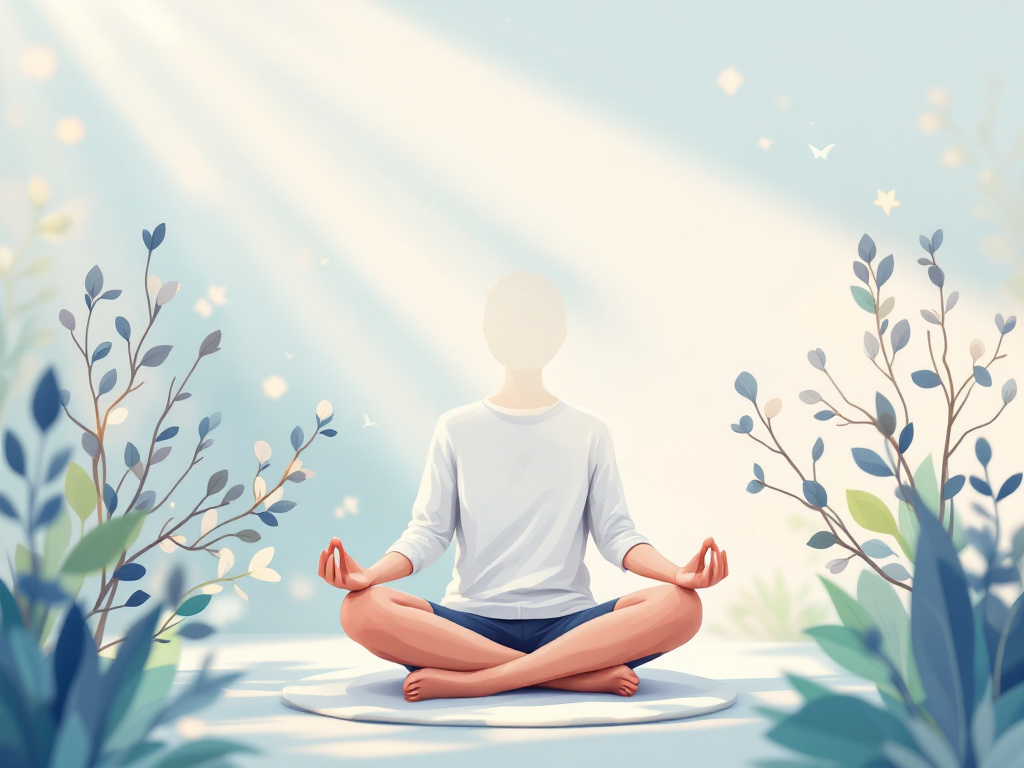
Breath awareness is one of the simplest and most effective ways to practice meditation for stress and anxiety. You always have your breath with you, and it is a direct line into your nervous system.
A 5‑step breath meditation you can do anywhere
Try this for 5 to 10 minutes:
-
Sit comfortably
Sit in a chair or on the edge of your bed. Place your feet on the floor, rest your hands in your lap, and let your spine be gently straight but not stiff. -
Pick a focus point
Close your eyes if that feels safe. If not, lower your gaze. Place your attention on the feeling of your breath at one place in your body, such as your nostrils, chest, or belly. -
Notice each breath
As you inhale, silently say “in.” As you exhale, silently say “out.” You are not trying to breathe in a special way. You are just noticing what is already happening. -
Expect your mind to wander
When thoughts appear, and they will, notice them kindly. Then escort your attention back to the breath. No judgment, no story about doing it wrong. -
End with one kind sentence
After a few minutes, take one slightly deeper breath and think a gentle phrase like “May I be calm” or “I am doing my best today.”
This basic mindfulness meditation, focusing on the present moment and your breathing, is one of the most widely studied methods for reducing stress and anxiety (Mayo Clinic).
Guided meditation when your mind is racing
Sometimes focusing on your breath feels too bare. A guided meditation can give your attention a bit more structure, which can be especially helpful when anxiety is high.
Guided meditation usually involves listening to a recording that walks you through:
- Visualizing a calming scene
- Paying attention to physical sensations
- Gently relaxing each part of your body
Mayo Clinic notes that guided imagery and similar practices are effective options for reducing stress and anxiety, especially when you are getting started (Mayo Clinic).
If you want an easy way to experiment, you can:
- Search for “10 minute guided meditation for anxiety” in your favorite app or video platform
- Test two or three different voices and choose the one that feels most relaxing to you
- Use the same track every day for a week so your body starts to associate it with winding down
You are still meditating. You are just borrowing someone else’s script until you feel ready to steer on your own.
Body scan meditation to release tension
Stress and anxiety do not live only in your thoughts. They show up as tight shoulders, clenched jaws, shallow breathing, and a general sense that you are braced for impact.
Body scan meditation helps you notice and soften these patterns.
A body scan involves slowly moving your attention through your body from head to toe, noticing sensations in each area, and relaxing whatever you can. It can be done on its own or as part of a broader mindfulness routine (Mayo Clinic).
Here is a quick way to try it:
- Lie down or sit back in a chair.
- Start at the top of your head and move your attention slowly downward.
- At each area, ask “What is here right now” and notice warmth, tightness, tingling, or even numbness.
- On your exhale, imagine breathing out of that body part and letting it soften just a bit.
- Continue until you reach your feet.
This kind of present-moment, nonjudgmental awareness is one of the three core ways meditation reduces stress, along with accepting your thoughts and avoiding harsh self-judgment (Calm).
Moving meditation if you hate sitting still
If you feel too restless to sit, you can still use meditation for stress and anxiety by choosing a moving style. The research review mentioned earlier found that moving forms such as yoga, Tai Chi, and Qigong tended to show even larger reductions in anxiety than some static methods (NCBI).
You do not need a full class to benefit. You can:
- Take a 10‑minute walk and pay close attention to the feeling of your feet on the ground
- Sync your breathing with slow, gentle stretches
- Practice a simple standing sequence that repeats the same motions with awareness
The key is the same: stay with the sensations of your body and your breath instead of following every thought that appears.
How meditation actually changes your stress response
It helps to know that meditation for stress and anxiety is not just “relaxing.” It changes how your brain and body respond to stressors.
A randomized trial of patients with generalized anxiety disorder compared an 8‑week Mindfulness‑Based Stress Reduction program with an active education control. Both groups improved, but the mindfulness group showed greater gains in several anxiety measures, better coping in a stressful lab test, and more positive self-talk under pressure (PMC). Two‑thirds of people in the mindfulness group were rated “much” or “very much” improved, compared with 40 percent in the control group.
Other work summarized by Calm notes that regular meditation can decrease the size or reactivity of the amygdala, the part of your brain that handles fear and stress responses (Calm). A less reactive amygdala means you still notice stressors, but they do not hijack you as quickly.
In practical terms, that looks like:
- Feeling a spike of anxiety and returning to your breath instead of spiraling
- Hearing bad news and staying steady enough to choose a next step
- Sleeping better because your nervous system is not locked in “on” mode (PMC)
You are training a calmer default, not chasing a perfect mood.
Building a routine that actually fits your life
The most effective meditation for stress and anxiety is the one you will keep doing. To make that happen, keep it small and connect it to moments that already exist in your day.
You might:
- Meditate for 5 to 10 minutes after you brush your teeth in the morning
- Take a 3‑minute breathing break before a big meeting or difficult conversation
- Use a short guided track before bed as a signal to unwind
Calm recommends weaving meditation into existing habits, such as while drinking your morning coffee or sitting on your commute, because that makes it more likely you will stick with it (Calm).
If daily practice is not realistic right now, aim for 4 or 5 days a week. The goal is a sustainable rhythm, not perfection. Manhattan CBT emphasizes that regular practice matters more than the exact length of each session for developing the skill of mindfulness and managing anxiety (Manhattan CBT).
Quick start plan for the next 7 days
Here is one simple way to put all of this into action:
-
Days 1–2: 5 minutes of breath meditation
Sit, notice the breath, gently return when your mind wanders. -
Days 3–4: 10‑minute guided session
Pick a short guided meditation for stress or anxiety and use the same one both days. -
Day 5: 10‑minute body scan before bed
Lie down and move your attention slowly from head to toe. -
Day 6: 10‑minute mindful walk
Walk at a normal pace, focusing on your feet, legs, and breath. -
Day 7: Choose your favorite
Repeat the technique that felt easiest and most helpful. This becomes your default practice for the next week.
By the end of a week, you will know what kind of meditation feels natural to you, and you will have proof that you can fit it into your real life.
Bringing it all together
Meditation for stress and anxiety does not have to be complicated or mystical. You are using simple, repeatable practices to:
- Focus your attention on one thing instead of a rushing stream of worries
- Build present-moment awareness so you can respond instead of react
- Gradually train your brain and nervous system to be less reactive to stress
You can start with 5 to 10 minutes a day, choose a style that suits your personality, and let the benefits compound. Pick one practice from this guide, schedule it for tomorrow, and give yourself permission to be a beginner.
You might feel a little calmer after the first session. The real power comes when you keep coming back.
About the Author