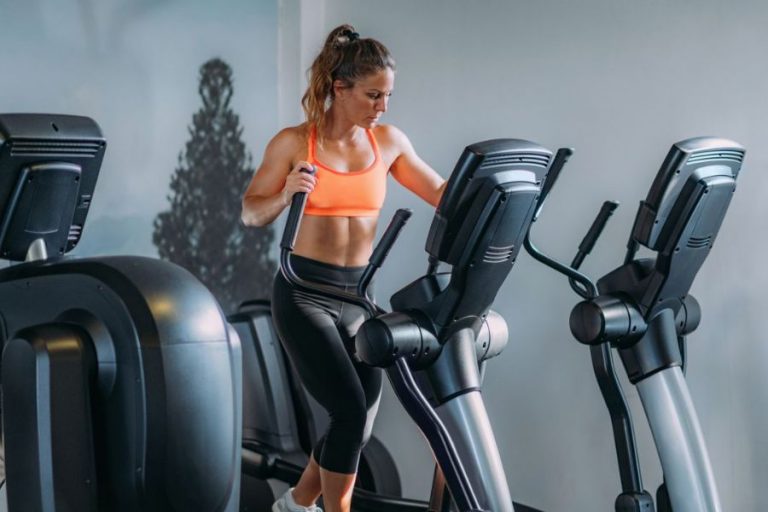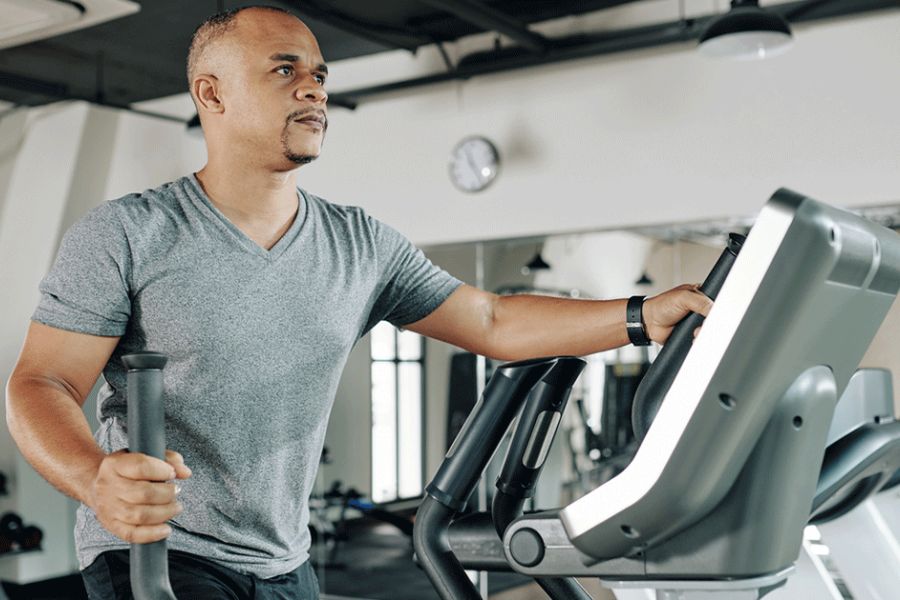
A gentle elliptical workout for seniors can be one of the easiest ways to protect your joints, strengthen your muscles, and boost your heart health, all in a single routine. The smooth, gliding motion means less pounding on your knees and hips while still giving you an effective cardio and strength session that fits the recommendations for older adults.
Below, you will find how an elliptical workout for seniors benefits your body, how to choose the right machine, and a simple step-by-step plan you can start this week.
Why ellipticals are ideal for seniors
Elliptical trainers give you low-impact movement that is kind to aging joints but still challenges your muscles and heart.
The pedals move in an oval path that keeps your feet in contact with the machine, so you avoid the jarring impact that comes with walking or running on a treadmill. This is particularly helpful if you have arthritis, joint sensitivity, or have been advised to avoid high-impact workouts. The senior elliptical bike program notes that this reduced strain on joints is one of the main reasons the elliptical is ideal for older adults with joint issues (Space Cycle).
At the same time, you get a full-body workout. Ellipticals engage your legs, arms, and core, using roughly 80% of your muscles, which helps with toning, coordination, and balance. This whole-body involvement can lower your risk of falls by improving strength in the very muscles that keep you steady when you walk or climb stairs (Space Cycle).
Because you control the resistance and speed, you can keep your workout at a comfortable intensity or gradually build up over time. For many seniors, this balance of safety and effectiveness is hard to match with other cardio machines.
Health benefits you can expect
An elliptical workout for seniors does much more than burn calories. It supports nearly every part of your health.
Stronger heart and better circulation
Regular elliptical sessions train your heart and lungs to work more efficiently. This kind of consistent cardiovascular exercise improves blood flow, helps lower resting heart rate and blood pressure, and can reduce cholesterol levels. These changes together decrease your risk of heart disease, which is a key concern as you age (Fitscope Studio).
Elliptical machines also make it easier to hit the widely recommended 150 minutes of moderate-intensity exercise per week, even if you break it into shorter sessions. The movement is continuous and controlled, so you can stay in your target heart rate zone without stressing your joints (CNET).
More strength and muscle tone
Although you might think of ellipticals as only cardio equipment, they double as a strength training tool. The resistance in the pedals challenges your glutes, quadriceps, hamstrings, and calves, while the moving handles involve your arms, shoulders, and upper back. Your core works the entire time to keep you upright and stable.
Using an elliptical regularly helps you build and maintain this muscle mass, which allows you to burn calories more efficiently and reduce body fat, even at rest (Fitscope Studio). Because you are training many muscle groups at once, you also avoid the imbalances that can happen when you only focus on one area, such as just your legs or just your arms.
Better balance and lower fall risk
Falls are one of the biggest health risks for older adults. Ellipticals naturally help you train the muscles and coordination you rely on to stay upright.
As you pedal, your legs, hips, and core are working together to keep you balanced over moving pedals. The support of the handlebars means you can practice this safely. Over time, this improves your stability and makes everyday activities like walking on uneven ground, stepping off curbs, or climbing stairs feel more secure (TRUE Fitness; Fitscope Studio).
Support for bones and joints
Elliptical training is considered weight-bearing exercise, which is important for keeping bones strong as you age. Your body weight works against the resistance of the machine, which signals your bones to maintain or improve their density. This is especially helpful if you are trying to reduce your risk of osteoporosis or slow its progression (Verywell Fit; TRUE Fitness).
At the same time, the low-impact, almost weightless feel of the gliding motion avoids the harmful joint stress that can come with running or stair climbing. This is why ellipticals are often recommended for seniors with arthritis, osteoporosis, or general joint pain, as long as your doctor approves (Fitscope Studio).
Choosing the right elliptical for you
Not every elliptical feels comfortable for every person. A few key features will help you pick a machine that fits your body and needs.
Check stride length and stability
Stride length is the distance the pedals travel forward and back. If it is too short, your movement will feel choppy and awkward. If it is too long, you may feel overextended.
Experts suggest that a stride length of around 20 inches tends to suit people between 5’3″ and 6’0″, although you should always test how it feels if you can. Stability and weight capacity also matter. Look for a solid frame, a wide base, and a machine that can comfortably support at least your body weight, often around 300 pounds or more for many seniors (BarBend).
Look for senior friendly design
Some ellipticals are built with older adults in mind. Features that can make your workout safer and more enjoyable include:
- A wide, non slip base
- Large, padded pedals
- Ergonomic handlebars at a reachable height
- Easy to read controls and simple buttons
The senior elliptical program emphasizes broad bases, ergonomic handles, and padded pedals as key for comfort and safety in older users (Space Cycle).
Certain models, like the HARISON HR-304 and HR-305, even come fully assembled, with remote controls, anti slip pedals, and very quiet operation under 15 decibels, which can be helpful if you want to exercise at home without fuss or noise (Harison Fitness).
Consider seated and compact options
If standing for long periods is difficult, or if you have pronounced knee or back pain, you might prefer a seated elliptical. The Teeter FreeStep LT3 Recumbent Cross Trainer gives you a low-impact, reclined position that eases stress on your joints and spine while you pedal, which is an appealing option for many seniors with chronic pain or mobility limits (CNET).
Compact, under desk models, such as the Cubii Move or the Cubii Total Body Smart Seated Elliptical, let you exercise while seated in a regular chair. These are light, quiet, and often include upper body resistance handles, which makes them suitable if you work from home or simply want a gentler way to move on days when standing is not realistic (BarBend; CNET).
How hard and how often to exercise
When you are starting an elliptical workout for seniors, your main goals are safety, consistency, and gradual progress.
Most seniors do well beginning with shorter workouts of 10 to 15 minutes, three or four times per week. From there, you can slowly increase up to 20 or 30 minutes as your endurance improves. This progression helps you avoid soreness and reduces the chance of overuse injuries (Verywell Fit; Harison Fitness).
To judge intensity, you can use the rate of perceived exertion (RPE) scale from 1 to 10, where 1 is total rest and 10 is all-out effort. Aim for a 4 to 6 during most of your workout, where your breathing is quicker but you can still speak in short sentences without gasping. This is considered moderate intensity and is effective without being overwhelming for most older adults (Verywell Fit).
Ellipticals with adjustable resistance and incline make it easy to stay at a low-impact level while still challenging your muscles and cardiovascular system. You can keep the incline low and gently raise resistance, or vice versa, depending on what feels best on your joints (CNET).
If you have severe joint damage, a recent surgery, or significant pain, always check with your doctor before starting, even with low-impact equipment. Many people with mild to moderate joint pain can benefit from ellipticals, but medical guidance is important when symptoms are more serious (Harison Fitness).
A simple 20 minute elliptical routine for seniors
You can use this beginner friendly plan on almost any elliptical. Adjust the times slightly if you need a shorter start.
Warm up: 3 to 5 minutes
Set resistance and incline to the lowest or a very easy level. Start pedaling at a slow, comfortable pace. Focus on smooth motion, relaxed shoulders, and even breathing.
This gentle warm up increases blood flow to your muscles and prepares your joints, which can help prevent stiffness or injury (Space Cycle).
Main set: 10 to 12 minutes
Alternate between easier and slightly more challenging segments. As a guideline:
- 2 minutes at easy pace, low resistance, RPE around 3 to 4
- 2 minutes at moderate pace, a small increase in resistance, RPE 4 to 5
- Repeat this 4 minute cycle 3 times, or as many times as feel comfortable
If your machine has moveable handles, lightly hold them during the moderate segments to involve your upper body. Keep your grip gentle so you do not overwork your hands or wrists.
Verywell Fit suggests that a 20 minute total elliptical workout, starting with 3 minutes of easy ramps and gradually adding intervals, is a good structure for beginners, including seniors (Verywell Fit).
Cool down: 3 to 5 minutes
Return to an easy pace with low resistance. Focus on long, steady breaths and letting your heart rate come down gradually.
Once you step off the machine, take a few minutes to stretch your calves, hamstrings, quadriceps, and upper back. The senior elliptical program also encourages pairing workouts with gentle stretching and strength exercises to improve flexibility and reduce injury risk (Space Cycle).
Extra tips to stay safe and comfortable
Small habits can make your elliptical workouts smoother and more enjoyable.
Wear supportive, closed toe athletic shoes with good cushioning. They help protect your feet and ankles and reduce slipping. Keep your posture tall with your chest lifted, shoulders relaxed, and eyes looking straight ahead, not down at your feet. This position engages your core and keeps strain off your lower back.
Hydration matters, even for shorter workouts, so keep water nearby and sip during your session. Plan regular rest days to allow your muscles and joints to recover, especially when you are new to exercise.
If you notice new or worsening pain in your knees, hips, back, or chest, slow down or stop and consult a professional. Mild muscle fatigue is normal when you are building strength. Sharp or intense joint pain is a sign to ease off and get advice.
Putting it all together
An elliptical workout for seniors offers a rare combination of safety, simplicity, and full body benefits. The smooth movement protects your joints, the resistance builds strength in your legs, arms, and core, and the continuous motion supports your heart, lungs, and circulation.
By choosing a machine that fits your body, starting with manageable 10 to 20 minute sessions, and paying attention to how you feel, you can build a routine that supports your health for years. Try one short elliptical session this week, even if it is only 5 or 10 minutes at very low resistance, and notice how your body responds. Over time, these small, consistent efforts add up to real improvements in strength, balance, and confidence in your everyday life.
About the Author