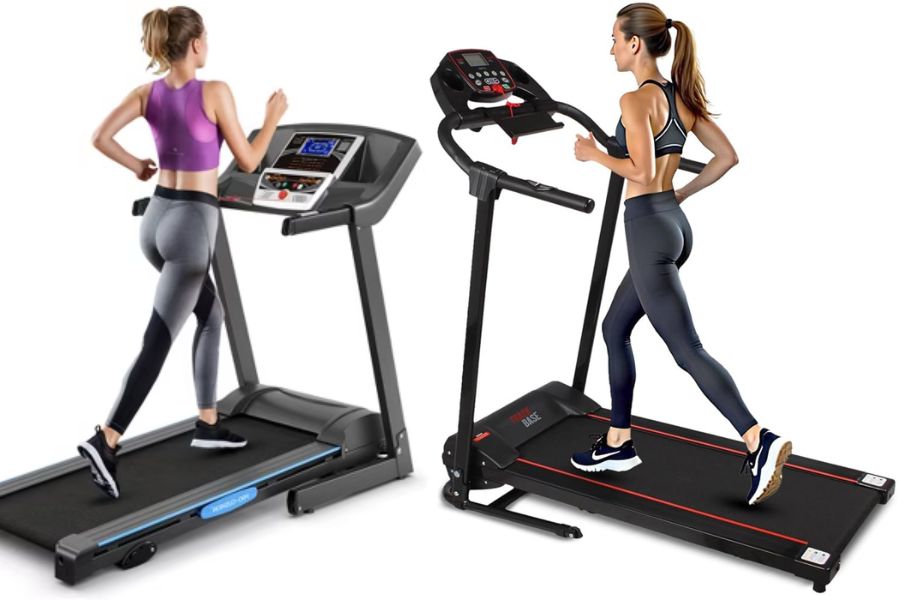
Treadmill walking workouts are one of the simplest ways to lose weight, build cardio fitness, and take care of your health without needing to run. With a few smart tweaks to speed and incline, you can turn a basic walk into a workout that challenges your muscles and keeps your heart strong.
Below you will find approachable treadmill walking workouts you can start today, plus form tips so you feel good during and after your session.
Why treadmill walking workouts work
Walking on a treadmill gives you a controlled environment. You avoid rain, wind, and extreme heat, which makes it easier to stay consistent with your cardio routine throughout the year (One Peloton). Consistency is one of the biggest drivers of weight loss and long‑term health, so this matters more than any fancy exercise trend.
Research also shows that running on a treadmill can match the intensity of running outside when you put in the same effort, so you can trust that your indoor workouts count for real cardiovascular fitness (Cleveland Clinic). Walking uses the same idea, just at a lower impact and intensity that is friendlier on your joints.
If your goal is better health, aim to reach at least 150 minutes of moderate cardio per week. A brisk treadmill walk at about 3 to 4 miles per hour for 30 minutes a day, five days a week, satisfies this guideline (One Peloton).
Get started safely and confidently
Before you touch the speed controls, it helps to have a simple checklist so you feel prepared and safe.
Warm up first
A proper warmup lets your heart rate and joints ease into the effort. You can try:
- 3 to 5 minutes walking at 2 to 2.5 mph
- 0 to 1 percent incline
- Relaxed posture with your arms swinging naturally
Warming up this way can improve performance and make your workout feel smoother from the first few minutes.
Find your target intensity
Instead of obsessing over exact speeds, focus on how the workout feels in your body. You can use two simple tools:
- Rate of perceived exertion (RPE)
Picture a scale from 1 to 10.
- 1 to 3 feels like an easy stroll
- 4 to 7 feels challenging but sustainable
- 8 to 10 feels very hard and only comfortable for short bursts
Many benefits of treadmill walking workouts show up when you spend most of your time between RPE 4 and 7 (Nike, NordicTrack).
- Heart rate checks
You can wear a fitness tracker, use a chest strap, or pause briefly to take your pulse. Keeping your heart rate in your personal target zone for at least 20 minutes helps improve cardiovascular endurance over time (Cleveland Clinic).
Use beginner‑friendly settings
If you are newer to treadmill walking workouts, start with:
- Speed: 3 to 4 mph
- Incline: 0 to 2 percent
From there, you can gradually increase speed, incline, or workout length as your fitness improves (One Peloton).
Focus on form to avoid aches
Good walking form keeps your joints happy and helps you get more out of every workout.
- Keep your torso upright, not hunched forward over the console
- Engage your core gently, as if zipping up snug jeans
- Let your arms swing naturally at your sides, do not cling to the handrails unless you are regaining balance
- Land softly on your heel or midfoot, then roll through to your toes
If you are walking on an incline, posture becomes even more important. Trainers recommend engaging your core, keeping your torso tall, and using your glutes and hamstrings to drive each step (Nike). Leaning too far forward or hanging onto the handles can stress your lower back and knees.
Easy steady‑state treadmill walk
This is your go‑to workout when you want something simple that still supports weight loss and heart health.
- Warmup
- 5 minutes at 2.5 to 3 mph
- 0 to 1 percent incline
- Main walk
- 20 minutes at 3 to 4 mph
- 1 to 2 percent incline
- Cooldown
- 5 minutes at 2 to 2.5 mph
- 0 percent incline
Stay at an intensity where you can talk in short sentences but not easily sing. This style of steady‑state workout prepares your muscles and lungs for more advanced options later (NordicTrack).
Incline walking to burn more calories
Incline walking is one of the most effective ways to make treadmill walking workouts work harder for you, without needing to run.
Walking uphill requires more energy from your body. At just a 5 percent incline, the metabolic cost can rise by about 17 to 52 percent, and at 10 percent incline it can increase by roughly 32 to 113 percent compared to flat walking, depending on the study and setup (Nike, NordicTrack). Incline walking also engages your calves, quadriceps, hamstrings, and glutes more intensely, which helps tone your legs and improve endurance (NordicTrack).
Here is a simple incline workout you can adjust to your level:
- Warmup
- 5 minutes at 3 mph
- 2 to 3 percent incline
- Incline blocks
Repeat 3 to 5 times:
- 3 to 5 minutes at 3 to 3.5 mph, 8 to 10 percent incline
- 1 to 2 minutes at 2.5 to 3 mph, 2 to 3 percent incline for recovery
- Cooldown
- 5 minutes at 2.5 to 3 mph
- 0 percent incline
This format is based on trainer guidance that uses incline intervals to raise heart rate, burn more calories, and still allow for short recovery sections (Nike).
If you prefer something more straightforward, you can walk at a moderate pace with an incline between 10 and 12 percent for about 30 minutes, which many lifters use after strength training sessions to support fat loss (Reddit). Just listen to your body and reduce the incline if your form starts to suffer.
Try the popular 12‑3‑30 workout
The 12‑3‑30 treadmill workout has become popular because it is simple to remember and feels approachable if you like a challenge.
The structure is:
- 12 percent incline
- 3 mph speed
- 30 minutes total
Walking on an incline like this recruits your glutes, hamstrings, and quads more intensely than level walking and raises your heart rate into a solid cardio zone without requiring you to run (TODAY). Trainers and brands highlight this workout as a low impact but challenging way to increase calorie burn, as long as you pair it with a consistent, supportive nutrition plan for actual weight loss (NordicTrack, One Peloton).
There are a few cautions, especially if you are new to exercise or have joint issues:
- A steep incline puts extra stress on your lower back, hamstrings, Achilles tendons, knees, and the bottoms of your feet
- Experts suggest starting with a lower incline, paying careful attention to posture, and including rest days between sessions to avoid overuse injuries (TODAY)
If 12‑3‑30 feels too intense at first, you can scale it like this:
- Week 1 to 2: 6 percent incline, 2.5 to 3 mph, 15 to 20 minutes
- Week 3 to 4: 8 to 10 percent incline, 3 mph, 20 to 25 minutes
- Week 5 and beyond: Work toward 12 percent incline and 30 minutes as your goal, not your starting point
Interval walking for faster fitness gains
Interval treadmill walking workouts alternate between higher intensity bursts and easier recovery periods. This style of training keeps things interesting and can provide big benefits in less time.
According to trainers, intervals that change speed and incline can raise your heart rate to moderate or high levels, which strengthens your heart, muscles, and endurance system (Nike). A 2019 study also found that high intensity interval training, or HIIT, can improve cardiorespiratory fitness more than steady moderate exercise and is often more time efficient (NordicTrack).
Here is a beginner friendly interval walking workout:
- Warmup
- 5 minutes at 2.5 to 3 mph
- 0 to 1 percent incline
- Intervals
Repeat 6 to 8 times:
- 1 minute fast walk or light jog at 3.5 to 4.5 mph, 2 to 4 percent incline, RPE about 7
- 1 to 2 minutes easy walk at 2.5 to 3 mph, 0 to 2 percent incline, RPE about 4
- Cooldown
- 5 minutes at 2 to 2.5 mph
- 0 percent incline
Interval training like this can improve aerobic capacity, fight boredom through variety, support fat loss through higher calorie burn, and save time since even shorter workouts can be very effective (Garage Gym Reviews).
If you are new to intervals, start with one session per week and slowly build up to two or three sessions weekly so your body has time to recover (Garage Gym Reviews, NordicTrack).
Aim to keep your hardest intervals around 70 to 85 percent of your maximum heart rate and limit HIIT style sessions to about three or four days a week so you do not overdo it (NordicTrack).
Make treadmill walking a long‑term habit
Any plan only works if you can stick with it. A few small habits will help you turn your treadmill walking workouts into a regular routine that supports weight loss and better health.
- Set a weekly schedule, for example, 3 to 5 sessions of 30 to 60 minutes, and treat them like appointments with yourself (Reddit)
- Wear comfortable running or walking shoes that offer stability and cushioning so your feet stay happy over time (NordicTrack)
- Keep a water bottle nearby and sip regularly, especially during longer or incline heavy workouts (NordicTrack)
- Add variety by rotating between steady walks, incline days, 12‑3‑30 sessions, and interval workouts so you never feel stuck doing the exact same routine
Walking might look simple on the surface, but when you use speed, incline, and intervals thoughtfully, your treadmill becomes a powerful tool for weight loss, stronger muscles, and better heart health. Choose one of the workouts above, set a realistic starting point, and give yourself a few weeks of consistency. You may be surprised by how quickly your energy, stamina, and confidence improve.
About the Author