Strength training for shoulders can feel intimidating at first, especially if you worry about form, equipment, and where to begin. But the truth is, an effective shoulder routine doesn’t need to be complicated or reserved for advanced athletes. With the right mindset and guidance, you can unlock stronger, more defined shoulders that not only look great but also support everyday movements, from lifting groceries to playing sports with friends. In this friendly guide, you’ll find everything you need to start or refine your shoulder workouts, even if you’re completely new to strength training.
Understand basic shoulder anatomy
Before diving into specific exercises, it helps to know the different muscles at play. Your shoulders are a complex joint made up of several muscle groups, each with a slightly different role. The most prominent is the deltoid, which wraps around the top of your arm and helps with raising and rotating your arm in multiple directions.
Beneath the deltoid sits your rotator cuff, a group of four smaller muscles that stabilize and rotate the shoulder joint. Maintaining a strong rotator cuff is crucial for avoiding injury and comfortably handling heavier weights in your workouts. Together, these muscles allow for a broad range of motion, which makes the shoulder joint incredibly versatile but also more prone to strain if you’re not careful.
Why this matters
When you recognize that different areas of your shoulders have different responsibilities, you can tailor your training to keep them all healthy. Focusing exclusively on visible muscles, such as the front delts, might lead to imbalances. Be sure to devote attention to the entire shoulder region, including the rotator cuff.
Perform a proper warmup
A quick shoulder warmup can be your best defense against injury. You don’t need fancy equipment, but you do need to raise your heart rate slightly and move your arms through dynamic stretches. Warm muscles are more pliable and better positioned to handle the forces of strength training for shoulders.
One effective way to start is with arm circles. Stand tall, extend your arms out to your sides, and make gentle circles, gradually increasing their size. You can also add shoulder rolls, where you slowly move your shoulders forward and backward. Aim for a minute or two of these movements to encourage blood flow and help loosen any stiff areas. If you enjoy cardio, a few minutes on a rowing machine or a brisk walk swinging your arms can also get your shoulders primed for action.
Key warmup tip
Listen to your body. If a shoulder movement feels exceptionally tight or painful, pause and explore light mobility drills or gentle stretching. It’s better to spend an extra minute warming up than to rush and risk hurting your shoulder early in the workout.
Master fundamental strength exercises
Strengthening your shoulders efficiently calls for foundational techniques that engage every muscle fiber in the region. While there are countless moves, a few core exercises consistently stand out for building well-rounded strength and definition:
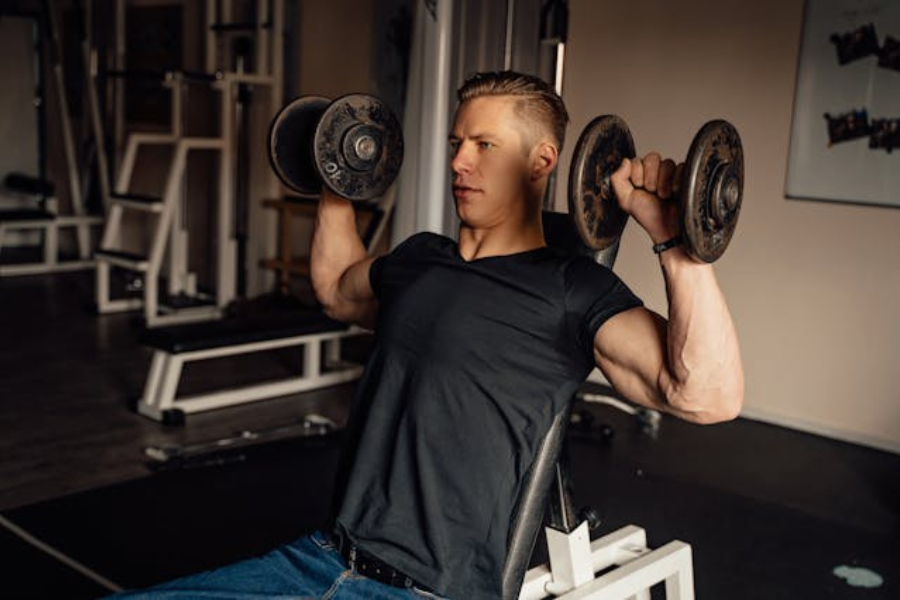
- Overhead press: Sometimes called the military press, this exercise works the front and side deltoids. You can use dumbbells, a barbell, or even resistance bands. Keep your core tight, back straight, and press the weight overhead in a slow, controlled manner.
- Lateral raise: A classic for targeting the side deltoids, the lateral raise involves lifting dumbbells out to your sides with minimal elbow bend. Remember to keep the movement smooth and avoid swinging your torso for momentum.
- Face pull: Ideal for the back part of your shoulders and upper back, the face pull increases stability in your rotator cuff. You’ll typically use a cable machine or resistance band, pulling the handle (or band) toward your face with elbows high to engage the rear delts.
- Bent-over reverse fly: By leaning forward and extending your arms out to each side, you’ll isolate the rear deltoids and upper back. Focus on squeezing your shoulder blades together at the top of each rep.
These four exercises form a strong base for shoulder strength. Once you’re comfortable with them, you can blend in advanced variations or different angles to hit each muscle from multiple perspectives.
Mind-muscle connection
Concentrate on feeling the targeted muscle contract. It might be tempting to rush through a set, but slowing down and focusing your attention on the muscle doing the work can magnify your results. A strong mind-muscle connection also helps prevent poor form.
Add variety and progression
After you’ve mastered the basics, you’ll want to challenge your muscles in new ways to keep them growing and adapting. Progression doesn’t only mean piling on heavier weights. You can also switch up rep ranges, adjust your rest intervals, or experiment with different equipment such as cables, kettlebells, or even bodyweight exercises like pike push-ups.
If you typically do a straightforward overhead press, you might try a single-arm variation to test your balance and core stability. Controlled negatives, where you give extra attention to lowering the weight slowly, also help spark new muscle growth. Variety is the key to sustained progress—your body learns quickly, so changing one or more variables ensures your shoulder workouts remain fresh and effective.
The importance of rest
New lifters often overlook the role of rest in strength gains. Your shoulder muscles, like any other muscle group, need downtime to rebuild and become stronger. Scheduling at least one day of rest after a heavy shoulder session prevents overtraining and reduces the risk of nagging injuries.
Avoid frequent mistakes
Shoulder training mistakes can stall your progress or, worse, sideline you with an injury. One common error is using a weight that’s too heavy. Instead of enhancing your strength training for shoulders, you might end up relying on your back or legs to get the weight up, putting excess stress on the spine and limiting the shoulder’s workout.
Another pitfall is neglecting balance across the shoulder. It’s easy to overwork the front deltoids with pressing movements while undertraining the rear delts and rotator cuff. This imbalance can lead to poor posture and potential aches. Keep your shoulder routine balanced by incorporating rows, reverse flies, or face pulls to strengthen the back side of the joint. Lastly, watch out for excessive swinging and jerky movements. Slow, controlled reps may feel harder, but they’re far more effective at isolating and developing the muscle safely.
Quick corrective strategies
- Start your routine with the most challenging exercise when you have the most energy.
- Check your form in a mirror, and consider starting with lower weights to nail proper technique.
- If you feel pain in the shoulder joint itself, pause and reassess—you might need a lighter load or a different exercise variation.
Summarize major takeaways
Developing strong shoulders isn’t limited to bodybuilders or fitness veterans. You can build impressive strength and shape right at home or in a gym by following a few guiding principles. Begin each session with a thorough warmup, focusing on light, dynamic movements that prepare your joints and muscles for work. Then, prioritize foundational exercises like the overhead press and lateral raise to hit the main areas of your shoulder. Use proper form, maintain a steady tempo, and pay attention to engaging the correct muscle group.
Once you have the basics down, shake things up. Introduce new exercises and vary your equipment or rep ranges to keep your shoulders guessing. This continuous challenge is what spurs growth. Most importantly, be patient with your progress and allow time for recovery. Rest days can be just as critical as training days for seeing results. With these strategies, you’ll quickly discover that strength training for shoulders not only helps you feel confident in a tank top but also boosts your overall mobility and functionality in day-to-day tasks.
Try starting with one or two of these tips in your next workout. Over time, you’ll piece together a well-rounded shoulder routine that leaves you feeling strong, stable, and ready for whatever life throws your way. Enjoy the process, and don’t be afraid to celebrate the small wins, like finally perfecting that overhead press or noticing you can carry heavier bags without any strain. It all adds up to a better, stronger you.
About the Author