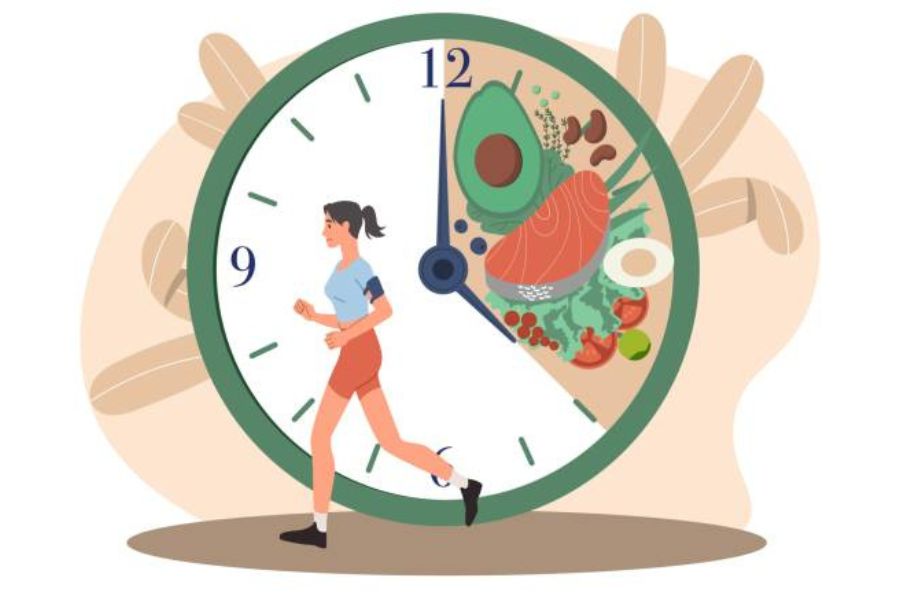
A rigid diet that dominates your calendar is hard to stick with. A flexible intermittent fasting schedule is different. You choose when you eat, when you fast, and how strict you want to be, so the plan fits around your real life instead of the other way around.
Below, you will learn how intermittent fasting works, what the main schedules look like, and how to build a pattern you can actually enjoy and keep.
Understand what intermittent fasting really is
Intermittent fasting is not a specific meal plan or a list of “good” and “bad” foods. It is simply an eating pattern where you alternate between periods of eating and periods of fasting, focusing more on when you eat than what you eat. You drink water and other zero calorie beverages during the fast, then eat your usual meals during your eating window (Johns Hopkins Medicine).
Different approaches use different timing. Some schedules focus on daily time restricted eating, such as the popular 16/8 pattern. Others spread fasting across the week, such as the 5:2 method or alternate day fasting. In every case, the goal is to give your body longer breaks from constant eating so it can burn stored energy, stabilize blood sugar, and potentially support weight management (Healthline).
The quality of what you eat still matters. Whole foods, lean protein, fiber, and healthy fats give you more energy and help fasting feel easier than a diet centered on refined carbs and ultra processed snacks (University of Michigan SPH).
Weigh the potential benefits and drawbacks
When you are designing an intermittent fasting schedule, it helps to understand why you are doing it and what trade offs you might face.
Research suggests that intermittent fasting may help you:
- Reduce your overall calorie intake so you lose weight or maintain a healthier weight
- Improve markers of metabolic health such as insulin sensitivity and blood sugar control
- Support heart and brain health and potentially reduce the risk of type 2 diabetes (University of Michigan SPH)
You may also find that fewer eating windows naturally cut back on late night snacking and mindless grazing, which can simplify your routine and make meal planning easier (Healthline).
At the same time, fasting is not side effect free. Common issues include fatigue, headaches, irritability, mood swings, and constipation, especially while your body is adjusting (Mayo Clinic). Some people also notice stronger urges to overeat on non fasting days because appetite hormones and the brain’s hunger center can go into overdrive (Harvard Health Publishing).
There is also emerging research that raises questions about how strict your schedule should be. One analysis of U.S. adults found that people who ate within an 8 hour daily window had a higher risk of dying from cardiovascular disease compared with those who ate over 12 to 16 hours, although the study relied on self reported data and cannot prove that the short eating window was the cause (American Heart Association Newsroom).
For you, this means extreme restrictions are not automatically better. A moderate, flexible pattern that you can sustain, paired with nutritious food, is likely safer and more helpful than a very tight window that leaves you exhausted or triggers binge eating.
Know who should avoid or modify fasting
Intermittent fasting is not for everyone. You should talk with your doctor before starting if you:
- Have advanced diabetes or take insulin or blood sugar medications
- Are pregnant, breastfeeding, or trying to conceive
- Have a history of eating disorders
- Take medications that must be taken with food or that affect blood pressure, heart rhythm, or fluid balance
Fasting can create dangerous shifts in blood sugar and in minerals like sodium and potassium, especially if you are taking certain medications (Harvard Health Publishing). Older adults may also be more vulnerable to unintended weight loss, which can lead to weaker bones, lower immunity, and reduced strength (Harvard Health Publishing).
If you fall into any of these categories, your provider can help you decide whether a gentler version, like a 12 hour overnight fast or small, well timed meals, might be safer.
Compare the main intermittent fasting schedules
Before you build your own intermittent fasting schedule, it helps to see how the most common patterns work in everyday life.
| Method | How it works | Typical example | Key pros | Main cons |
|---|---|---|---|---|
| 16/8 or 14/10 time restricted eating | Fast for 14 to 16 hours, eat during an 8 to 10 hour window each day | Eat from 10 a.m. to 6 p.m., fast from 6 p.m. to 10 a.m. | Easy to remember, lines up with daily routine, beginner friendly (Cleveland Clinic) | Can be hard if you work nights or have late social dinners |
| 5:2 method | Eat normally 5 days per week, then limit calories to about 500 on 2 nonconsecutive days | Regular eating on weekdays except Monday and Thursday, when you eat two very small meals | Flexible social life, only 2 “tough” days weekly (Cleveland Clinic) | Low energy on fasting days, takes planning to avoid overeating on other days |
| Alternate day fasting | “Modified” fast every other day, usually about 25 percent of normal calories | Normal eating on Monday, about 500 calories on Tuesday, and so on | Can produce a strong calorie deficit for weight loss (Cleveland Clinic) | Difficult to keep long term, may raise LDL cholesterol after stopping |
| 24 hour “eat stop eat” | Full 24 hour fast once or twice per week | Finish dinner at 7 p.m., then do not eat until 7 p.m. the next day | Simple rule, no calorie counting | High risk of headaches, fatigue, and intense hunger, especially if repeated (Cleveland Clinic) |
You do not have to choose one method and follow it perfectly. You can start with a gentle daily window, then adjust the length or mix elements to create a routine that feels easier.
Start with a gentle, realistic window
If you are new to fasting, the simplest way to begin is by extending the overnight break between dinner and breakfast. Many experts recommend starting with a 12 hour overnight fast, such as finishing dinner by 7 p.m. and eating breakfast at 7 a.m., and then slowly increasing your fasting time if that feels comfortable (Healthline).
A flexible first week might look like this:
- Days 1 to 3: 12 hour fast, for example 7 p.m. to 7 a.m.
- Days 4 to 7: 13 to 14 hour fast, for example 7 p.m. to 8 or 9 a.m.
You can then experiment with a 14/10 or 16/8 pattern, such as eating between 10 a.m. and 8 p.m. However, longer is not always better. Very long fasts of 24, 36, 48, or 72 hours do not necessarily give extra health benefits and can even backfire by pushing your body into a “starvation” mindset where it holds on to fat (Johns Hopkins Medicine).
The adjustment period usually lasts two to four weeks. During that time you might feel hungrier or more irritable as your body learns to tap into stored fuel, so listen closely to how you feel and keep your schedule flexible (Johns Hopkins Medicine).
Match your schedule to your lifestyle
A flexible intermittent fasting schedule starts with the realities of your life, not an idealized routine. To find your best window, look at:
- Your work hours and commute
- Family meals and childcare responsibilities
- Exercise times
- Usual social events or late dinners
If your family eats dinner at 7:30 p.m., a 10 a.m. to 6 p.m. eating window will cause constant stress. You might do better with 11 a.m. to 7 p.m. or even a 12 p.m. to 8 p.m. window so you can sit down with everyone. If you prefer early morning workouts, you may want an earlier window so you can eat after training.
You can also build in more flexibility by:
- Keeping your fasting and eating windows the same length most days, but sliding them a bit earlier or later when needed
- Planning one or two days each week with a slightly longer eating window for social occasions
- Allowing yourself to occasionally break the fast when you are truly hungry or unwell, then simply returning to your routine at the next meal
Time restricted patterns such as 16/8 or 14/10 are especially convenient because they fit into a normal day and can be adjusted for your own schedule (Cleveland Clinic).
Eat and drink in a way that supports fasting
What you eat during your eating window can make or break how fasting feels. To stay energized and satisfied, focus on:
- Protein at each meal, such as eggs, Greek yogurt, beans, tofu, fish, or poultry, to keep you full
- High fiber foods like vegetables, fruit, whole grains, and legumes to stabilize blood sugar and digestion
- Healthy fats from olive oil, avocado, nuts, and seeds to provide steady energy
- Plenty of water, plus unsweetened tea or black coffee during your fasting window, since these do not break your fast and help curb hunger (Johns Hopkins Medicine)
Try to avoid turning your eating window into a free for all. Relying heavily on high calorie ultra processed foods can cancel out potential benefits and make you more likely to crash midway through your fast (Johns Hopkins Medicine).
Constipation is a common side effect because you are eating less often. Fiber, hydration, and gentle movement help keep things regular (Harvard Health Publishing).
Watch for warning signs and adjust
A flexible intermittent fasting schedule changes with you. As you try a pattern for a few weeks, pay close attention to how you feel. It is normal to feel slightly hungry near the end of a fast, but you should not feel completely depleted every day.
Take any of these signs seriously:
- Persistent dizziness, faintness, or strong headaches
- Extreme fatigue that affects work or daily tasks
- Intense irritability or mood swings that disrupt relationships
- Binge eating or urges to completely lose control during your eating window
- Irregular or missed menstrual periods, especially if you are underweight or losing weight quickly (Mayo Clinic)
If you notice these issues, shorten your fasts, make sure you are eating enough during your window, or pause fasting and talk with a healthcare professional. Some people do better with a mild overnight fast and regular meals instead of structured intermittent fasting, and that is a valid choice.
Put it together into a plan you can keep
Once you have tested what works for you, turn your experiments into a simple weekly structure. For example, your flexible intermittent fasting schedule might look like this:
- Monday to Thursday: 14/10 pattern, eating from 9 a.m. to 7 p.m.
- Friday: Slightly longer window, 9 a.m. to 8 p.m., to allow for dinner out
- Saturday: Unstructured but mindful eating, focusing on whole foods
- Sunday: Return to 14/10, 10 a.m. to 8 p.m., and plan meals for the week
This kind of plan gives you consistency on most days, space for real life events, and enough structure to support your health goals. If you decide later to try 16/8 or to incorporate an occasional lower calorie day, you can layer those changes on top of this foundation.
Intermittent fasting does not have to feel like a strict rulebook. When you build a schedule around your own body, responsibilities, and preferences, you are far more likely to stick with it long enough to see whether it truly helps you lose weight, feel better, and improve your health.
About the Author