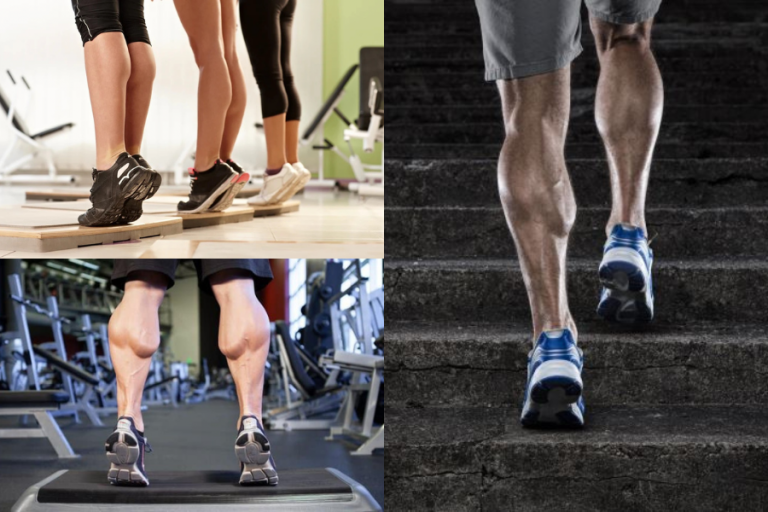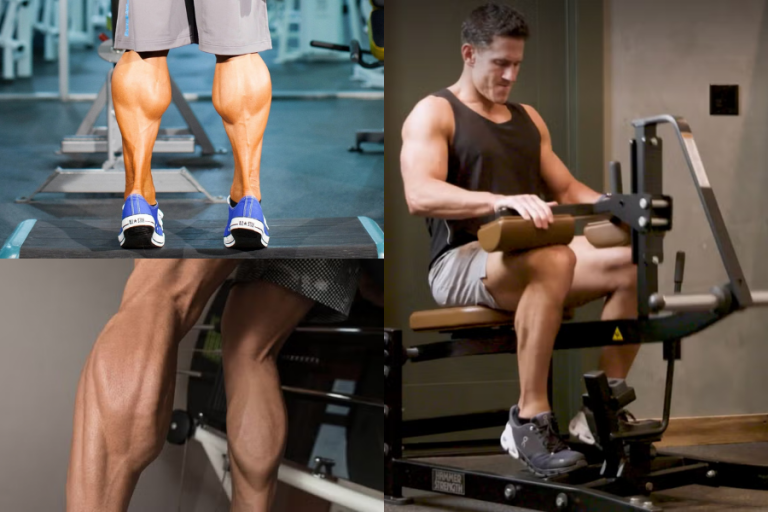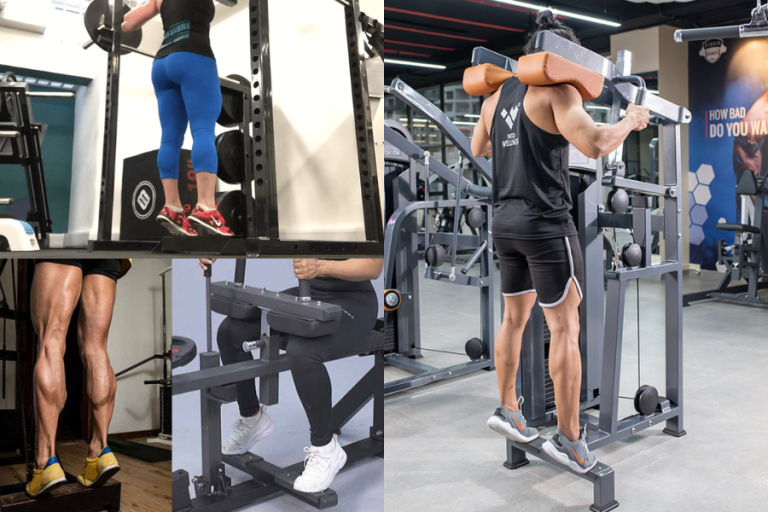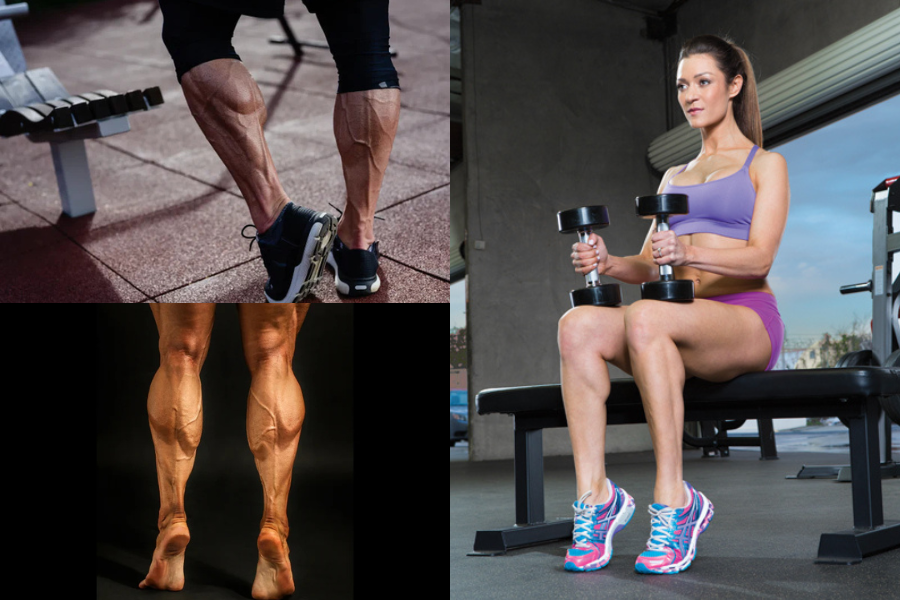
A lot of leg workouts barely touch your calves. Weighted calf raises change that. When you add smart resistance to this simple movement, you build strength, power, and ankle stability that you feel every time you walk, run, or lift.
Below you will find practical, science-backed tips for getting more from your weighted calf raises, whether you are brand new to the exercise or looking to break through a plateau.
Understand what weighted calf raises actually do
Weighted calf raises target the muscles at the back of your lower leg, mainly the gastrocnemius and soleus. According to Mayo Clinic, the calf raise exercise, especially when you hold dumbbells, helps protect your Achilles tendon and calf from injury by strengthening these muscles.
When you add resistance with dumbbells, a barbell, a kettlebell belt, or a weighted vest, you:
- Build strength for walking, running, and jumping
- Improve ankle stability and balance
- Support better performance in sports that involve sprinting and direction changes
If you have ever felt wobbly coming out of a squat or unstable on stairs, well-trained calves can make a noticeable difference.
Nail your basic standing weighted calf raise
Before you add fancy variations, you want your standard weighted calf raises to be solid.
Step by step with dumbbells
Mayo Clinic trainers recommend this simple setup for a safe and effective dumbbell calf raise:
- Stand with your feet about shoulder width apart.
- Hold a dumbbell in each hand with your arms hanging straight down below your shoulders.
- Keep your back and knees straight.
- Rise up onto your toes, lifting your heels as high as you comfortably can.
- Pause briefly at the top, then slowly lower your heels back to the starting position.
You should feel clear tension in your calf muscles, not in your knees or lower back. If you struggle with balance, Mayo Clinic experts suggest using a chair or pole for support rather than cutting the range of motion short.
For many people, one set of 12 to 15 controlled repetitions is enough to strengthen the calves when starting out. You can add more sets over time as you adapt.
Use single leg calf raises to double the challenge
You might assume you need more and more external weight to keep progressing, but you can make weighted calf raises tougher simply by using one leg at a time.
Performing single leg bodyweight calf raises effectively doubles the load on the working leg compared with doing the exercise on two legs. For someone who weighs about 64 kg, this significantly increases intensity without adding equipment. People who consistently perform single leg raises with full range of motion and higher reps often notice visible calf size gains and better muscular endurance.
Single leg raises are also valuable in rehab settings. Physical therapists often use them to restore a normal gait pattern and reduce limping after lower leg injuries, including Achilles ruptures. Being able to perform around 20 good quality single leg calf raises is sometimes used as a benchmark before returning to higher impact activities like running.
If you are not there yet, you can progress gradually:
- Start with assisted single leg raises while lightly holding a countertop.
- Focus on reaching full height and getting a good stretch at the bottom.
- Reduce the assistance over time until you can perform them unassisted with control.
Once you are strong on one leg with bodyweight, adding dumbbells or a weight belt becomes a powerful next step.
Pick the right way to add weight
You have several options for making your calf raises heavier. Each has pros and cons.
Standing weighted calf raises
Standing weighted calf raises are an easy progression from bodyweight. Athlete Movement notes that one preferred method is using a belt to attach a kettlebell. This keeps your hands free so you can lightly hold a rack or rail for balance, which is especially helpful if you tend to wobble with dumbbells.
You can also:
- Hold dumbbells by your sides
- Use a weighted vest
- Place a barbell across your upper back
All of these increase resistance, which promotes greater muscle strength and growth in your calf muscles.
Standing barbell calf raises
Standing barbell calf raises allow you to load more weight than you might manage with dumbbells. Athlete Movement suggests that you might want to stand on a block for extra extension at the top, or modify your setup to make balance easier. The tradeoff is that a heavy bar can be fatiguing for your shoulders and back before your calves actually reach failure.
Seated dumbbell calf raises
Seated dumbbell calf raises mainly target your soleus muscle and are useful if:
- You have trouble staying balanced when standing
- Your gym does not have a dedicated seated calf machine
- You want to add extra volume without overloading your spine
You simply sit, place the balls of your feet on a step, rest dumbbells on your thighs above the knees, and then raise and lower your heels under control.
Whichever method you choose, prioritize a setup that lets you move smoothly and safely, not just the one that lets you stack on the most plates.
Increase your range of motion for better results
You can make weighted calf raises significantly more effective by changing where your feet are, not just how much you lift.
Placing the balls of your feet on a step, stair, or weight plate allows your heels to drop lower at the bottom of the movement. This deeper stretch increases your range of motion and leads to greater muscle activation. Research cited in training resources notes that this simple change is one of the most reliable ways to boost the effectiveness of calf raises.
To use this variation safely:
- Pick a stable step or plate that will not slide
- Lower your heels slowly to a comfortable stretch, not a painful one
- Pause briefly at the bottom, then drive up to full height on your toes
The goal is a long, controlled movement from stretched to fully shortened, not bouncing quickly through the middle.
Adjust your foot position to hit different fibers
You can slightly change which parts of your calf work hardest by turning your feet:
- Toes pointing inward focus more on the outer head of the calf
- Toes pointing outward shift emphasis to the inner head
- Toes pointing straight ahead give you a balanced hit across the muscle
A common strategy is to rotate positions across sets. For example, you might do your first set with toes straight, your second with toes slightly in, and your third with toes slightly out. The key is to make small rotations rather than extreme angles so your ankles remain comfortable and aligned.
Control your tempo, do not rush the reps
How you lift and lower the weight often matters more than how much you are holding.
For muscle growth and strength, slow and controlled repetitions place optimal tension on your calves. Both Athlete Movement and Mayo Clinic trainers emphasize smooth, deliberate movement with straight knees for standing variations.
As a starting point:
- Take 2 seconds to rise onto your toes
- Pause 1 second at the top
- Take 2 to 3 seconds to lower your heels back down
This avoids using momentum and keeps the stress on your muscles instead of your joints. If you cannot control the tempo, the weight is probably too heavy for your current strength.
Choose smart sets, reps, and frequency
You do not need endless sets of weighted calf raises to see progress. You do need consistency and gradual overload.
A simple framework many intermediate lifters use is:
- 2 to 3 times per week
- 3 sets of 12 to 20 reps
- Rest 45 to 75 seconds between sets
The research in your brief suggests that 2 to 3 weekly sessions is a good target, provided you avoid overtraining. An intermediate routine might include holding dumbbells for 3 sets of 15 reps to push past what bodyweight alone can offer.
Pay attention to how your calves feel between sessions. They may be sore early on, especially if you introduce single leg work or extended range of motion, so give them time to recover before you hit them hard again.
Use progression to avoid plateaus
Your calves can adapt quickly, and that is where many people get stuck. You can keep progressing your weighted calf raises in several ways:
- Add a small amount of weight
- Add 1 or 2 reps per set with the same weight
- Increase the range of motion with a step
- Switch from two leg to single leg variations
- Add a paused stretch at the bottom or a longer hold at the top
More advanced workouts might include seated calf raises with extra weight and donkey calf raises, where a partner or added weight provides resistance from the hips. These target the calves from different angles for maximal development.
One point to remember: progression is not only about lifting heavier. You can also progress by improving technique, deepening your range, or gaining better control over your balance.
Compare your strength to standards, if you like numbers
If you enjoy tracking progress with metrics, strength standards for dumbbell calf raises can give you a rough idea of where you stand.
Recent data suggests:
- The average male lifter has a one rep max (1RM) dumbbell calf raise of about 85 pounds, which is considered an intermediate level as of 2026
- Male beginners can aim for around 17 pounds in a one rep max, which is already impressive versus the general population
- The average female lifter has a 1RM around 48 pounds, also classified as intermediate
- Female beginners can aim for about 16 pounds as an initial benchmark
These numbers compare your 1RM relative to bodyweight and help you see whether you are in a beginner, intermediate, or more advanced range. They are guides, not rules, so focus first on pain free movement and good form.
Put it all together in your own routine
You do not need a complicated program to benefit from weighted calf raises. The tips above come down to a few core habits:
Prioritize controlled movement, full but comfortable range of motion, and gradual progression in weight or difficulty.
Start from where you are today. You might simply add one set of single leg bodyweight calf raises at the end of your next workout, or you might swap your current rushed reps for slower, more deliberate ones using the Mayo Clinic form cues.
Once you feel the difference in how you walk, climb stairs, or push off during a run, you will be glad you did not keep leaving your calves as an afterthought.
About the Author