Are you ready to show your legs some love? If you’re looking for a way to create definition, boost strength, and feel more confident in your lower body, a balanced quad and hamstring workout is right up your alley. This type of routine targets the front and back of your thighs, helping you move with greater ease during everyday tasks and athletic activities alike.
By focusing on both muscle groups, you’ll build an impressive foundation of support for your knees, hips, and core. Below, you’ll learn the basics of quads and hamstrings, how to warm up effectively, and the best exercises to incorporate into your program. Let’s help you get closer to those toned legs you’ve been aiming for.
Explore your quads and hamstrings
Your quadriceps (quads) are the large muscles on the front of your thighs, and they help you extend your knees and stabilize your hips. Your hamstrings line the back of your thighs, working to flex your knees, extend your hips, and support overall leg power. Together, these muscles impact your posture, athletic movements, and daily activities like walking or climbing stairs.
When you strengthen both quads and hamstrings in equal measure, you create a balanced foundation that reduces injury risk and improves performance. Overdeveloped quads without equally strong hamstrings can pull your knee joint out of alignment. Similarly, if your hamstrings are tight or weak, they can limit your range of motion. A harmonious approach gives you the best of both worlds—strength and flexibility.
Begin a dynamic warm-up
Before you jump into heavier exercises, preparing your muscles and joints is a must. A dynamic warm-up helps increase blood flow, raises your body temperature, and makes your muscles more pliable. This is especially crucial for your thighs, which regularly endure high loads during squats, lunges, or running.
Start with gentle movements that involve your entire lower body. Think of exercises like walking lunges, leg swings, or shallow squats. Keep your repetitions low and focus on controlled motion. By gradually ramping up intensity, your quads and hamstrings are primed for a strenuous workout without becoming overstressed in the first few minutes.
Try these bodyweight moves
Bodyweight exercises are a fantastic way to master proper form and engage your muscles without adding heavy resistance. They’re accessible, can be done anywhere, and don’t require special equipment. Perhaps most importantly, these moves teach you how to recruit the right muscles before you introduce weights.
First on the list is the classic bodyweight squat. Stand with your feet about hip-width apart, keep your back neutral, and lower yourself as if you’re sitting in a chair. Engage your quads to power yourself back up. You’ll feel the burn in your hamstrings too—which is exactly what you want from a balanced lower-body exercise.
Another bodyweight favorite is the glute bridge. While primarily targeting the glutes, it also works your hamstrings in a big way. Lie on your back, bend your knees to about 90 degrees, and press your feet into the floor. Then, drive your hips up until you form a straight line from your shoulders to your knees. Maintain tension by squeezing your hamstrings on the way up and down, making slow, controlled movements to maximize muscle engagement.
Use resistance for strength
Once you’re comfortable with bodyweight exercises, adding external resistance helps your legs get stronger and more defined. Options range from dumbbells and resistance bands to barbells or kettlebells. If you’re just starting, stay on the lighter side and focus on proper form—you can always increase your weight once you’re confident in your technique.
Below is a quick comparison of different resistance tools you might use during a quad and hamstring workout:
| Equipment | Benefits | Example Exercises |
|---|---|---|
| Dumbbells | Versatile, easy to store at home | Dumbbell squats, lunges |
| Resistance band | Portable, gentle on joints | Band squats, banded leg curls |
| Barbell | Great for heavier lifts | Back squats, deadlifts |
| Kettlebell | Ideal for dynamic moves like swings | KB deadlifts, goblet squats |
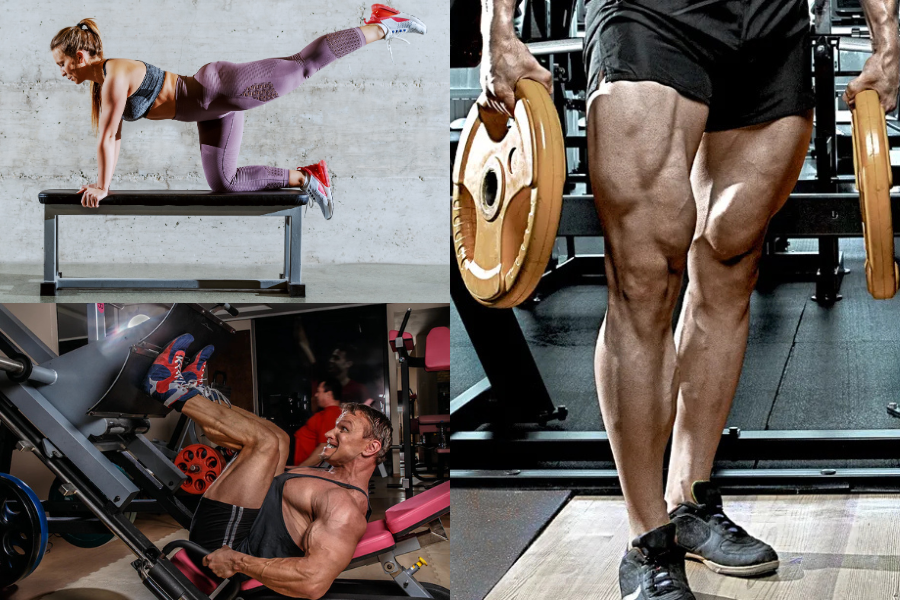
When you want to challenge your quads more directly, try front squats or Bulgarian split squats with a dumbbell or barbell. Both demand balance, which engages your core alongside your thighs. For your hamstrings, Romanian deadlifts are a stellar choice because they stretch and strengthen the back of your legs. Keeping a slight bend in your knees and a neutral spine will ensure your hamstrings do the heavy lifting rather than your lower back.
Pay attention to form
Good technique not only yields better results, it prevents unwanted pain or soreness down the line. One of the most common errors is letting your knees collapse inward during squats or lunges. To fix this, focus on pressing your knees slightly outward, which keeps them aligned over your toes. This detail can make a world of difference in distributing the workload across your quads and hamstrings.
The same care applies to exercises like deadlifts, where rounding your back is a red flag. Aim to maintain a flat spine throughout the move, hinging at your hips rather than just bending from your waist. If you find that your back is rounding, it might be a sign to lighten your load or revisit bodyweight versions until your form improves.
It also helps to think of each repetition as a full-body movement rather than an isolated exercise. During a single squat, for instance, your core should be braced, your back straight, your legs powering the movement, and your neck relaxed. Paying attention to the details keeps you fully engaged, which ultimately speeds up your progress.
Embrace rest and recovery
Though it’s tempting to train your legs every day to reach your goals faster, rest days are absolutely essential. Your quad and hamstring muscles need time off to heal and grow stronger. Overtraining can lead to lingering soreness, fatigue, and increased risk of injury. By balancing activity with recovery, you’ll see improved results and better long-term consistency.
Prioritize some basic self-care steps to speed up muscle repair. Light stretching, gentle yoga sessions, or foam rolling can help reduce stiffness and encourage better circulation in your thighs. If possible, add in a short walk or slow cycling on rest days—low-intensity activities get blood pumping without overloading tired muscles. By treating recovery as part of your workout routine, you’ll keep your legs happier, healthier, and primed for future gains.
Finally, remember that progress doesn’t happen overnight. Building toned, strong legs is a marathon, not a sprint. Start with small, measurable goals—maybe you’ll aim to increase your squat weight by five or ten pounds in a few weeks or successfully complete a set of deeper lunges without wobbling. Every milestone, no matter how modest, brings you one step closer to showing off the legs you’ve worked hard to strengthen.
Consider adding a bit of this workout to your weekly schedule. Whether you’re an exercise newbie or a seasoned gym-goer, a quad and hamstring workout that balances both muscle groups will not only complement your entire fitness routine, it will also bring you closer to achieving that sculpted lower-body look. Embrace the challenge, stay consistent, and enjoy the process of building a healthier, stronger you.
About the Author