A strong pair of hamstrings is about more than looking good in shorts. When you build them with smart hamstring isolation exercises, you support your knees, protect your lower back, and move more powerfully in almost everything you do, from sprinting to picking up groceries.
Below, you will learn what hamstring isolation exercises are, why they matter, and how to plug them into your routine so you get precise results instead of random soreness.
Understand your hamstrings first
Your hamstrings are a group of three muscles that run along the back of your thigh: the biceps femoris, semitendinosus, and semimembranosus. Together they create two main actions. They extend your hip, such as when you drive your leg backward, and they flex your knee, such as when you pull your heel toward your glutes.
These muscles balance the quadriceps on the front of your thigh. If your quads stay much stronger than your hamstrings, your knees and hips can feel unstable when you cut, jump, or land. In fact, poor hamstring development and quad dominance are linked with a higher risk of lower body injuries in both athletes and everyday lifters, according to the National Institute for Fitness and Sport (NIFS, April 2019).
Because many standard leg workouts lean heavily on squats, leg press, and leg extensions, it is easy for your posterior chain to fall behind. Isolation work helps you close that gap.
When you train your hamstrings directly, you are not just chasing muscle size. You are building the brakes and stabilizers that protect your joints.
Why hamstring isolation exercises matter
Hamstring isolation exercises focus on the back of your thigh with minimal help from other muscles. Instead of your glutes and lower back doing most of the work, the goal is to make your hamstrings the star of the movement.
A few key benefits:
- You correct muscle imbalances between your quads and hamstrings
- You increase strength in positions that matter for sprinting and jumping
- You reduce your risk of hamstring strains and other soft tissue injuries
- You can keep training around some injuries, for example when your lower back limits heavy deadlifts
Eccentric-focused hamstring training, where you control the lowering part of the rep, is especially effective. A 2023 research review found that eccentric hamstring isolation exercises can reduce hamstring injury rates by roughly 56.8 to 70.0 percent while also improving the strength balance between your hamstrings and quadriceps. That is a huge payoff from a small part of your training week.
How often to train your hamstrings
To get the most from hamstring isolation exercises, you do not need to turn every day into leg day. Aim for hamstring work 2 to 3 times per week, either as part of a lower body workout or inside a full body session.
You can think of it this way:
- Beginners: 2 hamstring-focused sessions per week
- Intermediates: 2 or 3 sessions per week
- Advanced lifters or athletes: 3 sessions per week, with varying intensity
Progress slowly. Most people respond well to progressive overload, where you add a small challenge regularly. A common guideline is to increase difficulty or volume every 4 to 6 weeks if you are newer and every 6 to 8 weeks if you are more experienced. This might mean slightly more weight, an extra set, slower eccentrics, or a more advanced variation.
Best hamstring isolation exercises
Below are core hamstring isolation exercises you can use in almost any program. Some need machines, others only require dumbbells or bodyweight. Choose what fits your equipment and experience.
1. Romanian deadlift (RDL)
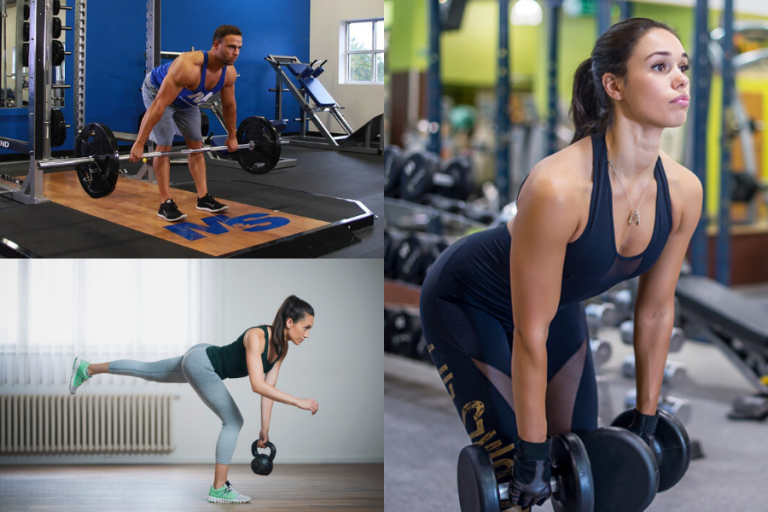
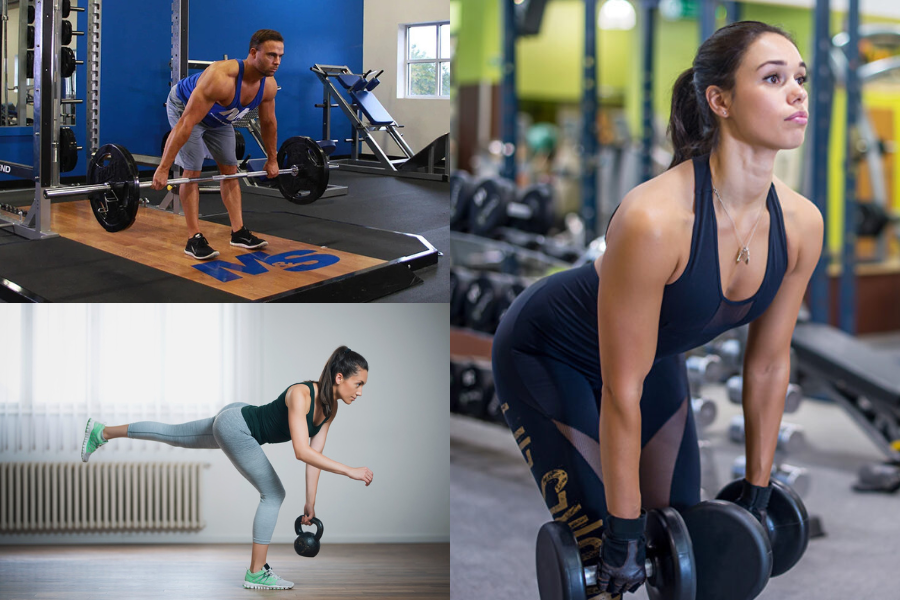
Romanian deadlifts are often described as one of the best hamstring isolation exercises because they load your hamstrings in a stretched position. You can use a barbell, dumbbells, or kettlebells.
You start from a standing position, soften your knees slightly, then push your hips back while keeping your spine neutral. You lower the weight until you feel a deep stretch in your hamstrings, then drive your hips forward to stand tall.
The RDL emphasizes hip extension, which is crucial for sprinting, jumping, and powerful hip hinge movements. Training your hamstrings in this lengthened position helps with both strength and flexibility. Guidelines often recommend 3 to 4 sets of 6 to 8 reps for strength and muscle growth.
2. Stiff-leg deadlift
The stiff-leg deadlift is a close cousin of the RDL. Your legs stay straighter than in a conventional deadlift, which reduces quad involvement and shifts more demand onto your hamstrings. You still maintain a soft knee bend so you are not locking your joints.
Because your hamstrings do most of the work, you typically use less weight than in a standard deadlift. A practical range is 3 to 4 sets of 8 to 10 reps. Focus on a controlled lower and avoid bouncing off the bottom position.
3. Seated leg curl
If you have access to a seated leg curl machine, you have one of the simplest ways to train your hamstrings in isolation. You sit with your legs extended and curl the pad down toward your calves. This variation tends to bias the inner portion of your hamstrings, particularly the semitendinosus, and it is popular among bodybuilders who want balanced leg development, as noted in Gymshark’s 2024 hamstring guide.
To maximize isolation, Gymshark suggests using an explosive one second squeeze on the way up and a slow three second lower on the way down. That tempo increases time under tension and eccentric control so you get more out of moderate weights instead of chasing the stack.
4. Prone (lying) leg curl
The lying leg curl has you face down on a bench while you curl your heels toward your glutes. This version emphasizes the outer hamstrings, especially the biceps femoris, according to Gymshark’s machine exercise breakdown from 2024.
Because your torso is supported and balance is not an issue, prone curls are ideal for higher rep work and training close to failure at the end of a workout. You can chase extra volume without worrying about losing control of heavy free weights.
The same tempo guideline applies here. Drive the pad up in about one second, then control the lower over roughly three seconds. That deliberate eccentric helps with both muscle growth and injury prevention.
5. Nordic hamstring curl
The Nordic curl is a challenging bodyweight exercise that heavily loads the hamstrings eccentrically. You anchor your ankles (under a bar, with a partner, or in a specialized Nordic bench), kneel upright, then slowly lower your body toward the floor by resisting with your hamstrings. You can catch yourself with your hands and push lightly off the floor to return.
Nordic curls target knee flexion and have been widely used in sports programs to reduce hamstring strains by strengthening the muscle in the positions where it often gets injured. Even a few controlled reps can be very effective. Start with assisted versions and low volume, such as 2 to 3 sets of 3 to 5 slow negatives.
6. Good morning
In the good morning, you place a barbell across your upper back and perform a hip hinge similar to an RDL. With a soft knee bend and a focus on pushing your hips back, you load your hamstrings and glutes while your spinal erectors assist in keeping your torso stable.
Good mornings isolate hip extension while still bringing in your posterior chain as a unit. Keep the weight conservative and technique tight, especially early on. You are aiming for a smooth arc of movement, not a deep collapse toward the floor.
7. Hip hinge and bridge variations
Not every hamstring isolation exercise needs a barbell. Hip bridges, hip thrusts, and hip extensions on a glute ham developer (GHD) are all valuable tools.
- Standard hip bridges emphasize your glutes, but you can shift more work to your hamstrings by placing your feet slightly farther from your hips.
- Hip thrust variations that place your feet a bit wider and farther than the typical 90 degree knee angle increase hamstring engagement.
- GHD hip extensions and glute ham raises involve controlled hip flexion and extension against gravity, which demands a lot from your hamstrings and glutes together.
Glute ham raises in particular are a high demand exercise, so use low reps and strict form, especially early on.
8. Kettlebell swings and single-leg RDLs
A study cited by Gymshark in 2024 highlighted kettlebell swings, single-leg Romanian deadlifts, and prone hamstring curls as especially effective for activating the biceps femoris.
- Kettlebell swings give you a dynamic hip hinge that trains power and conditioning along with hamstring strength.
- Single-leg RDLs are excellent for balance and unilateral strength. They are especially useful if you want to address side to side differences in your hamstrings.
Because these moves challenge your balance and coordination, start with light weight and higher control before adding speed or load.
Common mistakes with hamstring isolation work
Hamstring isolation exercises are straightforward, but a few typical errors can limit your progress or increase your risk of strain.
One common problem is using too much weight. On leg curls, this often leads to hip lifting off the pad, partial reps, or swinging the weight instead of controlling it. Lighter weight with full range of motion and a slow lower almost always wins.
Another issue is setup. Misplacing the pad on a curl machine, for example, can change where you feel the exercise and stress your joints. Take an extra few seconds to align the pad just above your heel and adjust the back or seat pad so your knees line up with the machine’s pivot.
Finally, many lifters rush the eccentric. That is the part of the rep most closely tied to both muscle growth and injury prevention in the hamstrings. Remember the simple cue: fast up, slow down.
How to program hamstring isolation exercises
You rarely want your hamstring isolation work to replace your big compound movements. Instead, think of it as a targeted finisher that rounds out each leg session.
A simple structure looks like this:
- Start with compound lifts that use many muscles at once. This might include squats, lunges, or conventional deadlifts.
- Follow with hip hinge based hamstring moves such as RDLs or good mornings.
- Finish with direct isolation such as leg curls, Nordic curls, or GHD work.
Because isolation work is more precise and less taxing on your nervous system, it fits well toward the end of your workout. That way you get the best of both worlds: heavy multi joint strength plus focused hamstring development.
Here is an example lower body day built around this idea:
- Back squat or split squat
- Romanian deadlift, 3 to 4 sets of 6 to 8 reps
- Seated or lying leg curl, 3 to 4 sets of 10 to 15 reps with slow lowers
- Optional: 2 sets of light Nordic curl negatives or single-leg RDLs for added eccentric work
Train this type of session 2 times per week with at least one rest or light day in between. Adjust the total sets and reps based on your experience level and recovery.
Key takeaways
Hamstring isolation exercises are not just a bodybuilding detail. They are a practical tool for stronger, more resilient legs.
- Your hamstrings drive hip extension and knee flexion and they balance your quads.
- Isolation work helps correct imbalances, improves performance, and significantly cuts injury risk when you emphasize eccentric control.
- Classic options like Romanian deadlifts, stiff-leg deadlifts, good mornings, and leg curls all target your hamstrings in slightly different ways.
- Eccentric focused moves such as Nordic curls and slow leg curls are especially powerful for both strength and protection.
- Place isolation after your main compound lifts, train your hamstrings 2 to 3 times per week, and increase difficulty gradually every several weeks.
Start by adding just one or two of these exercises to your next leg day. Pay attention to slow, controlled lowers, and you will feel exactly why targeted hamstring training earns its place in your routine.
About the Author