A simple hamstring workout routine can do more than just build strong legs. It also supports your hips and knees, improves athletic performance, and helps protect you from common injuries like strains and pulls. With a few well chosen exercises and a consistent plan, you can train your hamstrings effectively at home or in the gym.
Below, you will learn how your hamstrings work, how often to train them, and how to follow an easy hamstring workout routine that you can adjust to your experience level.
Understand your hamstrings
Your hamstrings are a group of three muscles at the back of your thigh. They cross both the hip and knee joints, so they help you bend your knees and extend your hips when you walk, run, or jump. They also help control your speed when you slow down or land from a jump, which is why they are so important for sports and everyday movement.
Because they cross two joints, you need to train your hamstrings with two main types of movements for full development:
- Hip hinge exercises like stiff legged deadlifts and good mornings
- Knee flexion exercises like leg curls
This combination lets you build strength and size along the whole muscle group, as explained in the RP Strength hamstring guide by Dr. Mike Israetel in 2024.
Plan your weekly hamstring training
You do not need a complicated program to get results. What you do need is a simple structure you can follow most weeks.
How often to train
Most people progress well with 2 to 3 hamstring focused sessions per week. This fits within typical recovery limits for most lifters according to volume guidelines in the RP Strength 2024 article. Two sessions are usually enough if you are newer to training, while three can work if you recover well and have some experience.
You can place these sessions on your usual leg or lower body days, for example:
- Option 1: Two days per week, such as Monday and Thursday
- Option 2: Three days per week, such as Monday, Wednesday, and Friday
Leave at least one day between hamstring sessions so your muscles and joints can recover.
Sets, reps, and volume basics
You can think of your training volume in simple categories:
- Maintenance Volume: enough sets to keep the strength you already have
- Minimum Effective Volume: enough to start seeing progress
- Maximum Adaptive Volume: the range where you usually grow the fastest
- Maximum Recoverable Volume: the most you can do and still recover well
The RP Strength 2024 guide notes that most people sit somewhere between Minimum Effective Volume and Maximum Recoverable Volume for best gains, usually with 2 to 3 hamstring sessions per week.
You do not need to calculate exact numbers to benefit from these ideas. Instead, start with the routine below, then adjust up or down over time based on how you feel and the results you see.
Learn proper exercise technique
Good technique is non negotiable if you want strong hamstrings without nagging injuries.
Hip hinge form cues
In hip hinge movements like Romanian deadlifts and stiff legged deadlifts, your goal is to bend deeply at the hips while keeping your lower back neutral, not rounded. The RP Strength guide recommends:
- Push your hips back, as if you are trying to close a car door with your glutes
- Keep a soft bend in your knees instead of locking them stiff
- Maintain a straight line from head to hips, without hunching your shoulders
- Lower the weight only as far as you can go without your lower back rounding
You should feel a strong stretch in the back of your thighs, not pain in your lower back.
Leg curl form cues
In leg curl variations, your job is to control both the start and finish of the movement. RP Strength suggests you:
- Start from a fully extended knee so your hamstrings stretch
- Curl the pad or band toward your glutes in a smooth, controlled motion
- Pause briefly at the top for a solid contraction
- Lower slowly instead of letting gravity snap your legs down
Controlled reps protect your knees and make every set more effective.
Use smart rep ranges
Different exercises work best in different rep ranges.
Hip hinge movements like Romanian deadlifts load the entire posterior chain, so heavy weights can be limited by fatigue in your lower back and other postural muscles. RP Strength recommends keeping these in the heavier 5 to 10 rep range for most sets.
Leg curls and other isolation movements work well with moderate to higher reps, around 10 to 30 per set. This mix of heavier hinges and lighter curls lets you train your hamstrings through a wide loading range, which can support more muscle growth.
Follow this easy hamstring workout routine
Here is a simple weekly hamstring workout routine based on the RP Strength 2024 recommendations. It combines one hip hinge and one or two leg curl variations across the week.
Weekly structure
Aim for 2 or 3 hamstring focused sessions:
- Day 1: Heavier hip hinge
- Day 2: Moderate leg curl
- Day 3: Higher rep leg curl (optional but helpful)
You can place these in your week like this:
- Monday: Hip hinge day
- Wednesday: Moderate curl day
- Friday: High rep curl day
If you only want two days per week, use Monday and Thursday and skip Friday.
Example weekly plan
You can follow this template as written, or swap in similar exercises that you prefer or that fit your equipment.
Day 1: Barbell stiff legged deadlift
- 3 sets of 5 to 10 reps
Focus on heavy, controlled reps. Rest 2 to 3 minutes between sets.
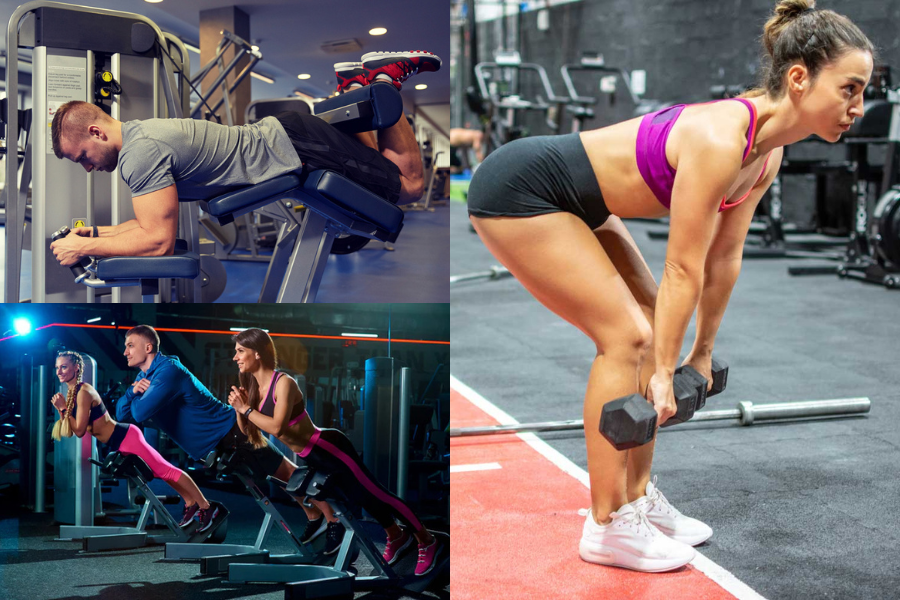
Day 2: Lying leg curl (machine or band)
- 3 sets of 10 to 20 reps
Use a weight that feels challenging in the last few reps but still allows smooth form.
Day 3: Seated leg curl (machine or band)
- 3 sets of 20 to 30 reps
Keep the tension constant and focus on a strong squeeze at the top of each rep.
This structure closely follows the sample routine described in the RP Strength guide in 2024, which recommends barbell stiff legged deadlifts on one day, lying leg curls on another, and seated leg curls on a third.
Try dumbbell and bodyweight options
If you train at home or in a basic gym, you can still build strong hamstrings with minimal equipment. Research from 2021 shows that common dumbbell and bodyweight moves can effectively train the hamstrings, glutes, and other lower body muscles.
Dumbbell hamstring exercises
Useful dumbbell options include:
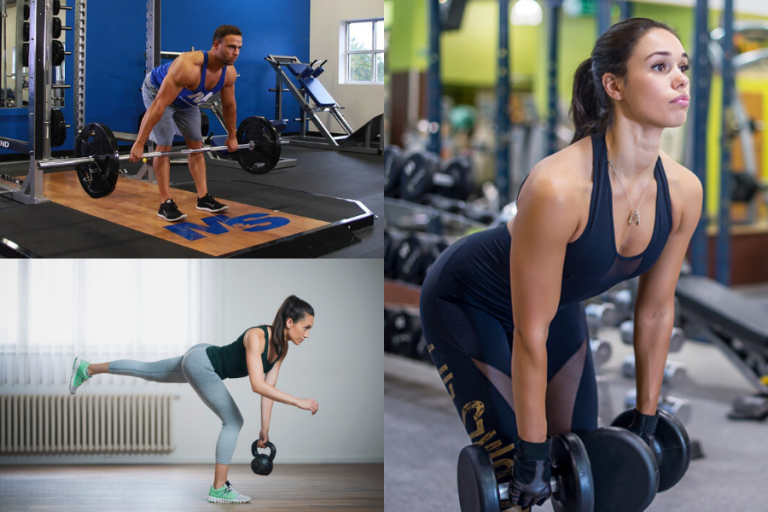
- Dumbbell deadlifts and single leg dumbbell deadlifts
- Dumbbell good mornings
- Weighted glute bridges and dumbbell elevated hip thrusts
- Weighted swings
- Dumbbell sumo squats and reverse lunges
These exercises strengthen your hamstrings while also working your glutes, quads, calves, and lower back (October 2021 analysis placeholder).
If you are a beginner, start with light dumbbells and manageable reps. Focus on controlled, smooth motion and add weight only when you can complete all reps with solid form.
Simple bodyweight variations
When you have no weights at all, you can still target your hamstrings with:
- Single leg Romanian deadlifts
- Hip bridges or feet elevated bridges on a chair
- Nordic curl progressions (assisted if needed)
Single leg deadlifts are especially helpful to build balance and fix left to right strength differences, which can reduce your risk of hamstring strains.
Warm up and cool down properly
A good hamstring workout routine starts before your first working set and ends after your last rep.
Pre workout warm up
Begin with 10 minutes of light cardio like walking, easy jogging, stair climbing, or dancing to raise your body temperature. Then use 2 to 3 simple activation drills for your hips and hamstrings, such as:
- Knee hugs
- Glute bridges
- Lunges with elbow to instep
- Dynamic hip flexion drills
Complete about three rounds of 10 repetitions per side for each drill before you move to your main lifts.
Post workout stretching and recovery
Finish your session with about 5 minutes of easy stretching focused on the hamstrings, glutes, and hip flexors. Flexibility work should address more than just the hamstrings. Mobility in your lower back, glutes, and hip flexors helps your sciatic nerve move freely and reduces strain risk.
Foam rolling your hamstrings can also help with muscle spasms and flexibility. Glide your hamstrings over a foam roller for 2 sets of about 20 seconds each, with around 30 seconds of rest between sets. This gives you some of the benefits of massage without the ongoing cost.
Prevent common hamstring problems
Many pulled hamstrings do not start with a single bad step. They often build over time due to muscle imbalances and posture issues.
Watch for tight hip flexors
Long hours of sitting can make your hip flexors tight and your hamstrings relatively long and overworked. When your hip flexors are tight, your glutes often switch off and your hamstrings pick up the extra work. This can increase your risk of strains, as highlighted by a beginner hamstring routine in Muscle & Fitness in 2026.
To counter this, include hip flexor stretches like a kneeling hip flexor stretch with a gentle pelvic tilt. Relax into the stretch rather than forcing it, and breathe steadily.
Build pelvic and core stability
Your hamstrings attach around your pelvis, so poor core control can change their resting length and tension. If your pelvis tilts too much, your hamstrings may be placed under constant stretch, which can make strains more likely.
Exercises that improve lumbo pelvic control are key. Add moves like:
- Glute bridges and physio ball bridges
- Physio ball leg curls
- Dead bugs or plank variations
A routine described for beginners uses the Physio Ball Leg Curl and Physio Ball Bridge for 2 sets of 10 reps each, with 30 seconds of rest, to build both hamstring strength and pelvic stability.
Adjust the routine to your goals
You can keep the structure of this hamstring workout routine and still tweak it to fit your specific goals.
If your main goal is strength
- Keep hip hinge movements in the 5 to 8 rep range
- Rest a bit longer between sets, around 2 to 3 minutes
- Focus on progressing the weight gradually while keeping good form
Conventional deadlifts, hex bar deadlifts, and Romanian deadlifts all work well for this. The hex bar deadlift is especially useful if you want to reduce upper body stress while still challenging your legs, because the neutral hand grip lets you lift heavier weights more comfortably.
If your main goal is muscle size
- Use a mix of 6 to 10 reps on hip hinges and 10 to 20 reps on curls
- Include both compound and isolation exercises
- Keep your rest moderate, around 60 to 90 seconds on lighter sets
Studies and practical guides in 2024 highlight Romanian deadlifts, good mornings, and hamstring curls as some of the best hamstring builders, especially when combined in a program that trains hamstrings at least twice per week.
If your main goal is injury prevention
- Include single leg exercises to balance left and right strength
- Add Nordic hamstring curls or easier variations if your knees tolerate them
- Make hip flexor mobility and core stability drills a regular part of your week
Because hamstring injuries often occur during sprinting or high speed stretching activities like kicking, building both strength and flexibility is your best protection. If you have a current or past hamstring injury, it is smart to work with a physical therapist or sports medicine expert who can tailor your exercises to your needs.
Putting it all together
A good hamstring workout routine does not need to be long or complicated. If you:
- Train your hamstrings 2 to 3 times per week
- Include both hip hinges and leg curls
- Use smart rep ranges for each exercise
- Warm up, cool down, and care for your hip flexors and core
you will build stronger, more resilient hamstrings that support your whole lower body.
Start by adding just one focused hamstring session to your week, then progress to the full routine when you feel ready. Over time, you will notice stronger lifts, more stable knees and hips, and more confidence in everything from stair climbing to sprinting.
About the Author