A hamstring workout with dumbbells is one of the simplest ways to build strong, powerful legs at home or in the gym. With just a pair of weights, you can target your hamstrings, glutes, and the rest of your posterior chain and see real results in strength, muscle, and performance.
Below, you will find a focused routine, clear form tips, and practical guidance so you can train hard while protecting your back and knees.
Why train your hamstrings with dumbbells
Your hamstrings do much more than help you bend your knees. They support your hips, stabilize your knees, and play a key role every time you walk, run, or squat. They are made up of three muscles, the biceps femoris, semimembranosus, and semitendinosus, all located along the back of your thigh and responsible for both hip and knee movement.
When you build them with a smart hamstring workout with dumbbells, you:
- Improve sprinting and jumping ability, since strong hamstrings are crucial for hip extension used in powerful movements
- Reduce stress on your lower back because your hips take more of the workload instead of your spine
- Lower your risk of strains and pulls, which often come from weak or undertrained hamstrings
Dumbbells make all of this accessible even if you train at home. They allow a natural grip, are easier for beginners to handle than barbells, and still provide enough load for serious lifters.
Key principles for safe hamstring training
Before you jump into the workout, a few fundamentals will help you stay safe and get more from every rep.
Start lighter and move slowly
Hamstrings are powerful but prone to strain and long recovery times. If you are newer to strength training, you should begin with lighter dumbbells and slow, controlled motions to avoid injury.
Focus on:
- A smooth 2 to 3 second lower
- A brief pause at the bottom
- A strong, controlled return to the top
This tempo keeps tension on the muscles instead of your joints.
Nail the hip hinge pattern
Most effective hamstring exercises are hip hinge movements rather than squats. You push your hips back while keeping only a soft bend in your knees. This pattern loads the hamstrings and glutes instead of your quads and lower back.
Training specialist David Wiener explains that Romanian deadlifts help you strengthen hamstrings and glutes while reducing lower back stress and injury risk. Getting this hinge right is the foundation of your workout.
Protect your lower back
To keep your back safe during a hamstring workout with dumbbells:
- Maintain a neutral, long spine, no rounding or excessive arching
- Hinge at the hips, not the lower back
- Stop your range of motion when you feel a strong stretch in the hamstrings, not when the dumbbells hit the floor
Men’s Health fitness director Ebenezer Samuel suggests setting heavy dumbbells on a bench or box at about knee height so you do not have to pick them up from the floor, which reduces unnecessary strain on your lower back when you are using challenging weights.
The 5‑exercise dumbbell hamstring workout
This routine is designed to work your hamstrings from multiple angles while also training your glutes, lower back, and core. Perform it 1 to 3 times per week, depending on your overall program and recovery.
You will alternate between two main patterns: hip hinges and knee flexion. All you need is a pair of dumbbells and a bench or sturdy surface.
Suggested structure:
Warm up, then perform 3 to 4 sets of each exercise. Rest 60 to 90 seconds between sets, and 90 to 120 seconds between exercises.
1. Dumbbell Romanian deadlift
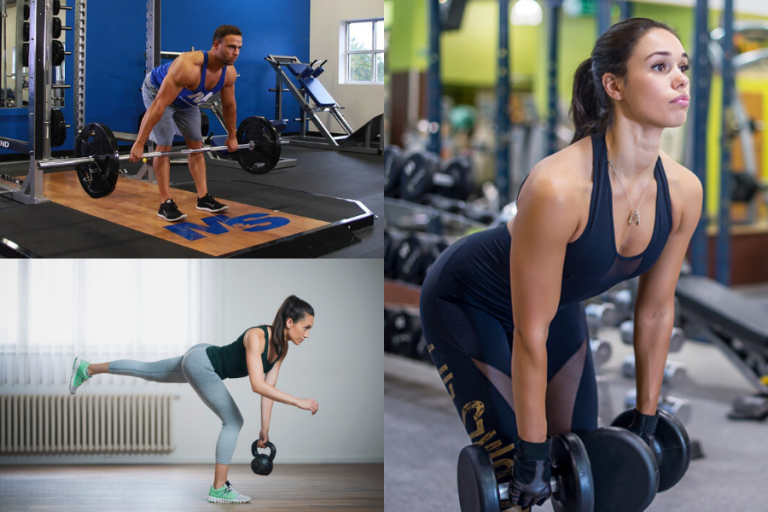
The dumbbell Romanian deadlift (RDL) is the centerpiece of your hamstring workout with dumbbells. It targets your hamstrings, glutes, and the entire posterior chain, and it also helps you learn the hip hinge used in many other lifts.
How to do it
- Stand with your feet hip width apart, holding a dumbbell in each hand at your sides or in front of your thighs.
- Soften your knees slightly and brace your core.
- Hinge at your hips by pushing them back, as if you are closing a car door with your glutes, while keeping your spine neutral and the dumbbells close to your legs.
- Lower until you feel a strong stretch in your hamstrings, usually when the dumbbells reach mid shin or just below the knees.
- Drive through your heels, squeeze your glutes, and return to standing without arching your back.
Julie Ledbetter emphasizes keeping a long, neutral spine and lowering the dumbbells close to your shins to keep the tension in your glutes and hamstrings rather than your lower back.
Sets and reps:
3 to 4 sets of 6 to 8 reps with a controlled 2 second lower and a brief pause before standing, as recommended for strength and muscle gains.
If grip becomes a limiting factor with heavier weights, wrist straps can help you focus on your hamstrings instead of your forearms.
2. Dumbbell deadlift
The dumbbell deadlift is a slightly more knee‑dominant variation than the RDL. It still hits your hamstrings and glutes hard, while also challenging your quads, lower back, and core.
How to do it
- Stand with your feet hip width apart, dumbbells in front of your thighs.
- Hinge at the hips and bend your knees more than in an RDL as you lower the dumbbells toward the floor.
- Keep your back straight, chest open, and shoulders away from your ears.
- When the dumbbells reach about mid shin or the floor, press through your heels to stand up, driving your hips forward and squeezing your glutes.
Sets and reps:
3 sets of 8 to 12 reps.
Alternate this with RDLs in different sessions if you feel your lower back getting overly fatigued.
3. Single‑leg dumbbell deadlift
The single leg dumbbell deadlift adds a balance and stability challenge while isolating each hamstring. It is especially helpful for correcting side to side strength differences and improving athletic performance.
How to do it
- Hold a dumbbell in your right hand and stand on your left leg with a soft bend in the knee.
- Hinge at your hips, letting your right leg extend behind you as a counterbalance.
- Keep your spine neutral and lower the dumbbell toward the floor, close to your standing leg.
- Stop when your torso is roughly parallel to the ground or when you feel a strong stretch in the hamstring.
- Drive through your heel to return to standing, keeping your hips square.
Sets and reps:
3 sets of 10 to 12 reps per side.
If balance is an issue, you can lightly touch a wall or hold onto a stable surface with your free hand until you gain more control.
4. Weighted glute bridge or hip thrust
Although glute focused, glute bridges and hip thrusts are important support exercises in your hamstring workout with dumbbells. They build hip extension strength and power, which carries over to running and jumping.
You can perform these on the floor (glute bridge) or with your upper back on a bench (hip thrust) to increase range of motion.
How to do it
- Lie on your back with your knees bent and feet flat on the floor, hip width apart.
- Place a dumbbell across your hips and hold it in place with both hands.
- Brace your core, then press through your heels to lift your hips until your body forms a straight line from shoulders to knees.
- Squeeze your glutes hard at the top for 1 to 2 seconds.
- Lower your hips under control, keeping tension in your glutes and hamstrings.
Sets and reps:
3 sets of 10 to 12 reps for glute bridges, or 3 sets of 12 reps for elevated hip thrusts.
5. Dumbbell hamstring curl (on a bench)
Leg curl machines are common in gyms, but you can mimic the same knee flexion pattern at home with just a dumbbell and a bench. Jay Cutler, a four time Mr. Olympia, has even mentioned that he used to prefer dumbbell hamstring curls even when machines were available, which says a lot about how effective they can be.
How to do it
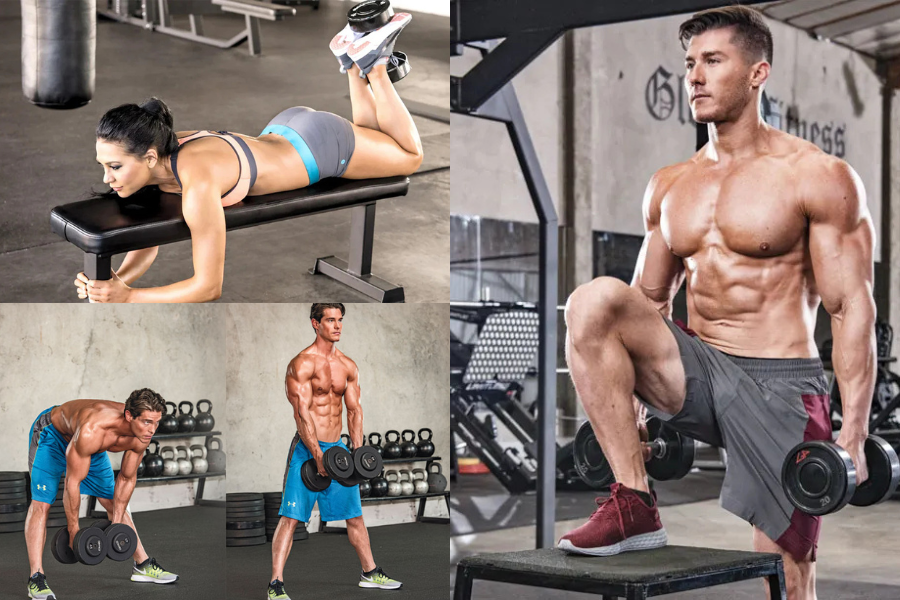
- Lie face down on a bench with your legs extended and a dumbbell held between your feet.
- Squeeze the dumbbell securely by pressing your feet together.
- Keeping your hips pressed into the bench, curl your heels toward your glutes as far as comfortably possible.
- Pause briefly at the top, then slowly lower the dumbbell back to the starting position.
From a biomechanics perspective, tension is highest when your hamstrings are stretched and decreases as you curl, similar to a dumbbell chest fly. Elevating the front of the bench slightly can help keep more tension toward the contracted position.
Sets and reps:
2 to 3 sets of 10 to 15 reps.
If your home dumbbells are light, you may not be able to progress weight quickly. In that case, slow the tempo, add pauses, or use single leg curls to continue challenging your hamstrings.
Sample weekly hamstring plan with dumbbells
Here is a simple way to fit this workout into your week if you train your lower body twice.
| Day | Focus | Exercises |
|---|---|---|
| Day 1 | Strength and hinge pattern | Dumbbell Romanian deadlift, Dumbbell deadlift, Weighted hip thrust |
| Day 2 | Unilateral work and curls | Single leg dumbbell deadlift, Weighted glute bridge, Dumbbell hamstring curl |
On each day, warm up first, then perform 3 to 4 sets per exercise using the rep ranges above. Aim to add a little weight, an extra rep, or a slower tempo every 1 to 2 weeks so your hamstrings keep adapting.
Common form mistakes to avoid
A few small errors can turn a great hamstring workout with dumbbells into a risky one. Watch out for these and correct them early.
- Rounding your back in RDLs or deadlifts. This shifts tension from your glutes and hamstrings to your spine, which increases injury risk. Keep your chest open and spine neutral.
- Squatting instead of hinging. Excessive knee bend turns RDLs into squats and takes work away from the hamstrings. Think about pushing your hips back, not dropping straight down.
- Using momentum. Swinging the weights reduces muscle tension and can strain your lower back, especially in drop sets or when you are tired.
- Going too heavy too fast. Julie Ledbetter notes that chasing heavier weights without clean form reduces muscle gains and raises injury risk. Prioritize perfect form first, then gradually increase resistance.
If you feel pain in your lower back instead of muscle fatigue in your hamstrings and glutes, reduce the weight, shorten your range of motion, and refocus on your hip hinge.
Putting it all together
A well designed hamstring workout with dumbbells does not need to be complicated. With a handful of movements, mindful tempo, and consistent progression, you can build stronger, more resilient legs that support everything else you do in the gym and in daily life.
Start with the dumbbell Romanian deadlift, add one or two of the accessory exercises, and give yourself a few weeks to get comfortable with the hip hinge. As your form improves, gradually increase your weights or add another set.
Your hamstrings will respond with more strength, better performance, and a lower risk of injury, all from a simple setup you can use almost anywhere.
About the Author