A strong, well‑built backside does more than fill out your jeans. The right glute workout for men helps you run faster, lift heavier, protect your lower back, and move with more power in almost every sport.
This guide walks you through exactly how to train your glutes for strength, size, and performance, using simple principles you can apply in any gym.
Why men should train glutes seriously
If you skip glute day, you are leaving a lot of strength and stability on the table.
Your glutes are responsible for:
- Hip extension, the driving force behind squats, deadlifts, jumps, and sprints
- Pelvic stability, which keeps your hips level and supports your spine
- Overall core strength, since your glutes work with your abs and lower back to stabilize your trunk
Coaches like Bret Contreras, founder of Glute Lab in San Diego, highlight that strong glutes help you boost speed, strength, and athleticism while reducing back issues by powering hip extension and stabilizing your pelvis, which supports your spine and eases back pain.
When you neglect glute workouts, especially if you sit a lot, you risk gluteal amnesia or “dead butt syndrome.” This is when your glutes stop firing properly. You may notice:
- Tight hip flexors
- Poor posture and altered gait
- Higher risk of lower back and knee pain
The good news is that a focused glute program fixes this over time and gives you a more athletic look at the same time.
Common glute training mistakes men make
Before you add more sets of hip thrusts, it helps to know what to avoid. Top coaches see the same problems over and over.
Choosing the wrong exercises
Fitness coach Jeremy Ethier notes that a lot of glute workouts rely on flashy or isolation moves and ignore what your glutes really do: extend the hip.
When your goal is clear, the key exercises follow naturally. For effective glute growth, Ethier recommends:
- Back squats
- Leg presses
- Bulgarian split squats
- Deadlifts and Romanian deadlifts
- Hip thrusts
These moves load hip extension heavily, which is exactly what your glutes need to grow.
Letting other muscles take over
You can go through the motions of a glute workout without actually training your glutes.
Two common technique mistakes:
- Your quads dominate your squats and lunges because you let your knees shoot forward and your hips barely move back
- Your lower back and hamstrings take over in deadlift patterns because you hyperextend your spine at the top or round your back off the floor
Ethier warns that poor form like this severely reduces glute stimulus. Slowing your reps, focusing on a full range of motion, and actually feeling the squeeze at lockout will make the same exercises much more effective.
Overusing booty bands on everything
Booty bands have a place, but they are not magic, and they are not needed on every set.
Coach Mark Carroll calls putting a band around your knees for every glute exercise a major mistake. In his 2025 guidance, he explains that for big hip extension moves like hip thrusts and bridges, a band adds sideways resistance that:
- Shifts focus away from the glute max
- Forces stabilizing muscles to co‑contract
- Limits how much load you can use on the bar
You end up turning a heavy strength move into a lighter, less targeted exercise.
A simple rule: use bands sparingly for activation or specific abduction work, not as a permanent attachment to every glute exercise.
Chasing “Instagram exercises” instead of basics
It is tempting to recreate every complicated angle you see online. Carroll warns against this approach in 2025, noting that most men would get far better results by mastering and progressively loading simple, proven movements like:
- Hip thrusts
- Squats and lunges
- Romanian deadlifts (RDLs)
- Back extensions
These are the exercises that build professional‑level glutes when you consistently add weight or reps and improve your technique over time.
How nutrition and patience affect glute gains
You can have the perfect glute workout for men and still see very little change if your nutrition and expectations are off.
Eating enough to grow
According to Mark Carroll, not consuming enough calories is the single biggest barrier to building your glutes, especially if you have already been training for a couple of years.
For muscle growth, you generally need:
- At least maintenance calories (your TDEE)
- Often a small surplus so your body has energy to build new tissue
- Adequate protein intake to support recovery
If you are constantly dieting or under‑eating, your body will prioritize basic functions over muscle growth, and your glutes will not change much no matter how hard you train.
Giving the process enough time
Carroll also notes that glute building is slow. You are looking at a minimum of 16 to 24 weeks of consistent training and proper calorie intake to really maximize growth.
Beginners might see some visible changes within roughly 6 weeks, especially with bodyweight or light resistance work, but real, dense muscle takes months of:
- Showing up consistently
- Progressively overloading your lifts
- Sleeping and eating well
If you are impatient, you are more likely to jump from program to program instead of sticking with the basics that actually work.
Key exercises in a glute workout for men
A solid glute program targets all three major muscles: gluteus maximus, medius, and minimus. You want a mix of heavy hip extensions, unilateral work, and explosive movements.
Heavy compound lifts for power
Classic compound lifts are still king for overall mass and strength because they demand strong, active hip extension:
- Deadlift and sumo deadlift, great for loading the posterior chain and forcing a strong glute contraction to lock out each rep
- Romanian deadlift, emphasizes the stretch position of the glutes and hamstrings, which is powerful for hypertrophy
- Back squat, when you sit back and drive up through your hips instead of folding into your knees
These lifts build a foundation you can layer other glute‑focused moves on top of.
Hip thrusts and bridges for direct glute focus
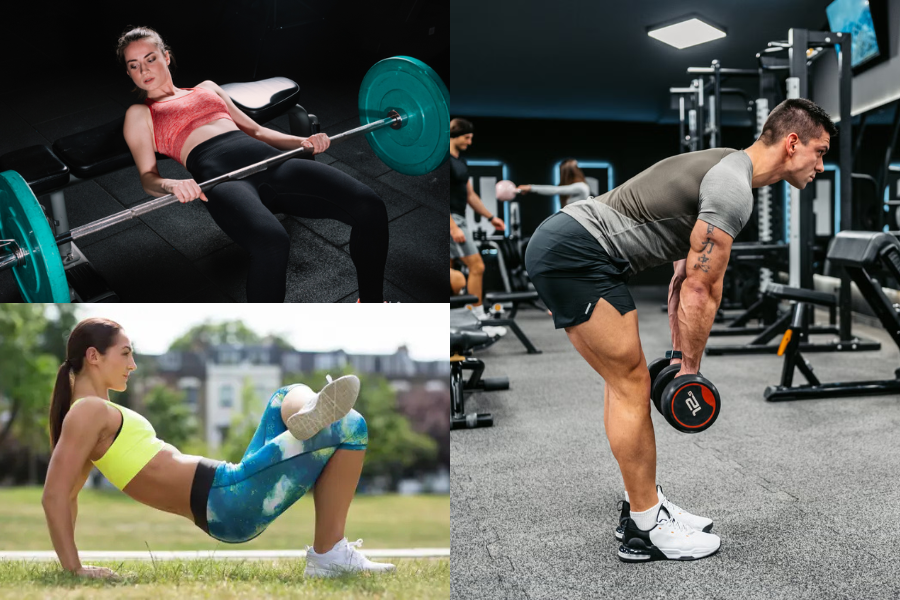
The hip thrust is one of the most effective exercises for isolating the glutes. Because it is very glute‑dominant and less stressful on the quads and lower back than heavy squats, you can often train it 3 to 4 times per week and recover well.
Variations to include:
- Barbell hip thrusts for heavy loading
- Single‑leg hip thrusts to fix imbalances between sides
- Bodyweight or banded glute bridges as a warm‑up or high‑rep finisher
Bret Contreras has even built specialized hip thrust equipment because of how central this pattern is to glute training, and his popularity reflects how effective this approach can be.
Unilateral and lateral work for stability
To cover your glute medius and minimus, which control rotation and stabilize your pelvis, incorporate single‑leg and side‑to‑side exercises such as:
- Bulgarian split squats
- Cossack squats
- Split squats and lunges
- Curtsy lunges
- Bench hip abduction
These moves help prevent hip drop when you run and walk, which in turn can reduce knee and lower back strain.
Explosive hip extension for athletes
If you play sports or care about vertical jump and sprint speed, you should also train your glutes explosively.
Useful additions include:
- Kettlebell swings for powerful, repeated hip extension
- Barbell jump squats, for example 5 sets of 5 reps at about 70 percent of your back squat 1RM, to teach you to apply force quickly
This style of training teaches your glutes not just to be strong, but to be fast and reactive.
Sample 2‑day glute workout for men
You can train your glutes effectively two times per week while still hitting other muscle groups. Here is a simple structure you can adapt.
Aim to add a small amount of weight, a few more reps, or slightly better form every 1 to 2 weeks. This progressive overload is what drives growth.
Day 1: Heavy strength focus
- Back squat
- 4 sets of 4 to 6 reps
- Sit back into your hips and drive through your mid‑foot and heel
- Romanian deadlift
- 3 sets of 6 to 8 reps
- Keep your spine neutral, hinge at the hips, and feel a stretch in your glutes and hamstrings
- Barbell hip thrust
- 4 sets of 8 to 10 reps
- Tuck your ribs, avoid arching your lower back, and pause for a second at the top squeeze
- Bulgarian split squat
- 3 sets of 8 to 10 reps per leg
- Lean slightly forward, sit into the front hip, and push through your front heel
- Bench hip abduction or side‑lying clamshells
- 3 sets of 12 to 15 reps per side
- Use light bands here if you like, and focus on a strong burn in your upper outer glutes
Day 2: Hypertrophy and explosiveness
- Barbell jump squat
- 5 sets of 5 reps at roughly 70 percent of your back squat 1RM
- Focus on smooth landings and quality jumps, not grinding reps
- Leg press (glute‑biased)
- 3 sets of 10 to 12 reps
- Place your feet higher on the platform and push through your heels to emphasize the glutes
- Hip thrust or glute bridge
- 4 sets of 10 to 12 reps
- Short rest periods here for a strong pump
- Walking lunges or split squats
- 3 sets of 12 reps per leg
- Take longer steps to hit the glutes more than the quads
- Quadruped hip extension
- 2 sets of 15 reps per leg
- Squeeze at the top, do not swing your leg, and keep your lower back stable
This setup balances strength, size, and athleticism and hits the glute max, medius, and minimus across multiple angles.
At‑home glute workout for men without weights
If you train at home or are just starting, you can still make impressive progress with bodyweight exercises, especially if you understand progressive overload.
A 2024 guide from Gymshark explains that bodyweight glute workouts can build strength and size, particularly for beginners, as long as you steadily increase the challenge. The key muscles you will target are:
- Gluteus maximus for overall size and shape
- Gluteus medius for rotation and pelvis stability
- Gluteus minimus for additional rotation and support
Try combining these moves:
- Air squats
- Crab walks
- Single‑leg Romanian deadlifts (with no weight or a household item)
- Glute bridges
- Split squats
- Curtsy lunges
To keep progressing at home, you can:
- Add reps over time
- Shorten your rest periods
- Add isometric holds at the hardest part of the movement
- Use resistance bands or household weights if available
Gymshark notes that many beginners notice glute growth within about six weeks of consistent training, especially if you train your glutes twice weekly and get enough protein. Just remember that bigger, stronger glutes are the result of months of steady effort, not a handful of workouts.
How strong glutes protect your back and knees
Building your glutes is not only about looks. Strong glutes also help:
- Reduce low back pain by stabilizing your hips and preventing excessive anterior pelvic tilt, which otherwise keeps your lower back under constant tension
- Maintain better alignment at the hip joint, which can ease pressure on the spine
- Improve knee health by keeping your pelvis steady so your knees track properly instead of collapsing inward
Exercises like the glute bridge, for example 3 sets of 10 reps, encourage symmetrical hip extension. Quadruped hip extensions, for example 2 sets of 15 reps per leg, train your glutes to extend the hip without relying heavily on the hamstrings, which helps maintain a healthy lower body kinetic chain.
Putting it all together
If you want a glute workout for men that actually delivers impressive results, focus on a few simple principles:
- Choose exercises that emphasize hip extension, like squats, deadlifts, hip thrusts, and split squats
- Use bands and flashy variations sparingly, and master the basics first
- Eat at least at maintenance, and ideally in a slight surplus, so your body has resources to build muscle
- Train your glutes at least twice per week, push for gradual progression, and commit for 4 to 6 months
Start by adding one or two of the exercises above into your current routine this week. As you get more comfortable, build toward a full two‑day glute focus. With time, your strength, athletic performance, and overall physique will all reflect the work you are putting into your glutes.
About the Author