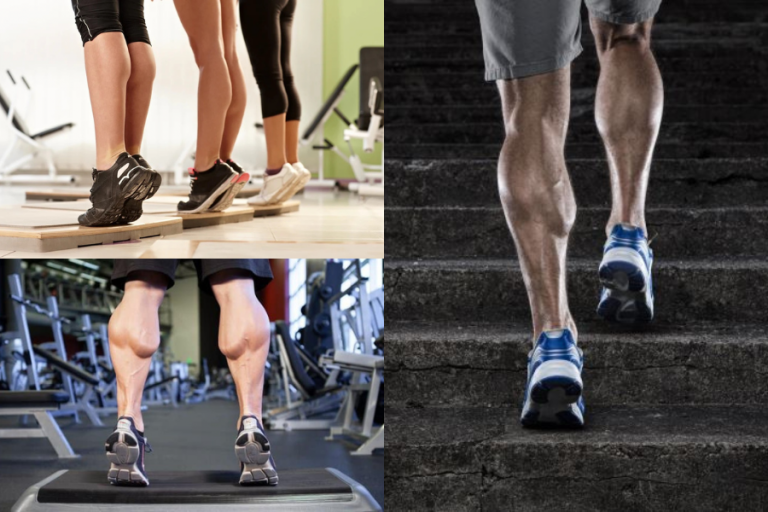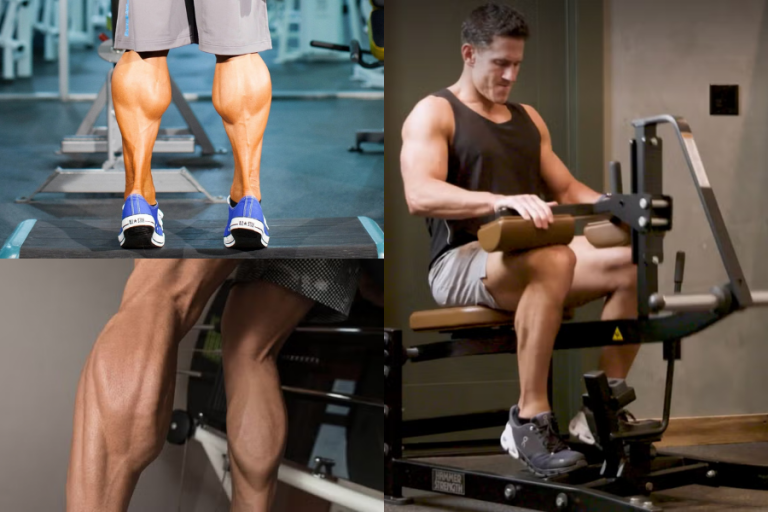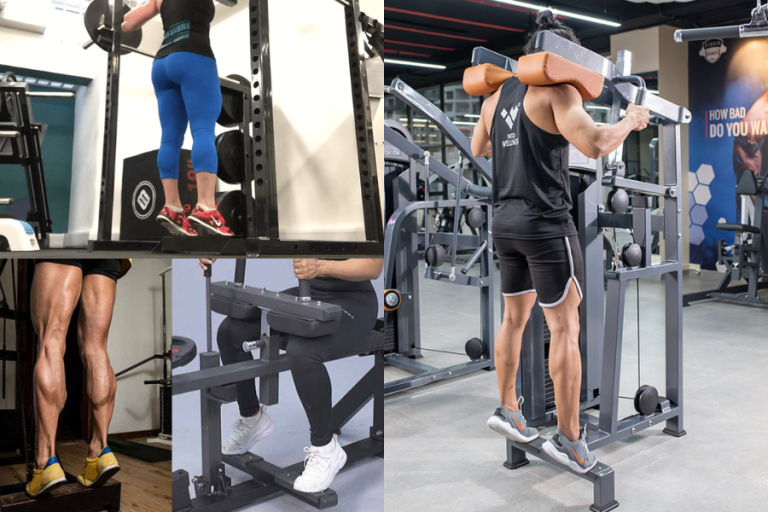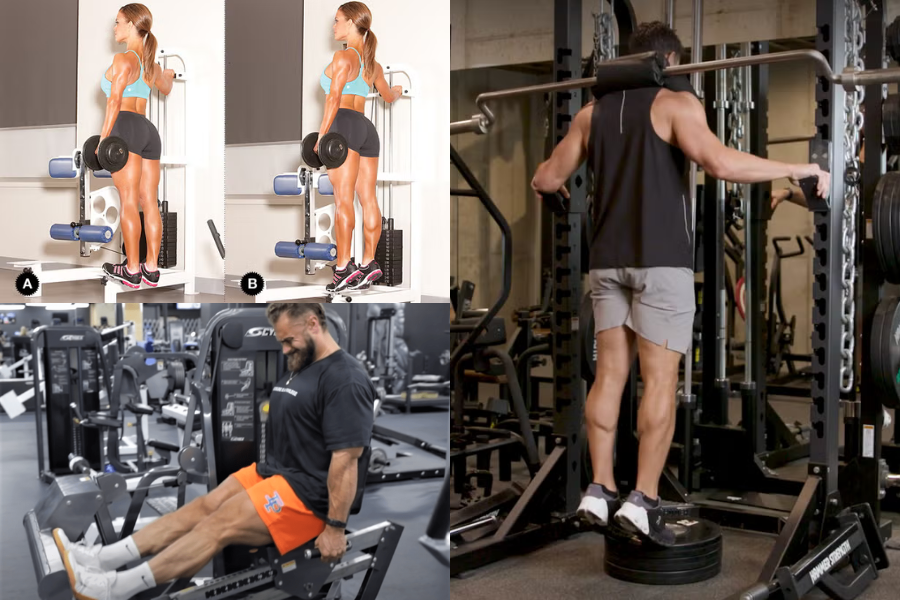
A strong pair of calves does more than fill out your jeans. When you learn the best exercises for calves and train them consistently, you boost your sprint speed, jumping power, balance, and overall leg strength.
Below you will find practical, research-backed calf exercises you can do at home or in the gym, plus tips to structure your workouts for real results.
Understand your calf muscles
Before you jump into sets and reps, it helps to know what you are training and why exercise selection matters.
Your calves are primarily made up of two muscles:
- Gastrocnemius: The larger, upper muscle that is visible just under the skin. It is more involved in explosive movements like sprinting and jumping because it has more fast-twitch fibers. Sport and Spinal Physiotherapy described its key role in power-based activities in 2024.
- Soleus: The deeper, lower muscle that sits underneath the gastrocnemius. It has more slow-twitch fibers and helps with endurance and posture, especially when you stand or walk for long periods, as noted by Sport and Spinal Physiotherapy in 2024.
These muscles join together and connect to your heel through the Achilles tendon. The angle of your knee changes which muscle works harder. Straight-knee exercises emphasize the gastrocnemius and bent-knee exercises bias the soleus, which was highlighted in a 2014 study by Suzuki et al.
Because of this, the best exercises for calves include both straight-leg and bent-knee variations.
Why strong calves matter
Calves do not just help you look athletic. They are involved in almost every step you take.
Stronger calves can:
- Improve short sprint performance and change of direction, because they help generate force quickly. A study by Mock et al in 2018 found that dynamic maximum calf strength is essential for short sprints.
- Increase jump height and explosive power, thanks to a more powerful push through the ankle.
- Support better balance and ankle stability, which helps prevent ankle sprains and lower-leg injuries, especially in sports with twisting or stop and start demands like netball.
- Reduce common overuse issues like shin splints, when you pair strength training with stretching and foam rolling for the lower legs.
Calf muscles are also notoriously stubborn. They contain a high proportion of slow-twitch fibers, so they respond well to higher training volume with lighter loads if you still work close to fatigue. Research led by Brad Schoenfeld in 2020 showed that calf muscles grow similarly with heavy or light loads as long as you train with high effort.
Standing calf raises (straight knee)
Standing calf raises are one of the best exercises for calves because they directly target the gastrocnemius and are easy to perform almost anywhere.
You can do them with both legs at once or progress to a single-leg version for more challenge. Surrey Physio recommends 20 to 30 repetitions twice a day for effective strengthening.
How to do standing calf raises
- Stand tall with feet hip width apart and knees straight but not locked.
- Press through the balls of your feet to raise your heels as high as possible.
- Pause briefly at the top and squeeze your calves.
- Lower your heels slowly under control until they are just above the floor.
- Repeat for your desired reps.
To progress:
- Start with two-leg raises, then move to single-leg calf raises, which Surrey Physio also recommends at 20 to 30 repetitions twice daily for extra ankle and calf strength.
- Add weight using dumbbells or a barbell once bodyweight feels easy.
- Stand on a low step so your heels can drop below foot level. This increases the range of motion.
Seated calf raises (bent knee)
Seated calf raises shift more emphasis to the soleus because your knees are bent. This makes them a perfect partner exercise to standing calf raises.
Surrey Physio suggests seated (Bosu) calf raises with 20 to 30 repetitions performed twice per day. You can do them with bodyweight or added load.
How to do seated calf raises
- Sit upright in a sturdy chair or on a bench with knees bent at about 90 degrees.
- Place your feet flat on the floor, hip width apart.
- Push through the balls of your feet to lift your heels as high as you can.
- Squeeze your calves at the top.
- Slowly lower your heels back to the floor and repeat.
If you are at the gym, use a seated calf raise machine. At home, balance a dumbbell or weight plate across your thighs to increase difficulty. Focus on a slow lower phase to keep tension on the muscles.
Step-ups and plyometric step-ups
Step-ups are a simple way to train your calves, glutes, and quads together, which makes them ideal if you want improved athletic performance, not just bigger calves.
Surrey Physio recommends:
- Regular step-ups at 10 to 15 repetitions twice per day.
- Plyometric calf step-ups at 10 to 15 repetitions per leg twice daily for extra power.
Regular step-ups
- Stand facing a stable bench, box, or step.
- Place one foot fully on the surface, with your whole foot supported.
- Drive through the heel and ball of that foot to step up, bringing your other foot to meet it.
- Step back down under control and repeat.
Think about pushing the ground away with your calf as you come up. Keep your torso tall and knees tracking over your toes.
Plyometric calf step-ups
Once regular step-ups feel easy and your joints tolerate impact, try a plyometric version:
- Place one foot on the bench or step.
- Drive explosively through that leg, letting your opposite knee lift up as if you are sprinting.
- Land softly back in the starting position and repeat at a brisk pace.
Plyometric work increases the demand on your calves and lower legs, so introduce it gradually and skip it if you have current ankle, knee, or Achilles issues.
Straight knee vs bent knee calf raises
To get the most from your calf training, you need both straight-leg and bent-knee exercises in your routine. This ensures you target both the gastrocnemius and soleus muscles effectively.
Research by Suzuki et al in 2014 confirmed that:
- Straight knee calf raises emphasize the gastrocnemius.
- Bent knee calf raises shift activation to the soleus.
A balanced program could include:
- Standing calf raises or tiptoe farmers carries for straight-leg work.
- Seated calf raises or squats into calf raises for bent-knee work.
Calf muscles also like variety in foot position. A 2020 study on foot positioning found that:
- Toes out target the medial head of the gastrocnemius.
- Toes in shift emphasis to the lateral head.
- Toes forward give a more balanced activation of both heads.
Rotating your foot position across sets is a simple way to cover the whole muscle.
Hopping and other functional drills
Hopping is one of the best exercises for calves if you want real-world carryover to running and sport. It is essentially a series of explosive single-leg calf raises.
According to the research you saw above:
- Hopping replicates the way your calves work when you run, because you produce quick, powerful pushes with each contact.
- You can progress hopping by going faster, jumping higher, minimizing ground contact time, or adding small obstacles.
You can also try:
- Tiptoe walking to build endurance and balance in the calves.
- One Leg Over the Line drills to improve quickness and lateral movement.
- 3 Hurdle Drills or small cone hops to train agility and calf strength together.
Functional exercises help your calves learn to produce and absorb force dynamically, which is key for sports, hiking, or simply feeling steady on uneven ground.
Five research-backed calf builders
Several sources highlight a short list of highly effective calf moves. These appear repeatedly because they are simple, scalable, and work.
Here are five of the best exercises for calves based on available research:
| Exercise | Primary focus | Straight or bent knee | Key benefit |
|---|---|---|---|
| Standing calf raises | Gastrocnemius | Straight | Size and strength |
| Seated calf raises | Soleus | Bent | Endurance and posture support |
| Eccentric calf raises | Gastrocnemius and soleus | Straight or bent | Tendon health and strength |
| Tiptoe farmers carry | Gastrocnemius and soleus | Straight | Stability, grip, and functional power |
| Squats into calf raises | Gastrocnemius and soleus | Bent to straight | Full lower body integration |
Studies and expert guides recommend doing these exercises 2 to 3 times per week with relatively high volume and effort to maximize growth and strength.
How to program your calf workouts
You do not need long, complicated routines. You do need consistency, enough volume, and good technique.
Use these guidelines to build your own plan:
-
Train calves 2 to 3 times per week
Space sessions through the week so your muscles can recover. -
Include both straight-leg and bent-knee work
For example:
- Standing calf raises (straight).
- Seated calf raises or squats into calf raises (bent).
-
Aim for higher reps with control
Because of the high slow-twitch fiber content, calves respond well to sets of 15 to 30 reps when you push close to fatigue. Surrey Physio often suggests 20 to 30 repetitions for many calf exercises in their 2024 guidance. -
Use varied foot positions
Rotate through neutral, toes out, and toes in to hit different parts of the gastrocnemius as supported by the 2020 study on foot positioning. -
Progress gradually
Once the upper end of your rep range feels comfortable:
- Move from two-leg to single-leg versions.
- Add external weight.
- Introduce more challenging variations such as eccentric-focused reps or hopping.
- Finish with mobility work
Calf and ankle stretches, along with occasional foam rolling, help maintain flexibility and may reduce your risk of issues like shin splints. Stephanie Mansour emphasized in 2023 that calf mobility and ankle flexibility are crucial foundations for building stronger calves.
Safety tips and when to be cautious
Calf training is generally safe when you move through full, controlled ranges of motion and progress slowly. A few extra precautions go a long way.
Pay attention to:
- Pain vs discomfort: It is normal to feel muscle burn or fatigue. Sharp or sudden pain in the calf or Achilles is a reason to stop and reassess.
- Impact tolerance: If you are new to exercise or have a history of ankle or tendon issues, build a base with slower raises and step-ups before you add high-impact hopping or plyometric drills.
- Warm up: A few minutes of easy walking, ankle circles, and light calf raises prepare your joints and muscles for harder work.
If you have an existing lower leg or Achilles injury, check with a healthcare or rehab professional before you start a new calf routine or add plyometrics.
Putting it all together
If you want a simple starting point, try this short routine two or three times per week:
- Standing calf raises, 3 sets of 15 to 25 reps
- Seated calf raises, 3 sets of 15 to 25 reps
- Step-ups or tiptoe walking, 2 sets per leg or 30 to 60 seconds
- Finish with light calf and ankle stretches
Over time, progress to single-leg versions, add weight, and include hopping or plyometric step-ups if your joints feel good.
With just a few focused exercises performed consistently, you can build stronger, more powerful calves that support every stride, jump, and change of direction in your day.
About the Author