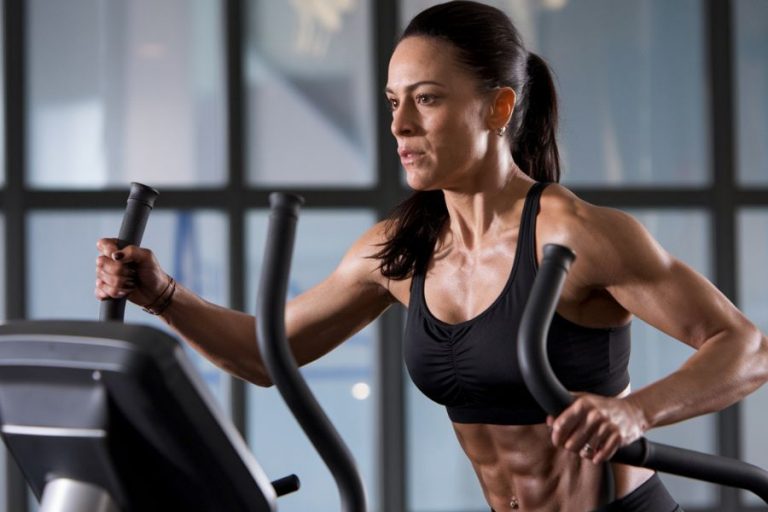
A standing ab workout lets you strengthen your core without getting down on the floor, clearing space, or grabbing special equipment. In just 10 to 20 minutes you can work your abs, back, and hips while standing, which fits easily into a busy day and a small living room.
Below, you will learn what a standing ab workout is, why it is worth adding to your routine, and a simple sequence you can follow at home with no mat required.
Understand what a standing ab workout is
A standing ab workout is a core routine you do entirely on your feet. Instead of crunches and sit-ups, you perform controlled movements like knee lifts, twists, and side bends while standing tall.
These exercises target your rectus abdominis, obliques, deeper stabilizing muscles, hips, glutes, and lower back. Fitness experts note that this upright position is more similar to how your core works in daily life, for example when you walk, climb stairs, or pick up a box from the floor.
Because you are not lying down, you avoid neck strain from crunches and wrist pressure from planks. This is one reason personal trainer Jacque Crockford recommends standing abs moves for people with joint pain in the neck, lower back, or wrists, and for those working out in tighter spaces or during prenatal fitness and injury recovery.
Learn the benefits of standing abs
Standing ab exercises offer many of the same benefits as floor work, with a few unique advantages that make them especially practical.
Improve posture and reduce back strain
Standing core moves focus on muscles that support your spine and pelvis. When you strengthen these muscles, it becomes easier to stand tall, keep your shoulders back, and maintain a neutral lower back.
Experts explain that this can reduce lower back strain and even ease chronic discomfort, since your body is not relying as heavily on passive structures like ligaments for support. Better posture often makes you feel more confident as well.
Build functional strength for daily life
Functional-movement specialist Gary Gray points out that your core usually fires while you are on two feet, not lying down. This makes a standing ab workout very practical. The strength you build carries directly into everyday tasks like lifting a laundry basket, turning to reach something behind you, or bending to tie your shoes.
Standing core training also prepares you for sports and weight training. Peloton instructor Rebecca Kennedy notes that these exercises can serve as movement prep for lifts like deadlifts since they mimic the hip hinge and spine stability you need under heavier loads.
Support balance and stability
Because you are upright, your body has to stabilize with every rep. Moves like single leg lifts, standing bird dog, and standing bicycle crunches challenge your balance and coordination while your abs work.
Physical therapist Raymond Agostino and Kennedy both explain that this kind of multiplanar, standing work improves overall stability, endurance, and power in movements like stair climbing and turning around quickly. Studies and expert reviews also suggest that standing ab drills may be more effective for overall stability than similar moves done sitting or lying down, since more stabilizer muscles fire to keep you upright.
Protect your joints and spine
If traditional crunches bother your neck or your back protests every time you plank, standing core work can be a welcome alternative. Standing ab exercises are generally gentler on the spine and lower back because you are not flexing your trunk against the floor repeatedly.
Crockford specifically recommends upright core training for anyone with joint issues during floor workouts, and notes that these moves can be adapted easily for different fitness levels. You can slow the motion, shorten the range, or use a chair for support as needed.
Compare standing abs vs floor abs
You do not have to choose between standing and floor based core training. Each has its strengths, and a mix will usually serve you best.
Floor exercises like planks and crunch variations are very stable. You can leverage gravity and your trunk weight to increase challenge, which can be especially helpful if you have balance issues or vertigo and need more support during movement (2026 standing vs floor abs analysis if referenced in your research source list).
Standing abs, on the other hand, tend to engage more muscles at once. Peloton instructors explain that you recruit your lower body, postural muscles, and deep core muscles in a coordinated way, which can lead to greater overall muscle activation compared with lying on your back.
Fitness experts caution that you should not think of standing abs as easy or floor work as automatically more advanced. Both can be modified up or down. For example, you can hold weights for extra challenge in a standing pike crunch, or you can elevate your hands on a bench to make planks more accessible. A balanced routine often includes both, depending on how your body feels on a given day.
Try this simple standing ab workout
You can complete an effective standing ab workout in about 20 minutes. The plan below follows the structure many coaches recommend: warm up, strengthen with bodyweight, then add a bit more movement or resistance if you feel comfortable.
Step 1: Warm up with gentle stretches
Spend 3 to 5 minutes waking up your muscles and joints. Move slowly and keep your core lightly braced.
- March in place, swinging your arms, for 60 seconds
- Do slow torso twists, rotating side to side, for 30 to 45 seconds
- Perform side reaches, reaching one arm overhead at a time, for 30 to 45 seconds
These warmup moves echo the first phase described in standing ab programs that start with stretching before deeper strengthening work.
Step 2: Strengthen with bodyweight moves
Choose 4 to 6 exercises and cycle through them for 2 to 3 sets. Experts like Agostino recommend 10 to 15 reps of each move, done 2 to 4 times per week for steady progress.
Here is one sample circuit you can follow:
-
Standing knee to elbow crunch
Stand tall with feet hip width apart and hands behind your head.
Lift your right knee as you twist your torso to bring your left elbow toward it, then return to start.
Alternate sides for 10 to 15 reps each. -
Torso twist
Plant your feet a little wider than hip width with soft knees.
Extend your arms in front of you and rotate your torso to one side, then the other, keeping your hips facing mostly forward.
Move with control for 20 to 30 total twists. -
Lateral side standing crunch
Place your hands lightly behind your head.
Shift weight to your left leg and lift your right knee out to the side as you bend your right elbow down toward it.
Complete 10 to 15 reps on one side, then switch. -
Single leg lift
Stand tall holding a chair or wall for balance if needed.
Brace your core and slowly lift one leg straight in front of you a few inches, then lower.
Perform 10 to 15 reps per leg, moving slowly so your core has to stabilize. -
Standing bicycle crunch
Similar to the knee to elbow crunch, but with a slightly faster tempo.
Bring opposite knee to elbow across your body while maintaining an upright posture.
Continue for 20 to 30 total reps or 30 seconds.
Fitness experts Chakoian and Powell highlight these types of movements in a no equipment standing ab routine you can do without even changing clothes.
Step 3: Add challenge with movement and light weights
If you feel steady with the bodyweight circuit, you can increase difficulty by adding small hand weights, a water bottle, or simply moving through a larger range of motion.
Try one or two of the following:
-
Overhead marches
Hold a light weight or no weight with both hands overhead.
March in place, lifting your knees while keeping your ribs stacked over your hips.
Continue for 30 to 45 seconds. -
Dumbbell wood chop
Hold one dumbbell or household object with both hands.
Start with the weight up by one shoulder, then rotate your torso and bring it diagonally down across your body toward the opposite hip.
Perform 10 to 12 reps, then switch sides.
Health Shots notes that this move hits your obliques and mimics real twisting motions you use in life and sports. -
Overhead circles
With or without weight, extend your arms overhead and draw small, controlled circles in the air.
Maintain a firm brace around your midsection to avoid leaning backward.
Continue for 20 to 30 seconds in each direction.
Standing ab programs often progress in this way, beginning with simple bodyweight exercises and eventually incorporating weights, TRX straps, kettlebells, or barbells in later phases to define and tone your core.
Follow safety tips and best practices
A standing ab workout can be part of your routine almost every day, as long as you listen to your body and vary the moves. Chakoian recommends paying attention to soreness in your abs or back and taking a rest or working different muscle groups if discomfort appears.
To get the most out of your sessions:
- Focus on slow, deliberate motion at first. Fitness instructor Powell suggests you increase tempo and range of motion only as you become more comfortable and stable.
- Keep your breath steady. Exhale on the effort, for example as you lift your knee or twist, and inhale as you return to start.
- Maintain soft knees, not locked legs, to protect your joints and improve balance.
- Use support when needed. A wall, counter, or chair is a tool, not a crutch.
If you have injuries, are pregnant, or manage conditions that affect your balance or spine, it is a good idea to check in with a medical professional before you start a new program.
You should feel your core working and your heart rate gently rising. Sharp pain, pinching, or dizziness are all signs to stop and reassess.
Make standing abs part of your routine
To build a stronger, more stable core, consistency matters more than complexity. A simple plan might look like this:
- Two to four standing ab workouts per week
- 4 to 6 exercises per session
- 2 to 3 sets of 10 to 15 reps each
As you get stronger, you can mix in new moves like standing mountain climbers, crossbody toe touches, or standing pike crunches, which target your abs from slightly different angles.
Standing core work can also fill smaller gaps in your day. You might do a quick round of knee lifts and torso twists while waiting for coffee, or a few sets of side crunches during a TV show. Each session is a chance to practice good posture and mindful movement.
Try starting with the warmup and one round of the bodyweight circuit today. Notice how your abs, hips, and balance feel afterward, then build from there at a pace that feels sustainable for you.
About the Author